

More news on this day
Air travel across the Middle East remains severely disrupted as Kuwait, Saudi Arabia, Bahrain, Lebanon, the United Arab Emirates, Iraq, Cyprus and several other countries impose full or partial airport and airspace closures in response to the fast‑escalating conflict involving Iran, Israel and the United States, leaving hundreds of thousands of travelers scrambling to rebook or find a way home.
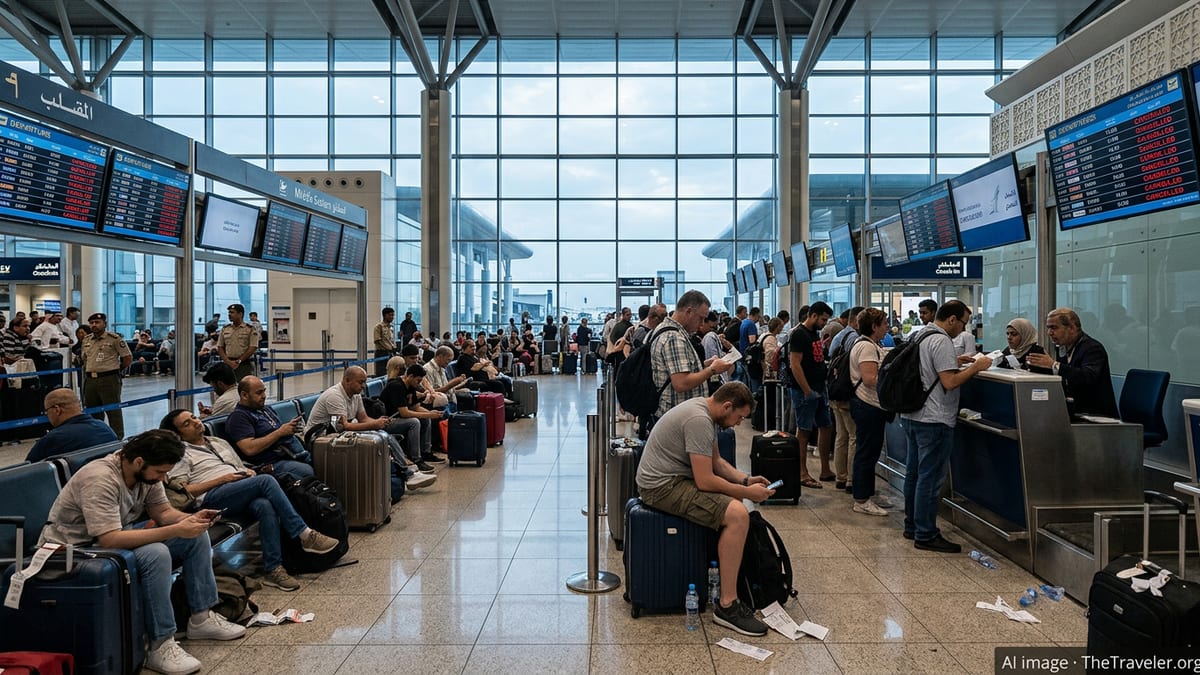
Which Airports Are Closed and Where Flights Are Still Moving
The most dramatic shutdowns are in Kuwait and Bahrain, where authorities have kept airspace largely closed following missile and drone attacks and ongoing security concerns. Kuwait International Airport, already damaged in a late February strike, remains shut to most commercial traffic, with only limited military and emergency movements reported. Bahrain’s main airport has similarly halted routine passenger operations while its airspace stays restricted.
Saudi Arabia, a crucial east–west corridor, has avoided a complete closure but is operating under tight restrictions. While Saudi airspace is technically open, many routes have been curtailed or rerouted away from high‑risk areas, leading to widespread cancellations and long delays across Jeddah, Riyadh and Dammam. Local carriers, including Saudia and low‑cost operators, have extended suspensions to several regional destinations such as Kuwait, Bahrain, the United Arab Emirates, Qatar and Iraq.
The United Arab Emirates has seen repeated suspensions and only a gradual restart of service. Airports in Dubai and Abu Dhabi that briefly shut after Iranian strikes are now running skeleton schedules, with Emirates and Etihad operating a reduced number of flights and giving priority to passengers who were already stranded. Sharjah and smaller UAE airports have faced intermittent closures, and transit through the country is heavily constrained.
Elsewhere, Lebanon’s Beirut, Iraq’s Baghdad and other regional gateways are operating with varying levels of disruption, often imposing nightly curfews or limited opening hours for safety. Cyprus, which sits on the edge of the affected air corridors, has emerged as a key diversion point, but its airports are also dealing with congestion and knock‑on delays from rerouted European, Asian and Gulf flights.
How Airlines Are Handling Cancellations and Schedule Changes
Major Middle Eastern and global carriers have canceled or rerouted thousands of flights since late February, creating a patchwork of shifting schedules that can change by the hour. Gulf network airlines that typically funnel traffic through Dubai, Abu Dhabi, Doha and other hubs have been hit particularly hard. Some, including Emirates, Etihad and Qatar Airways, paused regular operations for days at a time and are now running limited services that can be pulled back quickly if security deteriorates.
Saudi carriers have extended flight suspensions to multiple regional cities and warned that further adjustments are likely. Travelers are being urged to check flight status repeatedly on the day of departure and not to go to the airport unless their booking shows as confirmed and operating. In many cases, airlines are reaching out proactively via email, app notifications and text messages, but overloaded systems mean some passengers only discover cancellations after long waits at terminals.
European, Asian and North American airlines have also reshaped their networks. Many have suspended direct services to affected countries and are avoiding overflying large sections of Middle Eastern airspace, which adds hours to long‑haul journeys and reduces the number of flights they can operate in a day. The result is a sharp reduction in capacity to and from the region, even from airports that remain technically open.
Industry analysts warn that while some limited flying has resumed in parts of the Gulf, recovery is likely to be fragile as long as missile and drone attacks remain a threat. Airlines are revising schedules in short, rolling windows of a few days at a time rather than loading full seasonal timetables, making it difficult for travelers to plan with confidence.
Rebooking Options, Refunds and Travel Waivers
For passengers whose flights have been canceled, the immediate priority is understanding what flexibility their ticket offers. Most major airlines serving the region have introduced special “Middle East unrest” waivers that allow customers to change their travel dates without additional change fees, and in many cases to rebook onto alternative routes or nearby airports. Some carriers are also offering full refunds for trips that are no longer possible because of airport closures.
However, policies vary significantly between airlines and even between fare types on the same carrier. Travelers holding the cheapest nonrefundable tickets may find that they are eligible only for date changes, not refunds, or that any rerouting must keep the same origin and final destination. Those who booked through online travel agencies or tour operators can face extra delays while intermediaries seek approval from the airline before issuing new itineraries or refunds.
Rebooking capacity is another constraint. With Kuwait, Bahrain and parts of the UAE and Iraq effectively off‑line or running at reduced levels, alternative routes are filling quickly. Seats via relatively unaffected hubs such as Istanbul, Cairo or certain European capitals are in high demand, and fares on remaining flights have risen sharply. Travelers who need to reach or leave the region urgently are often forced into complex, multi‑stop journeys that may involve overnight layovers and cross‑border land segments.
Passengers are being advised to keep detailed records of all communications with airlines and agents, including screenshots of cancellation notices and receipts for hotels, meals and surface transport. While legal obligations differ by jurisdiction, such documentation can help when seeking reimbursements, especially on itineraries that touch the European Union or United Kingdom, where consumer protection rules for cancellations are more robust.
Safety, Government Advisories and Alternative Routes Out
Beyond the immediate flight chaos, safety considerations loom large. Multiple governments, including the United States and several European states, have issued strong warnings urging citizens to leave parts of the Middle East or to avoid nonessential travel altogether. These advisories often cover not just war zones but also neighboring countries where airports and critical infrastructure have been targeted or are within range of missile attacks.
For those already in countries such as Kuwait, Saudi Arabia, Lebanon, Iraq or the United Arab Emirates, embassy guidance has focused on registering with consular services, keeping phones charged and documents ready, and monitoring official channels for the announcement of evacuation flights or safe‑passage convoys. In some cases, nations have begun dispatching charter or military aircraft to relatively secure airports in the region, though these operations are typically limited in scale and can be announced with little advance notice.
As airspace closures persist, land and sea routes are becoming more important. Travelers are increasingly using border crossings into Saudi Arabia, Turkey, Jordan and Egypt as stepping stones to onward flights from less‑affected airports. Ferries across the eastern Mediterranean, including services linking Cyprus to Greece and other European ports, are reporting surging demand from passengers seeking a way around shuttered hubs in the Gulf.
Security experts stress that anyone considering overland or maritime exits should research current conditions carefully and follow local law and curfew rules. Road journeys that were once routine may now pass near sensitive military sites or through areas experiencing protests and sporadic violence. Reliable local drivers, daylight travel and close coordination with embassies and tour operators are being widely recommended.
Practical Tips for Travelers With Upcoming Middle East Plans
For travelers who have tickets to or through the Middle East in the coming weeks, the most important step is to avoid making assumptions based on old itineraries. Schedules that appear normal on booking platforms can change overnight if a new strike or airspace notice is issued. Checking directly with the operating airline 24 hours and again 4 to 6 hours before departure has become essential.
Experts advise building flexibility into any journey that still goes ahead. This can include allowing long connection times, avoiding tight same‑day links between separate tickets, and preparing for the possibility of unexpected overnight stays. Travel insurance that covers war‑related disruptions is limited, but some comprehensive policies may help with extra accommodation and rebooking costs; travelers are encouraged to read the fine print carefully.
Those who have not yet departed may wish to consider postponing or rerouting their trips, particularly if travel is for leisure rather than essential business or family reasons. Alternative itineraries that connect through southern Europe, North Africa or South Asia without overflying current conflict zones are likely to remain in higher demand, so booking early and remaining open to different dates, airlines and airports can improve chances of securing a seat.
With the situation changing rapidly, industry observers expect that airlines and governments will continue adjusting operations in short increments. For now, anyone with a stake in travel to or through Kuwait, Saudi Arabia, Bahrain, Lebanon, the United Arab Emirates, Iraq, Cyprus and neighboring states should plan for ongoing uncertainty, monitor official updates closely and be prepared to change course at short notice.