


More news on this day
Reopenings of key Middle Eastern airspace have not yet translated into a smooth travel experience, as airlines continue to grapple with reroutings, suspended routes and extended flying times months after major closures triggered by regional conflict.
Get the latest news straight to your inbox!
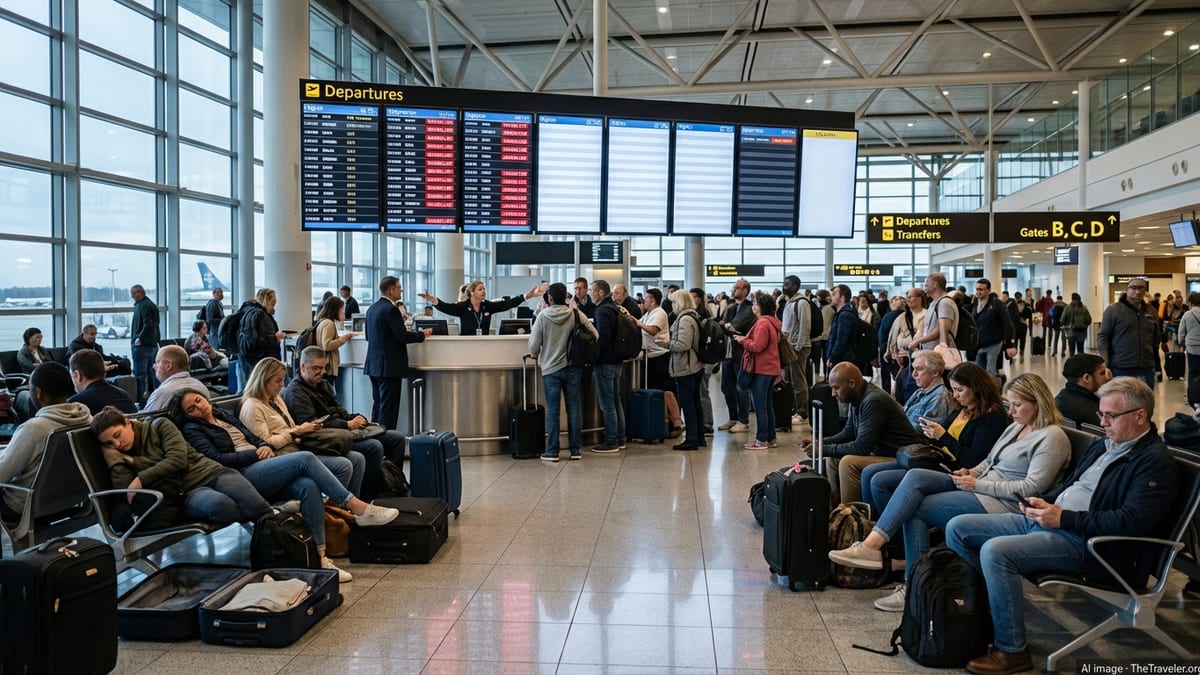
Airspace Reopens After Missile Strikes, But Schedules Lag Behind
Major closures of airspace over Iran, Israel, Iraq and parts of the Gulf followed large-scale missile exchanges in late 2024 and early 2026, sharply disrupting one of the world’s busiest aviation corridors. According to publicly available timelines, Iran, Israel and Jordan temporarily shut their airspace on October 1, 2024, after Iran launched hundreds of ballistic missiles toward Israel, forcing wide diversions and cancellations on routes linking Europe, the Middle East and Asia.
Subsequent rounds of military action deepened the disruption. Reports indicate that Israeli strikes on targets in Iran and neighboring countries on October 26, 2024, led to further caution among airlines already adjusting away from perceived risk zones. Regional news coverage from autumn 2024 describes repeated suspensions of services to Tel Aviv and Beirut, along with reduced frequencies to Iraq, Iran and Lebanon as carriers reassessed exposure.
Although state media and international outlets documented a phased resumption of flights and the lifting of formal restrictions on Iranian airspace by early October 2024, flight operations did not return to previous patterns. Many airlines maintained altered routings or limited schedules, citing ongoing security assessments and insurance considerations. Later, in February 2026, a new wave of hostilities prompted fresh closures across multiple Flight Information Regions, reinforcing the sense of instability on these long-haul corridors.
Rerouted Traffic Adds Time, Cost and Complexity
Network data compiled by Eurocontrol show how prolonged airspace constraints have reshaped traffic flows between Europe, the Middle East and Asia. A March 2026 Aviation Trends paper estimates that, with airspace over Iraq remaining closed but traffic to and from the Gulf region otherwise closer to normal, around 1,150 flights a day continued to be affected by reroutings. The same analysis highlights significant reductions in direct traffic to the wider Middle East compared with pre-crisis levels, along with knock-on impacts for overflights between Europe and North America that typically use the region’s airspace.
Earlier network overview and delay reports for 2024 underline how military activity and changing airspace restrictions added pressure to already busy south-eastern European routes. Publicly available performance data point to higher air traffic flow management delays on axes feeding into the eastern Mediterranean, where traffic has been funneled into fewer safe and available corridors. Even when flights are operating, these detours can add substantial time in the air, extra fuel burn and increased crew and maintenance costs.
For travellers, the most visible consequences are extended journey times and higher chances of missed connections. Travel coverage following the October 2024 missile attack describes aircraft that were already airborne turning back to Europe or diverting to alternative hubs such as Larnaca in Cyprus when airspace closures were announced. Those patterns have repeated during subsequent flare-ups, with aircraft sometimes holding while new routings are identified or diverting to airports capable of handling large numbers of unplanned arrivals.
Carriers Adjust Networks and Advisories
Individual airlines continue to revise their Middle East operations as security assessments evolve. Travel alerts from major European carriers show a patchwork of suspensions, frequency reductions and daylight-only operations on routes into Lebanon, Israel, Iraq and Iran at various points since late 2024. In some instances, flights were paused for weeks or months before being cautiously reintroduced, often with flexible rebooking policies for affected passengers.
One leading European airline’s current disruption notice, updated in 2026, cites the security situation in the Middle East as the reason for adjusted schedules and a pause on flights to certain Gulf and Levant destinations for defined periods. Such advisories commonly offer options including travel on alternative dates, rerouting via different hubs, or refunds where services are cancelled or significantly delayed. This illustrates how, even with key airspace formally reopened, network planners are still building buffers and contingency options into their schedules.
Regional carriers face a different set of trade-offs. Public reports indicate that Gulf and Levant airlines have sometimes resumed services more quickly than their European counterparts, reflecting both their geographic reliance on the region and differing risk assessments. At points in late 2024, for example, Middle East Airlines was reported as one of the few carriers still operating from Beirut while several foreign airlines maintained suspensions, underscoring the uneven pace of recovery across operators.
Knock-On Effects for Europe-Asia Connectivity
The Middle East’s position as a crossroads between Europe and Asia means that airspace disruption there reverberates far beyond the immediate region. Eurocontrol’s European Aviation Overview for 2024 notes that constrained or closed airspace linked to conflicts has influenced route choices across South-East Europe and the eastern Mediterranean. Traffic that once routinely overflew Iraq, Syria or parts of Iran has been redirected north or south, concentrating flows over Turkey and the Caucasus or along more southerly Gulf and Red Sea corridors.
These changes intersect with other long-running constraints, such as the near-total avoidance of Russian airspace by many Western carriers since 2022. As a result, airlines operating between Europe and East or South Asia have fewer optimal routing options, which can amplify the impact of any further Middle Eastern restrictions. Industry forecasts published in late 2024 anticipate continued growth in European traffic overall, but also highlight geopolitical risks and airspace closures in the Middle East as ongoing threats to efficiency and punctuality.
For connecting passengers, the result can be additional stops, longer minimum connection times and a greater reliance on certain hubs judged to be more resilient to regional instability. Some long-haul itineraries that once involved a single stop in a Gulf hub now route via secondary European or Central Asian gateways, adding complexity and, in some cases, cost.
Travellers Face Prolonged Uncertainty
While flight schedules have broadly stabilized compared with the height of the October 2024 crisis and subsequent closures, disruption remains a feature of travel through and over the Middle East. Airlines and air navigation authorities continue to issue warnings and notices to airmen on short notice when tensions spike, which can result in overnight timetable changes or rolling delays. Publicly available delay statistics for 2024 already showed elevated all-causes delay minutes on routes affected by conflict and capacity constraints, and more recent conflict-related closures risk prolonging that trend.
For passengers planning trips, travel industry guidance increasingly emphasizes flexibility. Travellers are frequently advised to leave extra time for connections, monitor airline apps and flight trackers, and consider booking through carriers that offer free date changes or multiple daily frequencies on key routes. Given that formal reopenings of airspace have not always coincided with an immediate return to pre-crisis schedules, the expectation among many analysts is that uncertainty will persist as long as regional tensions remain unresolved.
In practical terms, this means that journeys linking Europe, the Gulf, South Asia and beyond may continue to take longer, with more circuitous routings and intermittent cancellations, even when skies above the Middle East are technically open. For now, publicly available network data and airline advisories point to a protracted adjustment period rather than a swift return to the status quo ante.
Euronews: Iran attack and Middle Eastern airspace closure coverage
Eurocontrol Aviation Trends: Impact of the current Middle East crisis on European aviation
Eurocontrol: All-causes delays to air transport in Europe 2024