


More news on this day
Severe storms sweeping across the US Midwest this week cut power to nearly 390,000 customers and disrupted more than 1,000 flights at major hubs including Chicago O’Hare, with knock-on delays reported as far as New York’s JFK and Dallas Fort Worth. The disruption is amplifying concern among travel planners and foreign governments already urging citizens to factor volatile North American summer weather into their itineraries.
Get the latest news straight to your inbox!
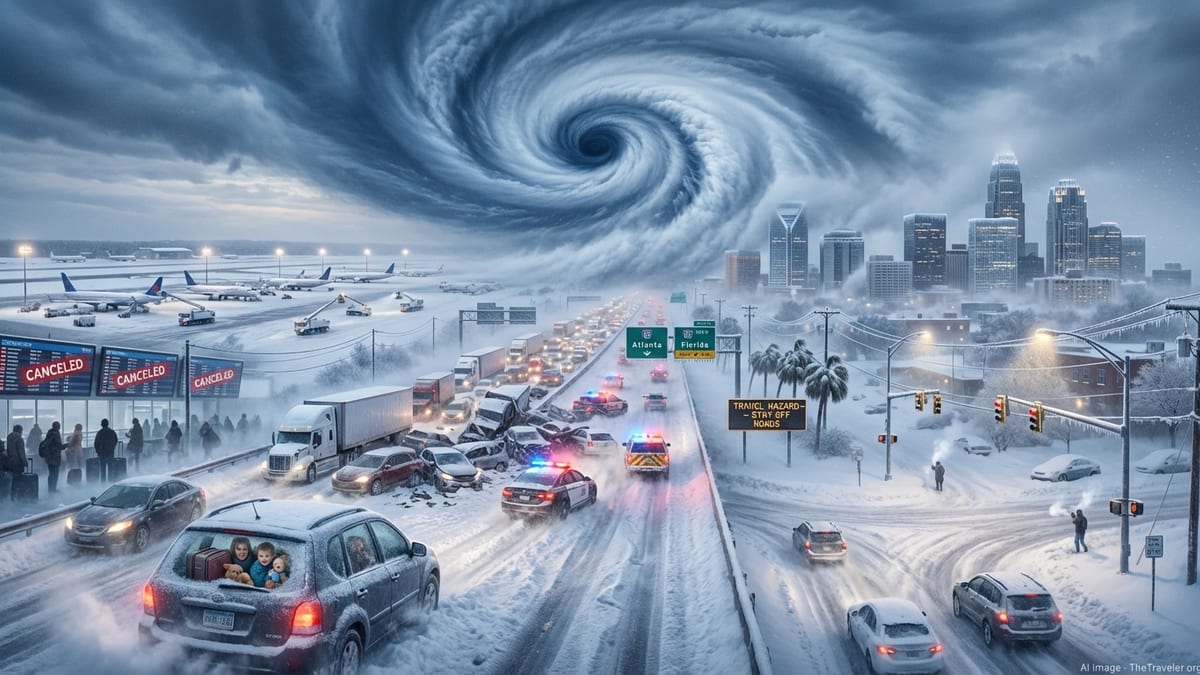
Power Outages and Airport Gridlock Ripple Across Key Hubs
Publicly available outage trackers indicate that at the height of the storms, nearly 390,000 homes and businesses across the Midwest were without electricity, with Illinois, Iowa and parts of Michigan among the hardest-hit areas. In the Chicago region alone, local utility data showed hundreds of thousands of customers affected as intense thunderstorms brought wind gusts reported at up to 80 miles per hour, downing trees and power lines.
Coverage from national and local news outlets describes a rapid escalation on June 10, when storm cells moved across the Chicago metro area late in the day. Chicago O’Hare and Midway imposed temporary ground stops as lightning and heavy rain passed over the airfields, halting departures and slowing arrivals. Flight-tracking services recorded more than a thousand delays and cancellations into and out of Chicago by Wednesday evening, creating a backlog that spilled into subsequent days.
Travel disruption was not contained to Illinois. Operational updates and passenger reports show wider airspace constraints across the Midwest and Great Lakes region, with weather-related holds affecting routes into major coastal hubs. Services at New York’s JFK and at Dallas Fort Worth experienced rolling delays as airlines attempted to reroute aircraft and crew around storm bands and manage capacity at already congested airports.
Even as power restoration progressed on Thursday, airlines were still managing residual disruption. Aircraft and crew displaced by the storms limited recovery options, particularly on complex hub-and-spoke networks centered on O’Hare and DFW, two of the country’s busiest connecting points for domestic and international travelers.
Foreign Travel Advisories Highlight US Summer Weather Exposure
Well before this week’s storms, several governments had updated or reiterated travel guidance for visitors to the United States, emphasizing that extreme weather is now a recurring feature of North American summers. Public advisories from Canada, Mexico, India and the United Kingdom in recent months have all pointed to risks linked to severe thunderstorms, hurricanes, floods and heatwaves when traveling in the US.
These advisories typically do not discourage travel outright but instead highlight the need for flexible itineraries and close monitoring of local conditions. Canadian and UK guidance, for example, stresses that travel in tornado-prone regions and along major storm tracks can be significantly disrupted with little notice, especially during late spring and summer. Mexico and India similarly urge their nationals to register travel details and to keep contact information updated in case emergency support is needed during weather-related incidents.
This week’s Midwest outages and flight chaos are likely to reinforce those messages. Large hubs such as O’Hare, JFK and DFW serve as primary entry points for transatlantic and transpacific passengers, including substantial flows from London, Toronto, Mexico City, Delhi and Mumbai. When storms force ground stops or extended ramp closures because of lightning, airlines have limited ability to prioritize one market over another, leaving international passengers exposed to missed connections and overnight diversions even when their origin or destination is far from the affected storm zone.
Consular updates following recent US weather events have increasingly urged travelers to purchase insurance that covers weather disruptions, to allow generous connection times at US hubs, and to be prepared for sudden changes to flight schedules during peak storm periods from late May through September.
Why Travelers Misjudge Weather Risks at Airports Like O’Hare, JFK and DFW
One of the striking themes emerging from passenger accounts this week is a persistent gap between how travelers perceive weather risk and how it actually plays out in airline and airport operations. Many visitors assume that storms only matter if they directly threaten their departure or arrival cities, or that large hubs are resilient enough to absorb heavy weather without widespread knock-on effects.
In reality, the most disruptive events are often brief but intense systems that stall over a critical hub at the wrong time of day. Thunderstorms parked above O’Hare or DFW for even an hour can trigger ramp closures when lightning is detected in the vicinity, stopping ground crews from loading bags, refueling jets or pushing aircraft back from gates. Once those ground operations pause, departures stack up and incoming flights are held or diverted, producing delays that can cascade across an airline’s entire network throughout the day.
Passengers also frequently underestimate how lean modern airline schedules are. Public scheduling data and analyst reports show that major carriers aim to keep aircraft and crew productive for as many hours as possible, leaving limited slack in the system. When a single round of storms forces widespread delays, flight crews can “time out” under duty rules, and aircraft may not end up where they are needed for the next morning’s departures. The result is that the worst disruptions sometimes hit the following day, when skies may already be clear.
Another misconception is that weather delays are only a concern in winter. Operational statistics from recent years point to summer as a peak period for disruption in the United States, driven by convective storms, extreme heat that affects aircraft performance, and tropical systems forming in the Atlantic and Gulf of Mexico. For international visitors planning once-in-a-year trips, that seasonal pattern is easy to overlook, especially when marketing materials still emphasize summer as the most desirable window for US travel.
How to Plan Around a Stormier North American Summer
Travel risk specialists and airline performance data highlight several strategies that can reduce exposure to severe-weather chaos, even if storms themselves are impossible to predict precisely. One of the most consistent findings is that early-morning departures face fewer delays than afternoon or evening flights, because they start before the daily build-up of convective storms and before network disruptions accumulate.
Another practical step is to build longer connection times at weather-vulnerable hubs. For itineraries routing through Chicago, New York or Dallas during storm season, longer layovers can provide a buffer if incoming flights are held in ground stops. While this may mean more time in the terminal, it can significantly improve the odds of reaching a long-haul connection, especially to Europe or Asia, on the same day.
Travelers are also encouraged to monitor multiple information sources. Airline apps and text alerts remain essential for real-time gate and departure updates, but official aviation notices, local media coverage and independent flight-tracking tools can offer earlier clues that storm-related delays are building at a particular airport. Some carriers have begun issuing flexible-change “weather waivers” ahead of forecast storms, allowing passengers to move trips by a few days without additional fees when models point to likely disruption.
Finally, there is growing recognition that accommodation and contingency planning are as important as the flight itself. Booking flexible hotel rates for the first night, identifying alternate nearby airports or rail links, and carrying essentials in cabin baggage can all lessen the impact if storms cut power, close runways or force unplanned overnight stays. For travelers from Canada, Mexico, India, the UK and beyond, this week’s Midwest storms underline that a successful US summer trip in 2026 may depend as much on weather literacy as on finding the right fare.