


More news on this day
Hanoi is emerging as a regional testbed for low-carbon urban mobility, combining an expanding electric bus fleet, a growing metro system and a citywide green transport strategy that is reshaping how residents and visitors move around Vietnam’s historic capital.
Get the latest news straight to your inbox!
Electric buses scale up across the capital
Publicly available information shows that Hanoi is moving quickly to electrify its bus fleet as part of a wider transition to green energy in public transport by 2030. City planning documents indicate that all buses operating in the dense inner core are expected to run on electric or other green energy within the decade, with a phased roadmap now underway to convert subsidised routes and introduce new zero-emission services.
Reports on Vietnam’s transport sector highlight the role of VinBus and other operators in seeding this shift. Industry coverage indicates that roughly 2,000 VinFast-built electric buses are now running in Vietnam, with around 600 operating in Hanoi alone, creating one of Southeast Asia’s densest e-bus networks and accounting for tens of millions of electric kilometres driven in and around the capital. These vehicles, supported by depot charging infrastructure and opportunity charging at key terminals, are gradually displacing older diesel buses from busy urban corridors.
New models are also being integrated into Hanoi’s contracted bus system. Coverage of recent tenders notes that multiple transport firms, including Transerco and private operators, are taking delivery of VinFast e-buses for deployment on city routes from 2025 onward. For visitors, the growing number of quiet, air-conditioned electric buses means cleaner air along key tourism axes linking the Old Quarter, West Lake, new urban districts and popular shopping areas, as well as more legible services thanks to updated route branding and digital timetable information.
Beyond standard city routes, pilot intercity services are extending the reach of electric buses to nearby destinations. Travel community reports in early June 2026 point to a free all-electric route linking Hanoi with the coastal development of Ha Long Xanh, signalling how zero-emission buses could reshape tourist flows between the capital and major leisure hubs in northern Vietnam.
Metro network expansion changes how visitors move
Hanoi’s metro system is evolving into a central pillar of its green mobility strategy. According to project documentation and specialist rail industry coverage, the capital now has two metro lines in commercial operation, with additional sections under construction. Line 2A, better known as the Cat Linh – Ha Dong line, was the first to open and runs entirely on an elevated guideway southwest of the city centre, offering high-frequency services with modern rolling stock.
The newest addition is Line 3, the Nhon – Hanoi Station corridor. The elevated section from Nhon to Cau Giay began passenger service in August 2024, after years of delays, creating an 8.5 kilometre spine that links rapidly growing western districts with education hubs and commercial areas. Information published by the operator and technical partners shows that the line uses energy-efficient Alstom trainsets and modern signalling designed to support high-capacity, low-emission operations suitable for dense urban corridors.
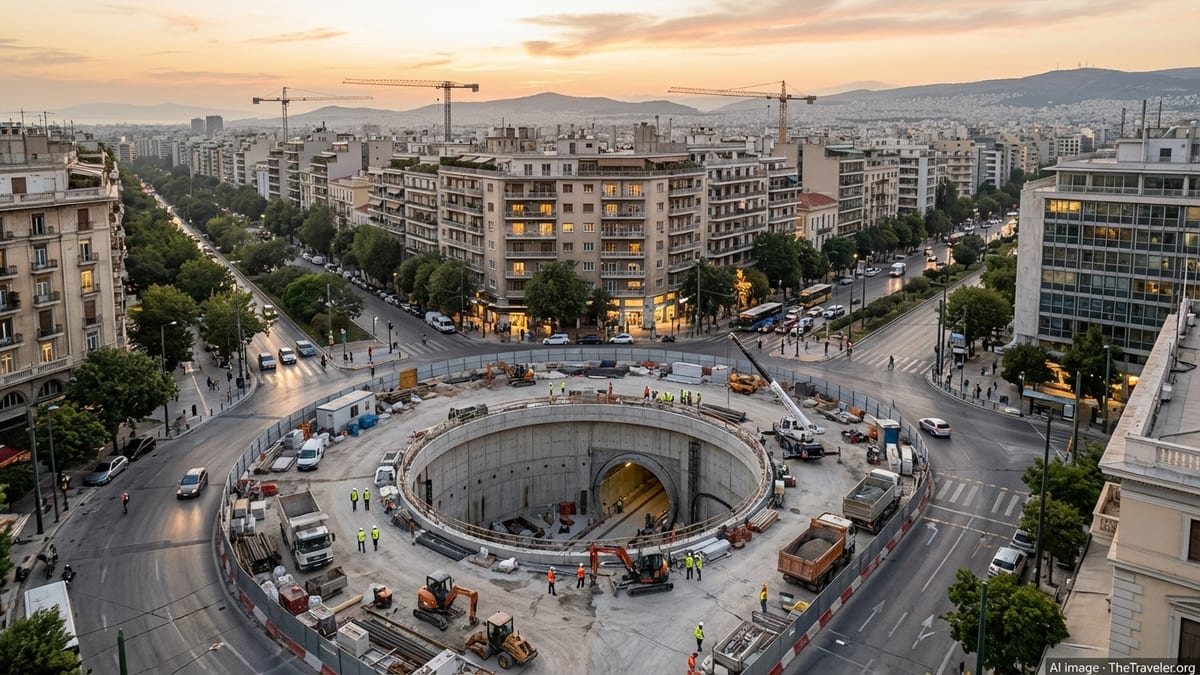
Construction is progressing on the underground section that will carry Line 3 from Cau Giay through Kim Ma, Cat Linh and Van Mieu to Hanoi Station, adjacent to the historic core and major tourist attractions. Recent infrastructure updates confirm that tunnel boring between the first four underground stations was completed in late 2025, with full line completion targeted around the middle of this decade. Once finished, Line 3 is expected to provide a seamless, mostly grade-separated route from western suburbs directly into the heart of the city.
Ridership on the metro network has been climbing as coverage improves and residents adjust their travel patterns. Local press reports for 2025 indicate that the Cat Linh – Ha Dong line alone carried more than 13 million passenger journeys that year, exceeding its annual target and helping to reduce pressure on key arterial roads. For travellers, the expanding metro offers a faster and more predictable way to reach accommodation, conference centres and cultural sites while avoiding the congestion typical of peak hours in central Hanoi.
Integrated ticketing and multimodal links ease navigation
Hanoi’s green transport push is not limited to hardware. According to published coverage and user feedback, the city has been steadily upgrading ticketing and passenger information systems to make transfers between buses and metro smoother, a shift that is particularly beneficial for visitors unfamiliar with local routes. The two metro lines now use a common fare system that supports contactless cards and QR code payments, reducing the need to queue for single-use paper tickets.
Transport planning documents and recent news reports describe ongoing work to integrate timetables and route planning across modes so that buses feed into metro stations rather than duplicating the same corridors. In practice, this means multiple bus lines have been restructured to terminate or pass by Cat Linh, Ha Dong, Cau Giay and other key interchange hubs, where park-and-ride facilities, taxi ranks and motorcycle parking allow easy switching between private and public transport.
The roll-out of electronic identification and biometric authentication systems on Line 2A in late 2025, as reported in local media, further underscores the city’s emphasis on digitalisation. These systems aim to speed passenger flows through gates, support personalised ticket products and gather anonymised data to optimise service planning. For tourists, the main effect is a more streamlined experience at stations, with clearer gate signage and reduced bottlenecks during busy periods.
At street level, upgraded wayfinding, bilingual announcements and clearer branding of e-bus routes are starting to bring Hanoi closer to the user experience found in more mature metro cities. While gaps remain, particularly in last-mile connections and accessibility for people with reduced mobility, the direction of travel points toward a more intuitive, multimodal network where buses and trains work as a single system rather than separate services.
Green transport strategy aligns with climate and tourism goals
Hanoi’s move toward electric buses and metro expansion is anchored in a broader transport master plan running to 2030 with a vision to 2050. Diagnostic work on the plan, prepared with international partners, emphasises a shift from motorbike-dominated streets to a more balanced mix where high-capacity public transport, walking and cycling carry a much larger share of daily trips. Target indicators include increased public transport network density and higher modal share for buses and rail, supported by land-use policies built around transit-oriented development.
City plans for green transport, made public through official portals and sector reports, explicitly link this shift to climate commitments and air-quality objectives. By converting the entire bus fleet to green energy by 2030 and expanding electrified rail, Hanoi aims to cut emissions from the transport sector while also improving resilience to fluctuating fuel prices. The rapid deployment of e-buses and completion of new metro sections are framed as key levers for achieving these goals.
Tourism considerations are also prominent. As international arrivals recover, Hanoi is positioning its sustainable transport upgrades as part of a wider effort to enhance the visitor experience. Cleaner streets, quieter buses and reliable rail links to business districts, event venues and cultural sites support the city’s branding as a modern yet liveable heritage destination. Eco-conscious travellers, in particular, gain credible low-carbon options for moving between the Old Quarter, lakefront promenades, museums and new urban zones without relying entirely on taxis or ride-hailing services.
Analysts of regional urban transport note that Hanoi’s combination of large-scale e-bus deployment, phased metro expansion and integrated digital ticketing is beginning to set a benchmark for other fast-growing cities seeking to decarbonise mobility while preserving economic dynamism. If planned projects and policy milestones hold through 2030, Vietnam’s capital is likely to stand out not only for its historic architecture and street food, but also for a transport ecosystem that makes sustainable travel the easiest choice for residents and visitors alike.