


More news on this day
A software defect that unfolded in roughly a millisecond set off a chain reaction in the UK’s air traffic control network earlier this month, contributing to more than 2,000 flight cancellations and days of disruption for travelers moving through London and beyond.
Get the latest news straight to your inbox!
What happened in the UK’s air traffic control system
Published coverage indicates the disruption traces back to a fault inside the UK’s National Air Traffic Services (NATS) flight data systems during an incident dated September 8, 2026. NATS runs the country’s en route air traffic control operation, and problems inside its flight-processing and flight-data tools can force restrictions that ripple quickly across airports and airlines.
According to NATS’ own preliminary reporting on the event, a rare timing sequence caused one internal request to be paused while a higher-priority message arrived, creating corrupted data output. Even though the vulnerable window existed only for about a millisecond, the corrupted data affected how flight data updates could be handled, triggering operational safeguards.
While the software issue was described as affecting flights associated with the London Area Control Centre (a key part of the network that manages high-level traffic flows), restrictions were applied across the UK to safely restart the national system and reload flight data. Reports describe the restriction window lasting about six hours, with knock-on effects that took longer to unwind.
Why a millisecond mattered: the cascading effects on flights
In aviation, a small failure can produce large consequences because safety-critical systems are designed to fail safely rather than fail silently. Coverage of the incident describes how the corrupted data interrupted normal automated flight-data handling, which then required traffic levels to be reduced so controllers could maintain safe separation while systems were brought back into a stable operating state.
That reduction in capacity quickly translated into canceled departures and diversions, especially at major hubs handling dense schedules and tight aircraft rotations. As airlines reposition crews and aircraft, cancellations can compound over multiple days, particularly when disruption hits a network at scale rather than a single airport.
Published reporting puts total cancellations at more than 2,000 flights to and from the United Kingdom. Travel disruption also extended beyond cancellations, as passengers dealt with rolling delays, late aircraft arrivals, and last-minute gate and schedule changes that can make same-day rebooking difficult during peak demand periods.
What travelers experienced and how airports responded
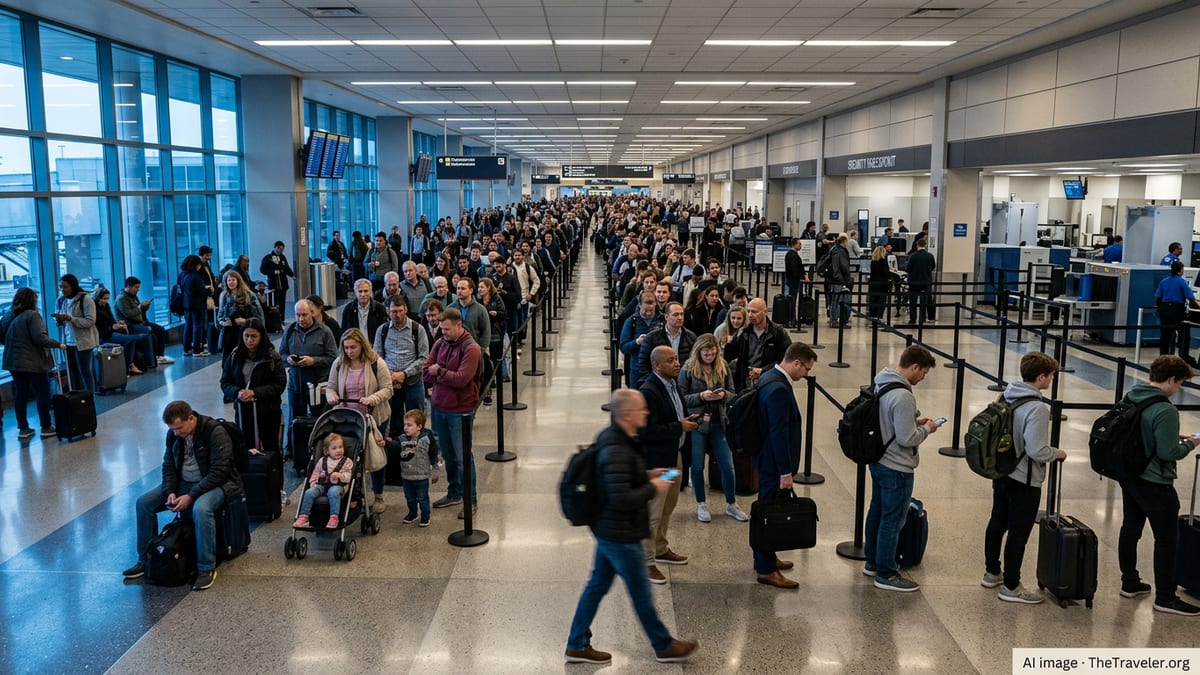
Airports and airlines urged passengers to check flight status and avoid traveling to terminals unless their flight was confirmed operating, according to widely published coverage during the disruption. That guidance reflects the reality that when airspace restrictions reduce departure slots, airport congestion can worsen quickly, with knock-on impacts on security queues, baggage handling, and gate availability.
Even after systems are restored, a backlog can persist as aircraft and crews end up out of position. Travelers may see longer-than-usual knock-on impacts: inbound flights arriving late, missed connections, and rebookings pushed into the following day as airlines work through constraints such as crew duty-time limits and aircraft availability.
For travelers, the practical pain point is often timing: a mid-morning disruption can erase an entire day of flight options on busy city pairs, leaving only limited seats on later departures. Reports indicate the September 8 event produced that kind of systemic squeeze, stranding travelers not only in London-area airports but also at UK regional airports and overseas stations waiting for inbound aircraft.
Accountability, resilience, and the wider context for UK air traffic tech
The September 2026 incident has renewed attention on NATS’ technology resilience and incident-handling processes. Coverage notes that the disruption follows a widely scrutinized NATS systems failure in August 2023, which also triggered major UK flight disruption and led to independent review work overseen by the UK Civil Aviation Authority (CAA) in subsequent years.
NATS has pointed to long-term investment in systems and technology, with public statements noting more than £1 billion invested over the past decade and a plan to submit additional investment proposals to the CAA through the end of 2033. The policy question for travelers is less about the headline figure and more about what it buys: improved redundancy, safer recovery procedures, and fewer nationwide restrictions when localized faults occur.
For airlines and passengers, the key operational issue is how quickly airspace capacity can be restored without triggering widespread cancellations. Reports describe that, despite the defect occurring in an extremely small time window, restoring reliable flight-data processing required restricting traffic broadly enough to restart and reload systems safely, illustrating how tightly coupled modern air-traffic networks are.
As airlines work through passenger reaccommodation after a network-wide event, travelers typically face choices between later flights, alternate airports, or rerouting via third countries. The September 2026 incident underscores the central reality of UK flying: when air traffic constraints hit the London control environment, the impact can extend well beyond the capital’s airports, affecting itineraries across the UK and into Europe and the North Atlantic routes.