


More news on this day
Japan’s Ministry of Foreign Affairs has issued a new regional advisory covering multiple Middle Eastern destinations, urging travelers to recheck country-specific warnings, stay alert to rapidly shifting security conditions, and prepare for flight disruptions including cancellations and temporary airspace closures.
Get the latest news straight to your inbox!
What Japan’s regional advisory covers, and when it was issued
The advisory, dated September 20, 2026 (Japan time), is a wide-area notice rather than a single-country update. It is intended to be read alongside the ministry’s existing country and territory risk information, which remains in effect and can differ significantly from place to place.
Japan’s notice lists the following covered destinations: the United Arab Emirates, Yemen, Israel, Iraq, Iran, Oman, Qatar, Kuwait, Saudi Arabia, Syria, Bahrain, Jordan, Lebanon, and Palestine. The ministry’s message is aimed at people currently in those areas as well as travelers planning upcoming visits or transits.
Published coverage indicates the advisory was prompted by heightened regional uncertainty and a concern that conditions could change with little warning, including impacts on aviation operations. The advisory also underscores that some locations in the covered set already have high-level risk designations from Japan, meaning the wide-area notice does not replace specific instructions for individual destinations.
Why this matters for travelers: transit hubs and airspace volatility
For travelers departing from Japan, the Middle East often functions as a long-haul bridge to Europe and Africa. Large volumes of itineraries are routed through Gulf hubs, and disruptions can cascade quickly when carriers change routings or when airspace restrictions are imposed.
Japan’s advisory highlights the practical travel implications of the current environment, including the possibility of flight cancellations and temporary airspace closures. Separately, U.S. State Department messaging has emphasized similar concerns, advising heightened vigilance for Americans in the region and warning that travel disruptions can occur with limited notice.
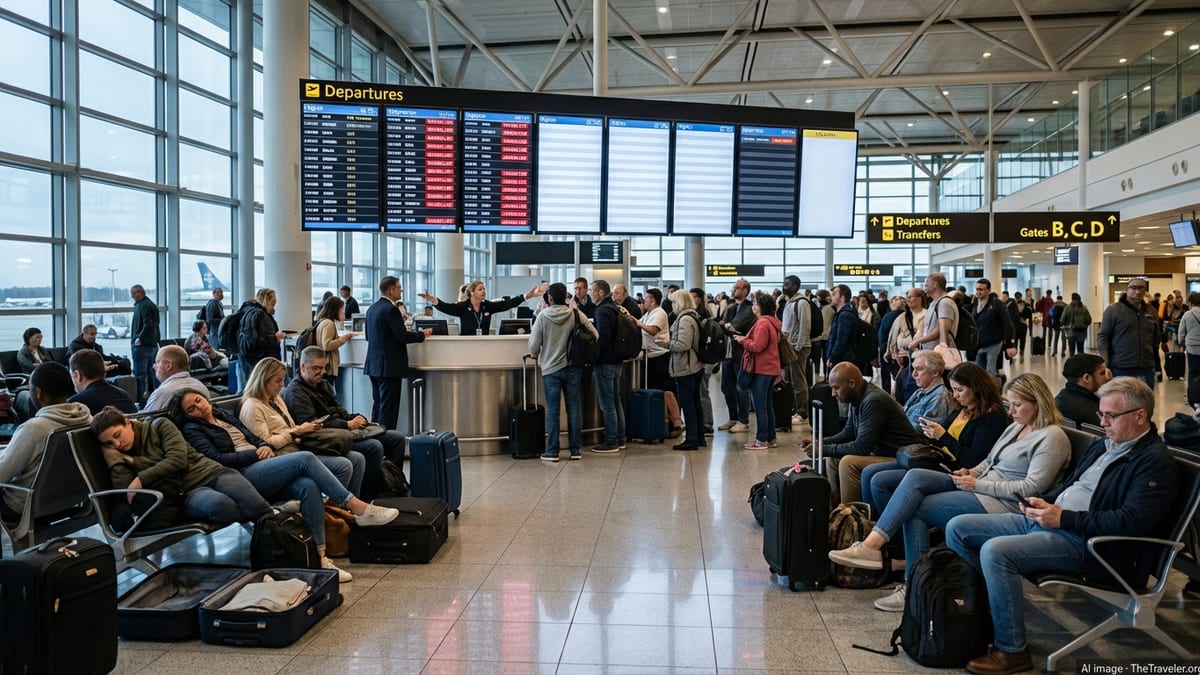
For passengers, the consequences can include last-minute schedule changes, longer routings that add connection risk, and irregular operations that affect baggage handling and onward travel. Travelers with tight connections, separate tickets, or nonrefundable ground arrangements are typically more exposed when the operational picture shifts.
What Japan is urging travelers to do now
Japan’s foreign ministry is directing travelers to reconfirm the existing safety information already issued for their specific destination and to keep monitoring updates from multiple sources, including flight status and local conditions. The ministry’s approach places responsibility on travelers to ensure they are reading the most current, destination-specific guidance rather than relying on general headlines.
The advisory also stresses personal safety behaviors that can become especially important during periods of heightened tension, including situational awareness and avoiding areas that could pose additional risk. Publicly available coverage of the notice also indicates a warning to avoid approaching military-related sites.
Another theme is communications readiness. Japan encourages travelers to maintain a clear plan for how to receive updates and how to contact assistance resources if conditions change, especially for those staying for an extended period or moving across borders within the region.
Photos, videos, and social posts: a specific caution in the current environment
Japan’s advisory includes a pointed warning about photography and videography involving military facilities or visible damage from attacks. The guidance is framed as a practical risk management step, noting that even distant images may draw enforcement attention depending on local rules and the security atmosphere.
For travelers accustomed to documenting trips, the message is a reminder that legal and cultural constraints can tighten quickly during crises. What is treated as routine travel content in some destinations may be treated differently in others, particularly around sensitive infrastructure, security forces, checkpoints, or locations tied to ongoing conflict dynamics.
Travelers transiting through airports in the region may also want to be cautious about photographing security screening areas, immigration counters, or restricted zones, as airport rules and local laws can carry penalties that are separate from airline policies.
Registration and preparedness: tools Japan highlights for overseas safety
Japan’s foreign ministry is again promoting “Tabi-Regi,” its travel registration service designed to help Japanese travelers receive updated safety information and facilitate contact during emergencies. Japan has also promoted its broader overseas safety information channels and related public outreach in 2026, including efforts to increase awareness of registration and preparedness.
For travelers, the practical value of registration systems can be greatest when conditions evolve rapidly. They can provide a direct channel for timely alerts, while also helping travelers keep critical itinerary details organized if rebooking becomes necessary.
Even for non-Japanese travelers, Japan’s advisory is a signal that the region’s operational environment may be more fragile than usual. For anyone with upcoming Middle East travel, a cautious approach typically means reviewing airline notifications frequently, keeping flexible connection buffers, and ensuring essential documents and contact details are accessible if plans change mid-journey.