


More news on this day
A preliminary investigation has linked last week’s UK air-travel disruption to a software defect that played out “in the space of a millisecond,” triggering a chain reaction that led to more than 2,000 cancelled flights and a multi-day scramble for airlines, airports, and passengers.
Get the latest news straight to your inbox!
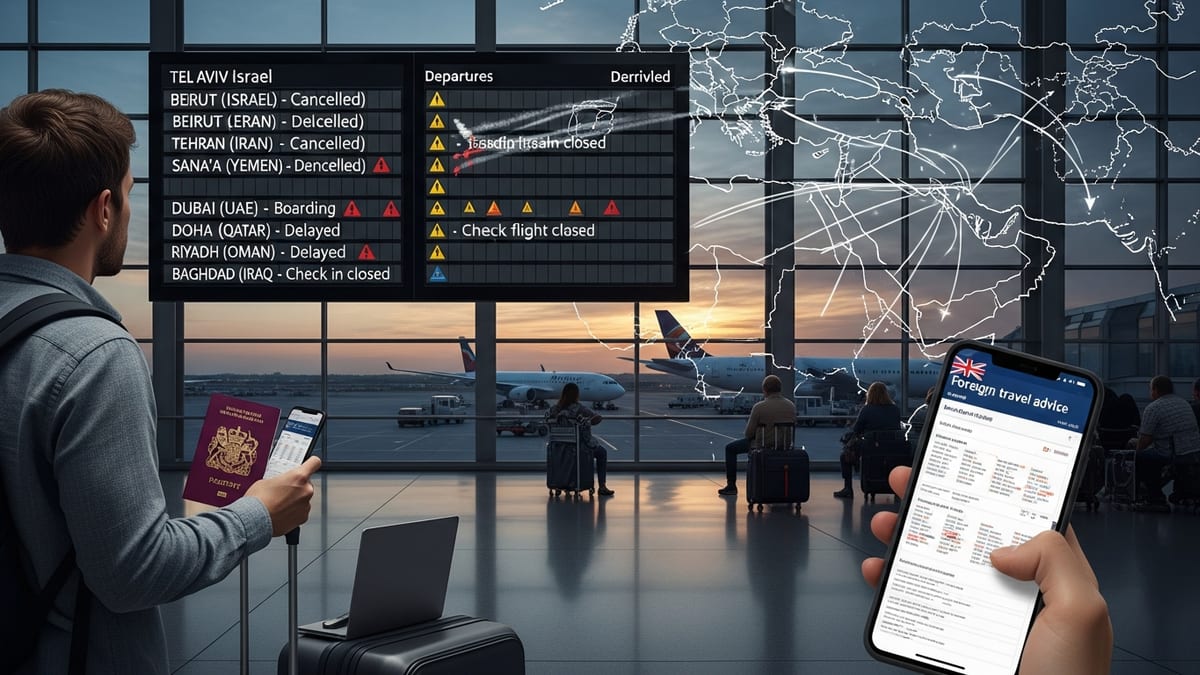
What happened and why it cascaded nationwide
Published coverage describes a failure inside the UK’s National Airspace System, operated by National Air Traffic Services (NATS), after an unusual sequence of events corrupted flight-data output. The problem occurred during the processing of a manual request for an aircraft code, when that task was interrupted by a higher-priority system message and then resumed incorrectly.
According to the preliminary report, the resulting corrupted output affected subsequent flight-data updates, reducing the information available to controllers. To keep operations safe while the system was restarted and flight data was reloaded, NATS imposed restrictions on aircraft movements.
Although the defect was tied to flights managed through the London Area Control Centre, the restrictions were applied across the UK network to allow the National Airspace System to be restarted and stabilized. Reports indicate the main restrictions lasted around six hours, but the operational aftershocks continued as aircraft and crews ended up out of position across Europe and beyond.
The scale: cancellations, delays, and the long tail
Across the disruption, published totals put cancellations above 2,000 flights to, from, or within the UK. Coverage also indicates that roughly 1,300 UK arriving and departing flights were cancelled on September 8 alone, with additional cancellations following as airlines worked through aircraft rotations, crew duty-time limits, and airport congestion.
Airports with dense schedules and limited spare gate capacity can struggle to absorb sudden, systemwide delays. When arrivals bunch up and departures are throttled, knock-on delays can spread quickly into the next day’s flying program, especially for short-haul carriers running tight turnarounds.
For travelers, the headline number of cancellations often understates the true impact. A single air-traffic constraint can trigger diversions, missed connections, and aircraft swaps, while the scramble for replacement seats can stretch for days during busy travel periods.
Why a “millisecond” bug can ground an aviation system
Modern air-traffic management depends on continuous, consistent data flows: flight plans, routing updates, and controller tools that present an up-to-date picture of aircraft movements. When that picture becomes unreliable, the safe response is to reduce complexity by limiting how many aircraft are allowed to move through constrained airspace at once.
The “millisecond” detail has drawn attention because it highlights how rare timing and sequencing conditions can still produce outsized disruption. In software terms, a defect can remain latent until a very specific combination of events occurs, then surface abruptly in operations that run 24/7 at national scale.
The UK has faced scrutiny over air-traffic resilience before. After a separate NATS failure in August 2023, the UK Civil Aviation Authority commissioned an independent review, which described the disruption as a major failure that affected hundreds of thousands of passengers. That earlier episode shaped public expectations that fixes would harden systems against repeat events, making the latest incident politically and operationally sensitive even as aviation stakeholders emphasize safety-first decision-making.
What passengers should do now if they were affected
For passengers caught up in the disruption, the first priority is documentation. Travelers typically benefit from keeping cancellation notifications, rebooking messages, and receipts for necessary expenses such as meals, ground transport, or overnight accommodation, since disruption can generate secondary costs even when the initial trigger was outside an airline’s control.
UK and EU-style consumer protections can hinge on the cause of the disruption and the airline’s responsibilities around care and re-routing. Published guidance around past large-scale air-traffic disruptions suggests passengers may still be entitled to assistance such as meals, accommodation when required, and alternative transport options, even when compensation is disputed.
Operationally, rebooking can be complicated when a nationwide event compresses demand into the following days. Travelers may see limited seat availability on the same airline, crowded partner options, and longer waits for customer-service channels. In that environment, checking for same-day airport standby possibilities and monitoring airline app updates can matter as much as email notifications.
What comes next for UK air-traffic resilience
NATS’ preliminary findings set the stage for deeper technical work: identifying the precise conditions that produced corrupted output, testing for similar timing-related defects, and improving detection so that anomalies are flagged before they force restrictive operating modes.
Reports indicate the incident has also reignited questions about governance, accountability, and operational resilience for a system that is both safety-critical and highly dependent on software. Airlines and passengers tend to judge performance not only by the initial outage window but by how quickly normal schedules return.
For travelers planning UK trips in the coming weeks, the practical takeaway is that air-traffic events can ripple far beyond the hour of the original failure. Checking flight status before heading to the airport, allowing extra time for connections, and building flexibility into itineraries remain the most effective ways to reduce the personal impact of a systemwide disruption.