


More news on this day
Severe weather across the Pacific typhoon belt combined with higher operating costs is causing widespread flight cancellations and delays at major Asian hubs, disrupting peak summer travel and stranding passengers across the region.
Get the latest news straight to your inbox!
Weather Turbulence Hits Peak Summer Schedules
Airlines and airports across East and Southeast Asia are confronting a convergence of monsoon rains and strong typhoons just as summer travel demand reaches its annual peak. Publicly available information shows that carriers serving Hong Kong, Taipei, Shanghai, Okinawa and other coastal gateways have preemptively scrubbed or rescheduled large portions of their schedules on days when storms are forecast to pass close to major cities.
In Taiwan and southern Japan, recent typhoon systems have led local and regional airlines to suspend most or all flights for several hours at a time, particularly when storm tracks bring high winds and heavy rain over key airports. Historical patterns in the region indicate that operators often halt entire domestic networks and a significant share of international services for safety reasons when signal levels rise and crosswinds exceed aircraft limits.
Along the Chinese coast, hubs such as Shanghai Pudong and Hong Kong International are especially exposed when storms enter the East China Sea or the Taiwan Strait. Reports from travelers on recent departures describe multi hour delays, rolling cancellations and last minute schedule changes as carriers try to reposition aircraft and crew around temporary airport closures and air traffic control restrictions.
Monsoon Conditions Strain South and Southeast Asian Gateways
Further south, seasonal monsoon systems are putting sustained pressure on airports in India and across mainland Southeast Asia. Persistent thunderstorms, low visibility and waterlogged runways at large urban hubs such as Mumbai, Bangkok and Manila are contributing to a higher incidence of go arounds, extended holding patterns and diversions, all of which cascade into knock on delays later in the day.
Aviation data referenced in regional media coverage shows that the June to August window corresponds with the highest concentration of weather related disruption in South and Southeast Asia. Afternoon and evening bank departures, when convective activity typically peaks, are particularly vulnerable as departure queues lengthen and arrival spacing increases for safety.
In Thailand and neighboring countries, published coverage highlights how even short bursts of intense rainfall can temporarily exceed drainage capacity at older terminals and aprons, forcing ground handlers to pause loading and fueling. When combined with rising passenger volumes, these stoppages translate into missed departure slots at congested airfields, pushing delays late into the night.
Ripple Effects Across Major Connection Hubs
Airline scheduling practices mean that disruptions at a handful of large hubs can reverberate across the wider Asian network and beyond. Regional analysis from industry publications notes that when a typhoon shuts down or restricts operations at one coastal hub, aircraft rotations are thrown off balance, leaving carriers short of planes and crew at downline airports many hours later.
Publicly available reports describe how cancellations at busy connecting points such as Hong Kong, Taipei, Shanghai and key Japanese and Korean airports often force airlines to prioritize long haul sectors while trimming shorter regional services. As a result, travelers on routes linking secondary Asian cities with major hubs may encounter abrupt same day cancellations or significant schedule changes, even if local weather remains benign.
Because many Asia Europe and trans Pacific itineraries rely on one or two central hubs, extended weather events can also strand passengers far from their final destinations. When aircraft and crews are out of position for multiple days, network planners frequently consolidate lightly booked flights onto a smaller number of departures, producing backlogs that take several days to clear once conditions normalize.
Operational and Cost Pressures Complicate Recovery
The process of restoring normal schedules after large scale disruption has become more complicated as airlines confront higher fuel prices, tight staffing levels and constrained airport capacity. Business coverage in the region has highlighted how sharp increases in jet fuel costs over the past year have pushed some carriers to trim marginal routes and reduce buffer capacity, leaving fewer spare aircraft available to absorb shocks.
At heavily used hubs, runway and gate utilization is already close to maximum during peak periods, limiting an airline’s ability to add recovery flights after a wave of cancellations. Airport operators in several Asian cities have pointed to parking shortages and air traffic control workload as factors that slow the pace at which airlines can reintroduce flights once storms pass and visibility improves.
Reports also indicate that ground handling and maintenance teams are working close to their staffing limits in many markets. When multiple weather events occur in quick succession, accumulated overtime and crew duty limits can force operators to keep aircraft on the ground longer than passengers might expect, even in clear skies, extending the disruption.
What Travelers Can Expect in the Weeks Ahead
Based on historical climate patterns and current seasonal forecasts, much of East, South and Southeast Asia is likely to remain vulnerable to further weather related aviation disruption through at least late August. The combination of warm sea surface temperatures, active typhoon formation and ongoing monsoon rainfall suggests that airlines will continue to adjust schedules at short notice around key hubs.
Public travel advisories and airline communications emphasize that passengers booked on flights through coastal hubs in the western Pacific and South China Sea should be prepared for significant day of travel changes when new storm systems are identified. Same day notifications about cancellations and rebookings have become increasingly common as carriers attempt to anticipate airport closures and airspace restrictions.
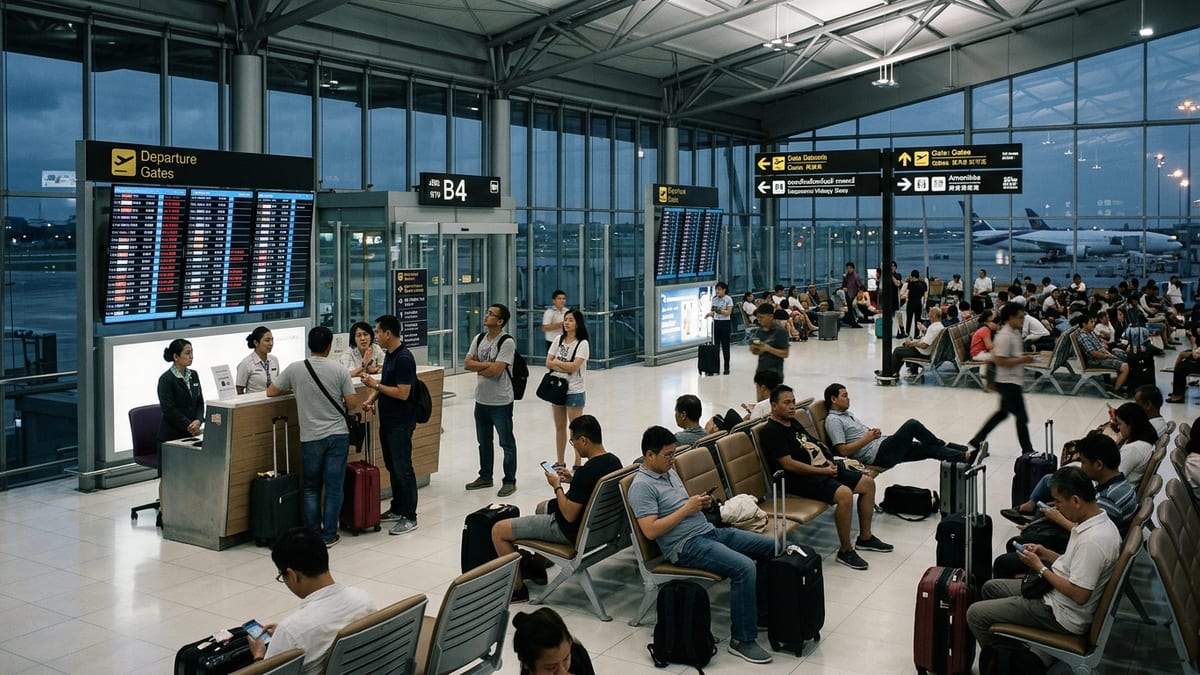
Industry observers note that while safety driven cancellations are unlikely to diminish, some airports are gradually improving drainage, runway monitoring and terminal operations to reduce delay durations once storms pass. For now, however, the reality for many travelers using Asian aviation hubs in the heart of the rainy season is a landscape of crowded terminals, extended waits and a higher than usual risk of journey disruption.