


More news on this day
Severe summer storms and airspace constraints around Washington and several major East Coast hubs triggered a fresh wave of travel disruption across the United States, with more than 1,092 flights canceled and at least 3,746 delayed in a single day, according to widely cited aviation data trackers and airline operational updates.
Get the latest news straight to your inbox!
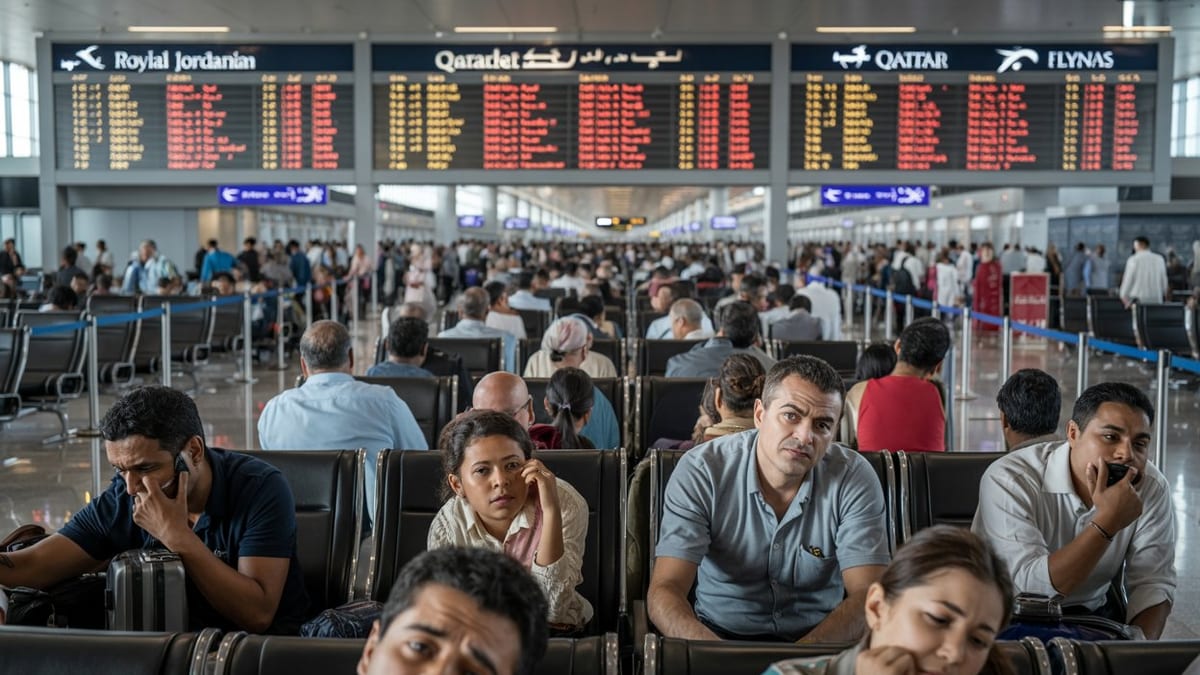
Storm Cells, Heat and Congested Skies Combine
Reports from airline operations centers and flight-tracking platforms indicate that a band of slow-moving thunderstorms rolling through the Mid-Atlantic and Northeast played a central role in the latest spike in cancellations and delays. Those storms repeatedly flared over key corridors used by traffic into and out of Washington, New York and other densely traveled airspace, forcing air traffic managers to slow arrivals and departures for safety.
In the Washington region, a combination of convective weather and temporary traffic management initiatives led to extended ground delays at Ronald Reagan Washington National, Washington Dulles International and Baltimore/Washington International. Passengers reported rolling departure estimates and aircraft held at gates while controllers spaced out flights and rerouted traffic around the worst of the storms.
Heat and humidity elsewhere in the country added another layer of complexity. Where temperatures pushed toward seasonal highs, airlines needed longer takeoff rolls and tighter weight calculations, which can translate into payload limits or last-minute swaps that ripple through already strained schedules. Smaller regional airports feeding into the East Coast hubs also saw disruptions as thunderstorms briefly closed arrival and departure windows.
Operational data suggests that while no single storm cell was unusually strong, the timing and location of repeated weather pulses over some of the nation’s busiest corridors magnified their impact. Each short-lived ground stop or arrival flow restriction created queues that took hours to clear, contributing to the elevated number of delayed flights logged nationwide.
Washington Airports Among Hardest Hit
Publicly available information from airline advisories and airport status boards shows that the Washington area bore a significant share of the disruption. Short-haul flights into Reagan National, a slot-controlled airport hemmed in by airspace restrictions along the Potomac River, proved particularly vulnerable once thunderstorms and low ceilings moved across departure and arrival paths.
At Dulles, the region’s primary long-haul international gateway, a series of arrival metering programs and temporary ground delay measures pushed back departure times and forced some inbound flights to hold or divert. Travelers on transcontinental and overseas routes reported missed connections and overnight rebookings as airlines struggled to reposition aircraft and crews.
Baltimore/Washington International, which hosts a dense schedule of domestic point to point flights, experienced its own wave of cancellations and delays as carriers trimmed rotations that could no longer operate within duty time limits for pilots and flight attendants. Schedules that rely on tight turnarounds between aircraft arrivals and departures proved especially fragile once morning and midday banks slipped behind.
These pressures coincided with a surge in leisure and business travel typical of early August, leaving fewer empty seats for same day rebooking. As a result, some travelers departing or connecting through Washington area airports faced multi day waits for the next available itinerary, even when their flight disruption was only a matter of hours on the operational side.
Nationwide Tally Reflects Fragile Summer Operations
The combined total of 1,092 cancellations and 3,746 delays underscores how sensitive the national aviation system remains to localized shocks during peak travel periods. Industry analysts note that many airlines are operating close to pre pandemic capacity with leaner spare aircraft and crew reserves, reducing their ability to absorb sudden weather or airspace constraints without widespread schedule adjustments.
Data compiled from widely referenced flight-tracking dashboards shows that the heaviest disruption clustered around a handful of large carriers with significant operations along the East Coast. Hubs in the New York area, including John F. Kennedy International, LaGuardia and Newark Liberty, also recorded elevated delay rates as weather patterns affecting Washington migrated northward through the day.
The cascading nature of airline schedules meant that knock-on effects were soon visible far from the original storm zone. Flights originating on the West Coast and in the central United States arrived late or departed without connecting passengers whose inbound trips were disrupted, prompting additional equipment swaps, rolling delays and, in some cases, preemptive cancellations to reset aircraft positions.
Comparisons with previous high-impact days suggest that while the latest disruption did not reach the scale of historic winter storm events, it reflects similar dynamics. A surge of weather over a constrained region, interacting with heavy seasonal demand and tight staffing, quickly produced a nationwide pattern of missed connections and extended journey times for tens of thousands of travelers.
Travelers Face Long Lines, Waivers and Limited Options
At impacted airports, travelers encountered crowded customer service desks, long waits for phone and app based assistance, and limited availability of same day alternatives. Social media posts and public forum discussions from passengers at Washington, New York and other hubs described hours spent queuing to rebook and difficulty securing hotel vouchers once evening cancellations mounted.
Several major airlines responded by issuing or expanding flexible travel policies, allowing customers headed to or through affected airports to change their itineraries without additional change fees and, in some cases, fare differences. Publicly posted waivers generally covered travel dates spanning the worst of the storm activity, though availability of seats on rebooked flights remained constrained.
Ground transportation providers around major hubs reported an uptick in demand from passengers opting to complete short haul portions of their trip by car or rail rather than waiting for a new departure slot. In corridors such as Washington to New York or Philadelphia, some travelers shifted entirely to trains or intercity buses when they could no longer rely on same day flight options.
Consumer advocates pointed to the disruption as a reminder for passengers to monitor flight status frequently, especially during periods of unsettled weather. They also emphasized the importance of understanding airline policies on refunds and rebooking when severe delays or cancellations make original travel plans unworkable.
What the Disruption Reveals About US Air Travel Resilience
Aviation analysts view the latest wave of cancellations and delays as part of a broader pattern of stress in the United States air travel system during high demand seasons. While overall reliability has improved compared with some of the most disruptive periods of 2022 and 2023, operational data and recent storm related events suggest that airlines and airports continue to operate with limited margin for error.
Industry research and federal statistics published in recent years highlight the complex interplay between weather, airspace capacity, crew scheduling rules and airline network design. When a disruption targets a region that hosts multiple large hubs, such as the Mid-Atlantic and Northeast, the resulting congestion can quickly spread across the country, even on routes untouched by the original storms.
Policy discussions in Washington have increasingly focused on how to strengthen passenger protections and clarify refund rights when delays and cancellations disrupt travel. New regulations and proposed rules emphasize timely notice of significant schedule changes and compensation in cases where disruptions fall within a carrier’s control, while recognizing that weather related delays remain an inherent risk of air travel.
For travelers, the day marked by 1,092 cancellations and 3,746 delays serves as another indicator that summer flying remains vulnerable to sudden operational shocks. Experts suggest building extra time into itineraries that involve tight connections, avoiding the last flight of the day when possible, and considering alternative airports around Washington and other congested hubs when planning critical trips.