


More news on this day
A Delta Connection flight from Detroit to Elmira, New York, operated by SkyWest Airlines as Flight SKW3949, returned to Detroit Metropolitan Wayne County Airport shortly after departure, according to flight-tracking information and early media reports.
Get the latest news straight to your inbox!
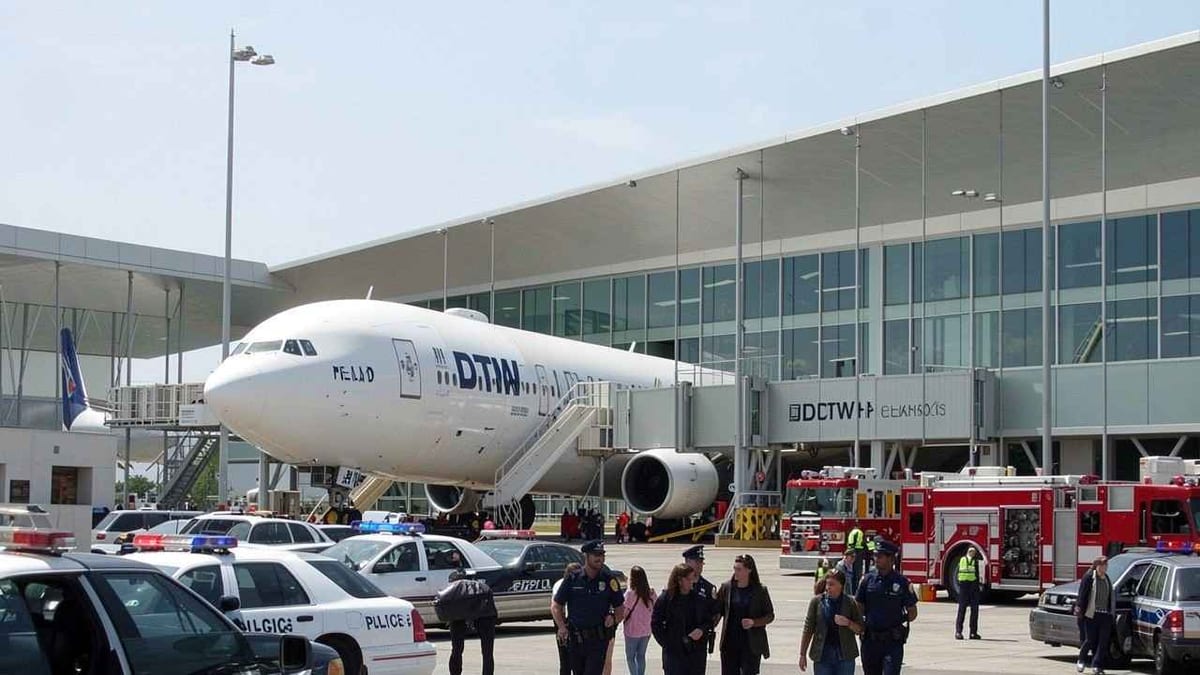
Regional Jet Turnback Draws Attention on Detroit–Elmira Route
The flight, operated with a Mitsubishi CRJ-900LR regional jet under the Delta Connection banner, was scheduled to connect Detroit with Elmira/Corning Regional Airport in upstate New York. Publicly available data indicates the aircraft departed Detroit as planned before discontinuing its eastbound track and turning back toward the hub.
Tracking information shows the CRJ-900LR climbed out of Detroit and leveled off at a relatively modest cruising altitude for the short sector before initiating the return. The aircraft subsequently landed at Detroit without further incident. There were no immediate indications of injuries or on-board emergencies in the early reporting surrounding the diversion.
While diversions of regional jets are not uncommon, turnbacks on shorter routes tend to attract interest from travelers, particularly when they affect smaller communities that rely on limited daily frequencies. The Detroit–Elmira link, served by Delta Connection carriers, is a key pipeline for passengers connecting from a global network into New York’s Southern Tier region.
As of the latest publicly visible information, the specific reason for the return to Detroit had not been detailed in official summaries. In similar cases involving regional jets, turnbacks can stem from a range of operational considerations including technical discrepancies flagged by the crew, cabin-related issues, or emerging weather and airport conditions that alter the viability of continuing to the destination.
Impact on Elmira-Bound Travelers and Regional Connectivity
For passengers booked on Flight SKW3949, the return to Detroit meant additional disruption on a route that typically offers only limited daily options. Travelers on smaller city pairs often depend on a single regional jet rotation to connect onward to larger domestic or international flights. When that aircraft does not reach its destination as scheduled, same-day alternatives can be constrained.
In hub-and-spoke networks built around major airports such as Detroit, flights to smaller communities like Elmira perform an essential role in maintaining access to the broader system. A cancelled or heavily delayed sector can lead to missed onward connections, extended rebooking windows, and in some cases overnight stays when substitute services are not immediately available.
Regional markets in the U.S. have been particularly sensitive to changes in service patterns in recent years, as airlines adjust fleets, staffing, and schedules. Diversions and turnbacks, even when managed safely and routinely from an aviation perspective, can reinforce traveler perceptions that smaller airports are more vulnerable to disruption than major hubs with multiple daily frequencies.
Some passengers on affected flights typically turn to social media or online forums to compare experiences and seek updates on rebooking options, though early public commentary around this particular Detroit–Elmira flight remained limited at the time of writing.
The Mitsubishi CRJ-900LR in Delta Connection Service
The Mitsubishi CRJ-900LR is a long-range variant of the widely used CRJ-900 regional jet family, configured by Delta Connection carriers for roughly 70 to 76 passengers depending on layout. The type is a workhorse on shorter and medium-haul routes across the United States, linking secondary markets to major hubs such as Detroit, Minneapolis, and Atlanta.
Fleet information published by SkyWest and industry references describe the CRJ-900 as a twin-engine regional jet with a typical cruising altitude comparable to larger mainline aircraft, but optimized for thinner routes where demand does not support narrowbody jets. Many of the CRJ-900s operating for Delta Connection feature refreshed “Atmosphere” interiors with updated bins, lighting, and cabin finishes, reflecting ongoing investment in the regional product.
Operationally, regional jets like the CRJ-900LR are subject to the same strict maintenance and safety oversight as larger aircraft. When technical alerts, abnormal indications, or other concerns arise, crews often opt to return to the departure hub, where maintenance resources and backup aircraft are more readily available. Such decisions, while disruptive to schedules, are treated within the industry as a conservative approach to risk management.
Publicly available performance data for the type does not indicate systemic issues unique to the CRJ-900LR on domestic U.S. networks. Instead, individual diversions are usually assessed in the context of route-specific conditions, aircraft history, and operational constraints on the day of flight.
How Flight Tracking Illuminates Diversions
For this Detroit–Elmira service, much of what is known in the immediate aftermath comes from flight-tracking platforms that aggregate transponder data and air traffic information. Such tools typically display departure and arrival times, altitude and speed profiles, and visible route deviations, giving observers an outline of the event even before detailed explanations become publicly available.
In cases where a flight aborts its route and returns to the origin, the track often shows a relatively early turnback, particularly on short sectors. The combination of a modest cruise altitude and a rapid reversal toward the departure airport tends to signal that the crew identified an issue before the flight progressed too far toward the destination.
Online aviation communities and social channels frequently use this data to reconstruct the timeline of a diversion and compare it with weather conditions and airport status reports along the planned path. While such reconstructions are inherently limited without access to internal airline or air traffic documentation, they do provide a consistent baseline view of what occurred in the airspace.
For travelers concerned about what a diversion means for their safety, aviation safety specialists often emphasize that a precautionary return is a sign of conservative operational decision-making rather than an indicator of increased risk. The safe, routine landing of the aircraft back at Detroit in this instance aligns with that broader pattern.
Ongoing Scrutiny of Reliability in Regional Air Service
The diversion involving Flight SKW3949 comes amid heightened attention to the reliability of regional air services across the United States. In many smaller cities, regional jets are the primary or only link to major hubs, and any irregular operation immediately affects local connectivity for both leisure and business travelers.
Industry data over recent years highlights that regional operations have faced staffing pressures, aircraft retirements, and evolving contract structures between mainline carriers and their regional partners. These factors can influence schedule robustness, turnaround times, and the availability of spare aircraft when irregularities occur.
Observers note that events such as a Detroit turnback on the Elmira route are best understood as part of this broader operational landscape. While each diversion has its own specific triggers, the way airlines manage recovery flights, customer rebooking, and communication plays a central role in shaping traveler confidence in regional networks.
As additional information emerges through official channels, regulatory databases, or subsequent reporting, the Detroit–Elmira diversion involving the SkyWest-operated CRJ-900LR is likely to be viewed as one more data point in the ongoing discussion about how U.S. airlines sustain reliable access for smaller communities connected through large hub airports.