


More news on this day
Air travelers across the United States faced another difficult day as more than 1,579 flights were delayed and at least 128 were canceled, according to live tracking data, with disruptions rippling through major hubs and regional airports during one of the busiest stretches of the summer travel season.
Get the latest news straight to your inbox!
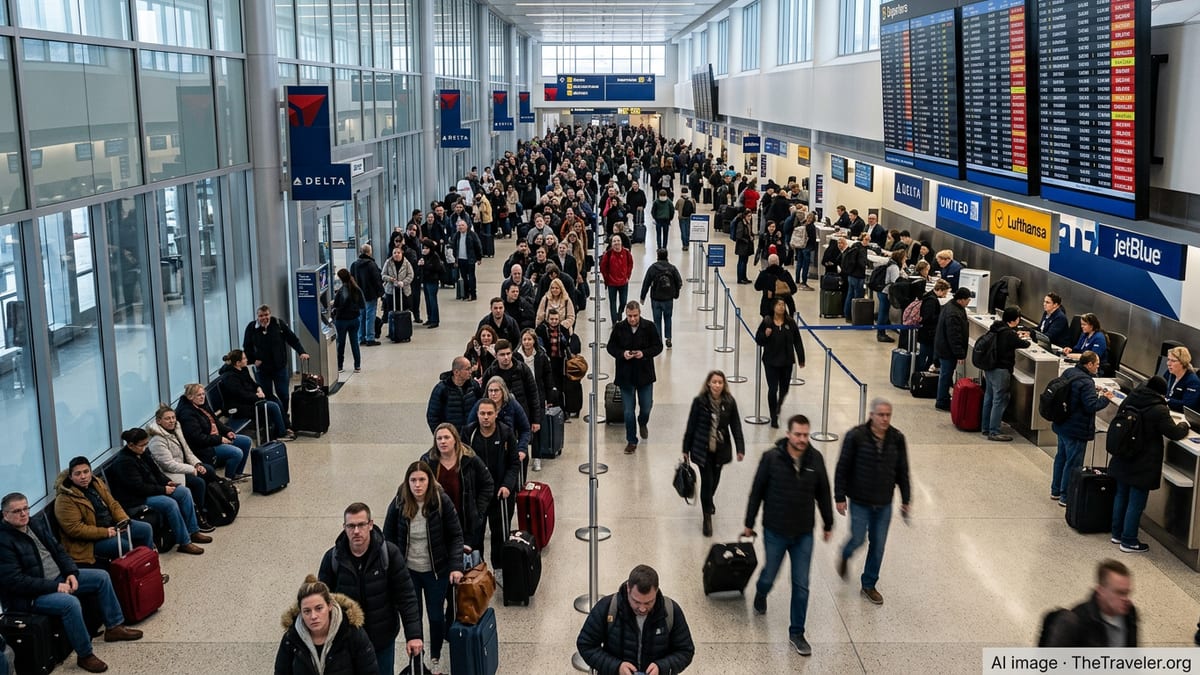
Storms, Congested Airspace and a Packed Summer Travel Calendar
Preliminary tracking figures indicate that the latest disruptions are concentrated along the East Coast and parts of the Midwest, where convective storms and heavy cloud build-ups have forced aircraft to reroute or hold for departure. Weather-related capacity restrictions tend to reduce the number of flights air traffic controllers can safely handle per hour, which in turn creates queues on the ground and in the air.
While the total number of canceled flights remains modest compared with some of the most severe weather events of recent years, the combination of 1,579 delays and 128 cancellations has been enough to strain airport operations and airline schedules. The impact is magnified during August, when U.S. carriers operate near peak capacity and aircraft and crew have less slack to absorb disruptions.
Publicly available information shows that the current problems come against a backdrop of increasingly fragile summer operations. Federal data from recent seasons has highlighted how storms, high demand and tight staffing can quickly trigger widespread knock-on effects for airlines, leaving planes and crews out of position for subsequent departures.
In this latest episode, several major airports serving New York, Washington and Boston have reported holding patterns or temporary ground stops, which slow departures from other parts of the country bound for those constrained airspaces. Even when storms are localized, the knock-on impact can stretch nationwide once connections and aircraft rotations are taken into account.
Major Hubs Shoulder the Brunt of the Disruptions
The highest concentrations of delays and cancellations are appearing at key coastal hubs, where traffic volume is dense and routings converge. Airports serving the New York region, including John F. Kennedy, LaGuardia and Newark Liberty, have seen extended departure queues, affecting both domestic and transatlantic services.
Further south, Washington-area airports and other East Coast gateways have reported slower operations at peak hours, contributing to late-arriving aircraft that then delay subsequent departures. Similar pressures are being observed at major connecting hubs in Atlanta, Charlotte and Chicago, where a limited number of open runway slots can quickly back up an afternoon of departures.
Reports from travelers indicate that the disruptions are not limited to any single carrier or alliance. Instead, a mix of full-service and low-cost airlines has been affected as they compete for the same constrained airspace and runway capacity. When one airline’s inbound flights are delayed, other carriers can still be forced to wait in sequence on crowded taxiways or in airborne holding stacks.
Regional airports have also felt the effects, particularly those that rely on a small number of daily flights to larger hubs. When a single inbound aircraft arrives late or a turn is extended for operational reasons, an entire day’s schedule for that city pair can slip, leaving passengers with fewer rebooking options.
How Delays Cascade Through Airline Networks
Operational data and past disruption analyses show that today’s late departure can easily become tomorrow’s missed connection. Airlines typically schedule aircraft to operate several legs in a single day, moving from hub to hub or linking smaller cities to major gateways. A delay of even 45 minutes early in the rotation can compound as the day progresses, especially when turnaround times are tight.
This cascading effect becomes more pronounced when airports experience short periods of halted operations due to thunderstorms or temporary airspace closures. As departures pause, crews can reach their legally mandated duty limits, and aircraft destined for future flights end up in the wrong place at the wrong time. Once this happens, even improving weather does not immediately restore normal operations, as airlines must reshuffle aircraft, gates and flight crews.
Research using historical Bureau of Transportation Statistics data has underscored how a relatively small number of highly disrupted flights at major hubs can account for a significant share of passenger delays nationwide. When hubs face capacity reductions, connecting passengers are particularly vulnerable, since missing one flight can mean hours of additional waiting for the next available seat on a heavily booked route.
For travelers, the impact is often felt in long queues at customer service desks and crowded gate areas as airlines attempt to rebook disrupted passengers. The latest round of delays is consistent with patterns seen in prior summers, where even short-lived storms or localized traffic-management constraints have led to late-night arrivals and missed onward connections.
Strains on Crews, Equipment and Passenger Experience
Beyond the raw numbers, the current wave of disruptions is highlighting ongoing strains in staffing and fleet deployment. Although airlines have rebuilt schedules since the pandemic years, industry briefings and testimony in recent months have pointed to continuing challenges in recruiting and training pilots, flight attendants and maintenance personnel at the pace of resurgent demand.
When operations are already running close to their limits, irregular events such as severe weather or temporary airspace constraints can more easily tip networks into dysfunction. Crews that have been delayed earlier in the day may time out just as they are needed to operate evening departures, forcing cancellations even when aircraft are available and weather has improved.
Publicly accessible incident reports and testimony from previous seasons have also highlighted the role of airport infrastructure. Terminals designed for lower passenger volumes, limited gate space and older baggage-handling systems can slow recovery once a backlog has formed. During busy periods, this can result in aircraft waiting for available gates and travelers facing extended waits to retrieve checked bags after delayed arrivals.
For passengers on the ground, the experience often includes a mix of rolling delay notifications, gate changes and, in some cases, overnight stays when rebooking options are limited. Travel forums and social media posts over the past 48 hours describe packed hotel shuttles, long rental-car lines and travelers opting to switch to trains or drive when short-haul flights are repeatedly pushed back.
What Travelers Can Do on High-Disruption Days
With more than 1,579 flights delayed and 128 canceled across the United States on a single day, travel specialists and consumer advocates routinely advise passengers to build additional margin into their plans whenever storms or large-scale constraints are in the forecast. That can include choosing morning departures, which are less likely to be affected by earlier knock-on delays, and avoiding tight connections through chronically congested hubs.
Public guidance from government transportation agencies and airline customer-service channels also emphasizes the importance of monitoring flight status frequently on days when disruptions are widespread. Mobile apps and airport information boards can show when flights are being held, retimed or rerouted, allowing passengers to adjust ground transport and accommodation plans.
Consumer groups additionally encourage travelers to familiarize themselves with each airline’s delay and cancellation policies before departure. While compensation rules differ by carrier and circumstance, knowing in advance what is typically offered in cases of severe delays or missed connections can help passengers advocate for meal vouchers, hotel placements or alternative routings when irregular operations occur.
As the peak summer travel period continues, industry observers expect that episodic days of heavy disruption will remain a feature of the season. The latest tally of delayed and canceled flights adds to a growing record of how tightly stretched U.S. air travel has become, and how quickly adverse conditions in a few key locations can reverberate from coast to coast.