


More news on this day
Air travelers across the United States faced widespread disruption as more than 2,200 flights were delayed and at least 546 were canceled, snarling schedules at major hubs and leaving passengers contending with long lines, missed connections and overnight airport stays.
Get the latest news straight to your inbox!
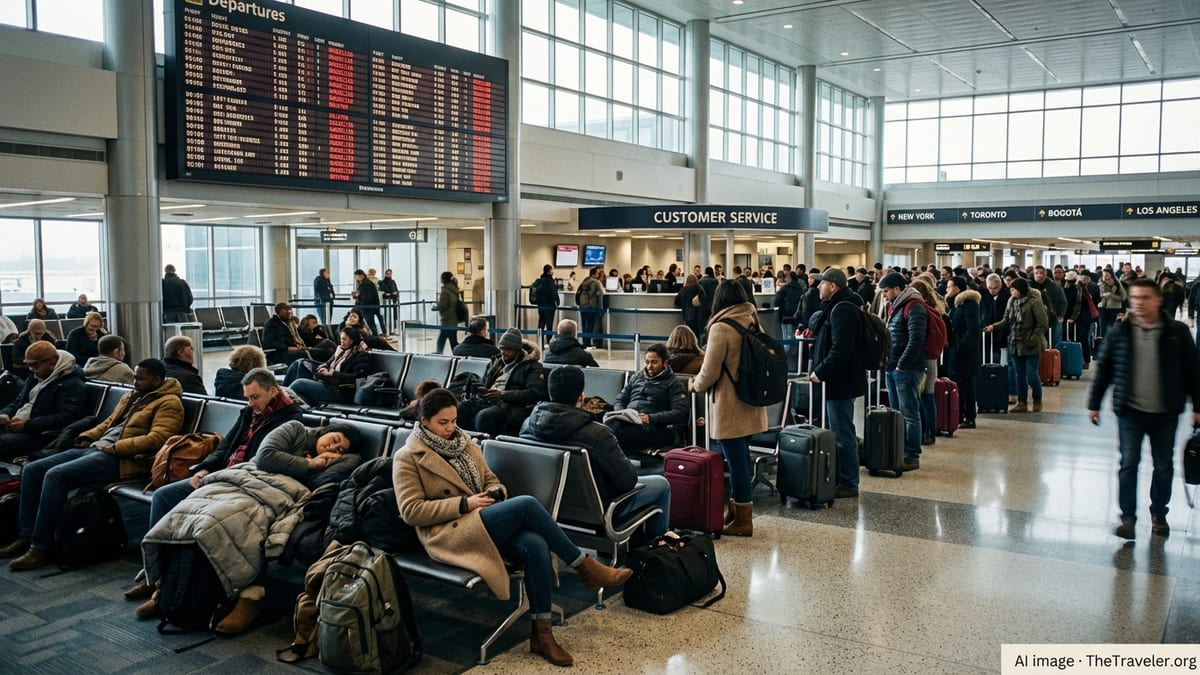
Delays Mount Across Major U.S. Hubs
Data from national flight-tracking dashboards and airline-status feeds indicate that delays climbed into the thousands as the day progressed, with cancellations topping 500 flights. The disruption spread across multiple carriers and airports, suggesting a system-wide strain rather than an isolated airline outage.
Large hub airports in the Northeast and Mid-Atlantic, along with busy connections in the Midwest and South, experienced some of the heaviest impacts. Travelers reported extended departure queues, rolling delay notifications and sudden cancellations even after boarding, underscoring how quickly conditions deteriorated once schedules began to slip.
Airline operations teams appeared to be balancing tight turn times, aircraft availability and crew duty limits. Once early flights ran late, aircraft and staff were left out of position for later departures, creating a ripple effect that pushed disruptions into the evening peak and beyond.
The pattern is consistent with broader trends in the U.S. aviation network, where high summer and holiday demand can leave airlines with little slack to recover from even a few hours of weather or traffic constraints.
Weather and Congested Skies Help Trigger the Chaos
Publicly available aviation and meteorological information shows that unstable weather in key regions once again played a central role in the disruptions. Thunderstorms and low clouds commonly prompt air-traffic flow constraints, forcing aircraft to fly longer routes, wait on the ground for takeoff slots or divert around storm cells.
When storms pass over dense corridors on the East Coast or around major Midwest hubs, the effect can multiply. Ground stops or reduced arrival and departure rates at a few big airports can back up traffic across the national network, as planes and crews that should be cycling through one city are instead waiting out the weather in another.
In this latest episode, flight-tracking data showed clusters of delays building around several large airports at roughly the same time. That pattern is typical when storms move along an active front, causing a rolling series of constraints that make it difficult for air traffic managers to fully reopen the system before the next wave of weather arrives.
Airports can usually absorb routine delays of 15 or 30 minutes, but once average waits stretch well past an hour and cancellations mount, recovery becomes far more complex. Aircraft may time out for required maintenance checks, and crews can hit federal duty limits, forcing airlines to scrub flights even after skies begin to clear.
Operational Strains Expose a Fragile System
Industry analyses and government reports in recent years have highlighted how tight the margins have become in U.S. commercial aviation. Airlines are operating fuller schedules with high load factors, using aircraft and crews intensively to meet demand. That leaves limited backup capacity when something goes wrong.
Persistent staffing challenges in some parts of the system, including maintenance and ground handling, can slow turnarounds and increase the chance that minor issues cascade into significant delays. If an aircraft requires additional checks after a hard landing or encounters a technical fault, it may be pulled from service, forcing schedule changes down the line.
On the government side, the air traffic control workforce has been under sustained pressure, particularly at busy coastal facilities. When staffing is tight, traffic managers may have to impose flow restrictions more quickly or keep them in place longer during marginal weather, contributing to bottlenecks during peak travel periods.
These structural constraints mean that a day with more than 2,200 delayed flights and hundreds of cancellations is no longer a rare event. Instead, it is part of a repeating pattern in which weather or technical problems expose how little resilience is built into the system.
Travelers Face Long Waits, Extra Costs and Limited Support
Accounts shared on social platforms and in local news coverage described travelers sleeping in terminals, missing family events and scrambling to rebook after last-minute cancellations. Some passengers reported rolling delays that stretched through the day before their flights were ultimately scrubbed, leaving them to negotiate hotel rooms and new itineraries late at night.
Unlike in parts of Europe, where regulations define compensation thresholds for long delays and cancellations, U.S. rules focus more narrowly on refunds when a flight is canceled or significantly changed. Airlines outline their own policies for meals, hotel vouchers and rebooking assistance, which can vary depending on whether the disruption is categorized as weather-related or within the carrier’s control.
When disruptions reach the scale seen in this latest wave, call centers, customer service desks and digital channels often become overwhelmed. Travelers may face long hold times and limited flight options, particularly in smaller markets where only a few daily departures are available. That can turn a single canceled flight into a multi-day delay for some passengers.
Consumer advocates regularly encourage travelers to monitor their flight status in real time, keep essential items in carry-on bags and consider earlier departures during peak travel periods to leave more room for rebooking if plans go awry.
What to Watch in the Coming Days
Operational data from prior disruption events suggest that it can take airlines at least a full day, and sometimes longer, to restore normal schedules after a nationwide shock. Aircraft and crews must be repositioned, maintenance checks updated and backlogged passengers accommodated before operations fully stabilize.
Travelers with flights scheduled in the next 24 to 48 hours may still see lingering effects, including minor schedule changes, swapped aircraft types and isolated cancellations as carriers work to rebalance their networks. Those connecting through the hardest-hit hubs are generally most at risk of further inconvenience.
Aviation analysts note that as demand remains strong and schedules stay tightly packed, episodes involving thousands of delays and hundreds of cancellations are likely to continue. Attention is increasingly focused on whether additional investment in staffing, technology and infrastructure can add resilience, or whether travelers will need to build more flexibility into their plans.
For now, on days when more than 2,200 flights are delayed and hundreds are canceled across the United States, the experience for many passengers is one of uncertainty, crowding and long waits, with little immediate sign that the underlying pressures on the system are easing.