


More news on this day
Passengers travelling through Manchester Airport today have faced another bout of disruption, with live flight-tracking data indicating more than 20 delayed departures and several services cancelled across the busy northern hub.
Get the latest news straight to your inbox!
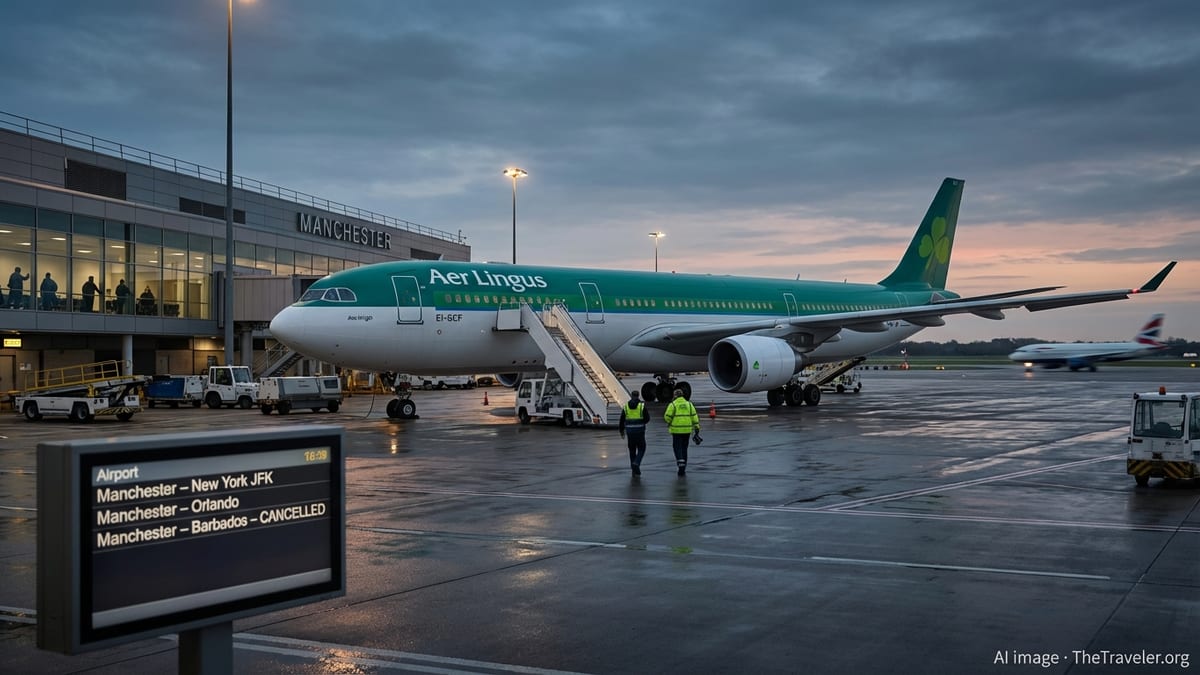
Live data shows clusters of delays across key departure waves
Publicly available departure boards and flight-tracking platforms for Manchester Airport on 30 August 2026 show a significant concentration of delays affecting services throughout the day. While the majority of departures operated broadly to schedule, more than 20 flights registered late pushes from the gate, with delays ranging from modest schedule slips to waits of over an hour for some passengers.
Departure listings compiled by specialist aviation data sites indicate that disruption has been spread across multiple airlines and destinations, particularly during the morning and early afternoon peaks when Manchester typically handles a high volume of leisure traffic to Spain, Greece and other Mediterranean holiday spots, alongside major European hubs such as Amsterdam, Paris and Zurich.
Airport-information aggregators tracking today’s operations at Manchester report more than 300 scheduled departures, giving context to the disruption: while only a minority of flights have been affected, the volume is large enough to impact several thousand passengers over the course of the day.
Separate statistics published on a live disruption dashboard that rates airports by the scale of delays and cancellations place Manchester in a higher-impact category today, with a score influenced by both the number of delayed flights and the average length of delay.
Three cancellations add to disruption for outbound travellers
Alongside the delayed services, at least three departures from Manchester Airport today have been cancelled, according to cross-checked listings on real-time tracking and schedule sites that monitor status changes throughout the day. These cancellations appear across different time bands rather than being confined to a single operational window.
Cancellation statistics published by a global flight-tracking platform for Manchester on 30 August show a small but notable number of flights removed from the schedule, set against a much larger tally of delays. While cancellations represent a fraction of total planned operations, they typically carry a disproportionate impact for affected travellers, who may need to be rebooked on later services or routed via alternative airports.
Publicly available information suggests today’s cancellations sit below levels seen during major disruption events but are still significant for individual passengers, particularly where alternative departures are limited or already heavily booked during the late-summer holiday period.
Travel-data providers note that even a handful of cancellations can create secondary pressure on airport infrastructure, as airlines process rebooking queues and ground-handling teams manage baggage retrieval for customers who no longer have an onward flight.
Weather and operational factors likely contributors
While no single dominant cause has been publicly identified for today’s pattern of delays and cancellations at Manchester Airport, available operational data points to a combination of factors. Live digital ATIS and meteorological information for the airport indicate changeable conditions through the day, including showers in the wider forecast window and cloud bases low enough at times to require additional spacing between arrivals and departures.
Forecasts for Manchester on 30 August highlight the potential for periods of heavy rain and thunderstorms in the region, conditions that can trigger air-traffic management restrictions, short-term runway configuration changes or reduced arrival and departure rates. Even where the most intense weather cells pass to the south or east of the airfield, associated routing adjustments in UK airspace can have knock-on effects for outbound schedules.
Operational briefings published for pilots today reference wet runway conditions and the use of specific departure runways, underlining that ground and air-traffic teams have been actively managing throughput. When combined with the typical late-August leisure peak and a tightly timed schedule, even modest constraints can quickly translate into rolling delays across multiple banks of flights.
Industry data from recent seasons also shows that Manchester has at times experienced elevated delay levels compared with some other UK airports, particularly during busy summer weekends, making it more sensitive to any operational stressors such as weather or airspace congestion.
Knock-on effects for connections and evening departures
The disruption recorded at Manchester today is not confined to the initial departure slots. Data from departures boards later in the afternoon indicates that some flights pushed back significantly behind schedule after operating aircraft arrived late from earlier rotations, a common pattern when morning delays cascade through the timetable.
Services linking Manchester with major European hubs such as Amsterdam, Paris and Istanbul play a key role in connecting passengers onwards to long-haul destinations. When these feeder flights depart late, missed connections and rebookings can ripple well beyond the UK. Travel-analytics sites that track typical connection windows note that relatively short delays can be manageable, but longer waits begin to erode the buffer passengers rely on to make onward flights.
As the day has progressed, disruption has also touched some early-evening leisure departures, with live boards showing revised departure times that edge deeper into the evening. For families and holidaymakers returning home before the new school term, these shifts can mean later arrivals, missed ground-transport connections or unplanned overnight stays near destination airports.
Historical performance data for Manchester suggests that once a delay pattern is established on busy days, the airport can take several hours to return to a normal rhythm, even after the original trigger has eased, because aircraft and crews remain out of position and stand capacity is tightly managed.
What passengers travelling through Manchester should know
For travellers yet to fly from Manchester this evening, publicly available guidance from flight-tracking and airport-information services emphasises the importance of checking departure status repeatedly on the day of travel. Many platforms aggregate real-time schedule changes and can send alerts when flights move from on time to delayed or cancelled.
Given today’s elevated disruption levels, passengers are advised by consumer-facing travel resources to arrive at the airport with additional time, particularly for peak-hour departures when security and check-in queues are typically longest. Having airline apps installed, with notifications enabled, can also speed up the process of rebooking if a cancellation occurs.
Travel-rights organisations highlight that, depending on the cause of the disruption and the route being flown, passengers departing from UK airports may be entitled to care, assistance or compensation when delays or cancellations meet specific thresholds. These entitlements vary by airline and jurisdiction, so travellers are encouraged to consult official conditions of carriage and government consumer advice pages relevant to their journey.
With Manchester Airport scheduled to handle hundreds of departures across the remainder of the late-summer season, today’s disruption underlines the value of building flexibility into itineraries, especially where tight connections or critical onward plans are involved.
FlightAware Manchester disruption statistics today
AirportInformation.com live Manchester departures data