


More news on this day
Australia is preparing for a nationwide test of its new AusAlert emergency warning system on Monday 27 July 2026, an exercise that will briefly turn mobile phones, tablets and some smart watches into loud sirens at the same time across the country.
Get the latest news straight to your inbox!
What AusAlert Is And Why It Is Being Tested
AusAlert is a new national warning system designed to send time-critical safety messages to compatible mobile devices during emergencies such as bushfires, floods, severe weather, public health incidents and security situations. Publicly available information describes it as a cell-broadcast system that uses 4G and 5G networks to reach people in defined geographic areas, rather than relying on traditional SMS or app-based alerts.
The nationwide test on 27 July 2026 is intended to check that AusAlert works as planned at scale before it becomes operational in October 2026. Authorities have already run smaller community tests across selected locations in June, with the upcoming exercise described as a final technical and public-awareness step ahead of full launch.
For residents and visitors, the test is also an opportunity to become familiar with how an AusAlert message will look and sound on their devices, so that future live warnings are quickly recognised and acted upon.
When The Test Will Happen Across Australia
The AusAlert national test is scheduled for Monday 27 July 2026 and will be sent simultaneously across Australia, with local time variations reflecting the country’s multiple time zones. Published government schedules state that in the Australian Capital Territory, New South Wales, Queensland, Tasmania and Victoria, the alert will sound at 2:00 pm AEST.
In South Australia, the Northern Territory and the New South Wales town of Broken Hill, the test is set for 1:30 pm ACST. Western Australia is scheduled to receive the alert at 12:00 pm AWST, while external territories such as Christmas Island have their own listed test times earlier in the day.
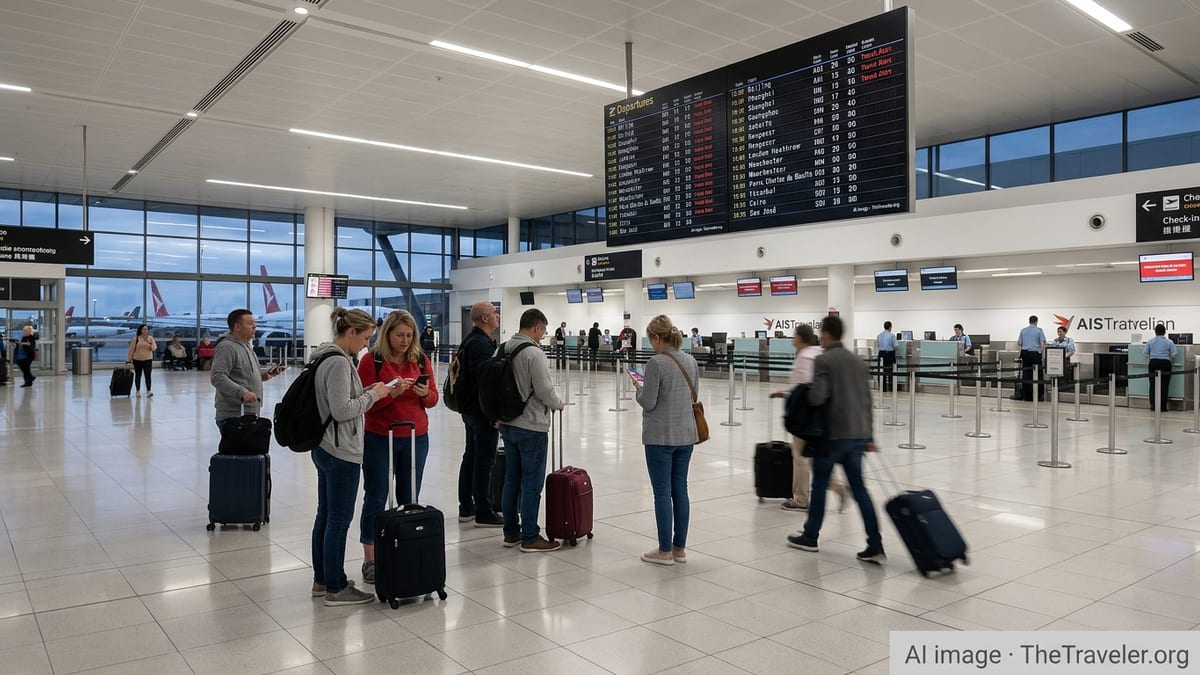
The timing means that many people, including travelers, may be on the move, in airports, on public transport, in shopping centres or at attractions when the alert arrives. Tourism operators, venues and transport providers have been urged through public information materials to be aware of the schedule so that staff and visitors are not caught off guard by the sudden noise.
What The Test Alert Will Look, Sound And Feel Like
Official guidance explains that the national test will use a single "Critical" AusAlert message delivered to all compatible devices connected to participating mobile networks within Australia’s borders at the time. Even visitors using international phones on roaming are expected to receive the alert if their device and network support the technology.
When the test is sent, devices are expected to vibrate and emit a loud, siren-like sound for about 10 seconds, even if set to silent or do-not-disturb. A full-screen message should appear, clearly identifying itself as a test and not a real emergency. Some devices may also trigger text-to-speech functions if those accessibility features are enabled.
The alert screen may require users to acknowledge or dismiss the message before normal phone functions resume, which could briefly interrupt calls, navigation apps or media playback. The test notification itself may remain accessible in the device’s alert history for some time after it is first received.
Guidance For Visitors, Residents And Vulnerable People
Information published for visitors to Australia notes that AusAlert does not collect or store personal data, phone numbers or location histories, and that alerts are broadcast to all compatible devices in a coverage area rather than sent individually. This is intended to reassure travelers who might be concerned about privacy or data use while roaming.
However, the loud sound may be unsettling for some people, particularly those with sensory sensitivities, anxiety, or past experiences of violence or coercive control. Community resources advise that anyone who could be placed at risk by a sudden audible alert from a hidden or safety device should consider turning that device off or placing it in flight mode at least one hour before the scheduled test time, and keeping it that way for up to 24 hours afterward.
Health, disability and community agencies have circulated AusAlert information packs aimed at older Australians, people with disability, First Nations communities and multicultural audiences. These materials outline what the test is, why it is happening, and practical steps to stay comfortable and safe while still benefiting from future real alerts.
Travelers staying in hotels, hostels or holiday rentals may want to let companions know about the test, especially if they are caring for children or older relatives who may be startled. Ear-sensitive travelers might choose to keep devices slightly away from their ears around the test time, particularly if using headphones that pass through system sounds.
What The AusAlert Test Means For Travel Plans
For most people, the AusAlert national test is expected to be a brief interruption rather than a disruption. Transport agencies and travel industry operators have been given advance notice through public advisories so that staff can anticipate a momentary surge of noise across terminals, platforms, buses and planes when the alert arrives.
Airlines typically require passengers to keep phones in flight mode during take-off and landing, which may prevent some in-flight devices from receiving the test. However, travelers who are in airport terminals or using inflight Wi-Fi with mobile radios active may still receive the alert on phones, tablets or smart watches.
Drivers using navigation apps or connected car displays may notice the alert temporarily taking over the screen or pausing audio. Current guidance suggests that people should read the message only when it is safe to do so, treating it similarly to any other urgent phone notification encountered on the road.
For international visitors arriving close to 27 July, the key takeaway is that this is a test of a long-term safety feature that could be valuable during future bushfire seasons, major storms or other emergencies. Keeping devices updated, connected to local networks and within reach will help ensure that once AusAlert goes live in October, both residents and travelers receive timely warnings when they matter most.