


More news on this day
China’s busiest airports experienced severe disruption this week, with publicly available tracking data indicating 4,341 flight delays and 120 cancellations across major hubs as summer travel demand peaks.
Get the latest news straight to your inbox!
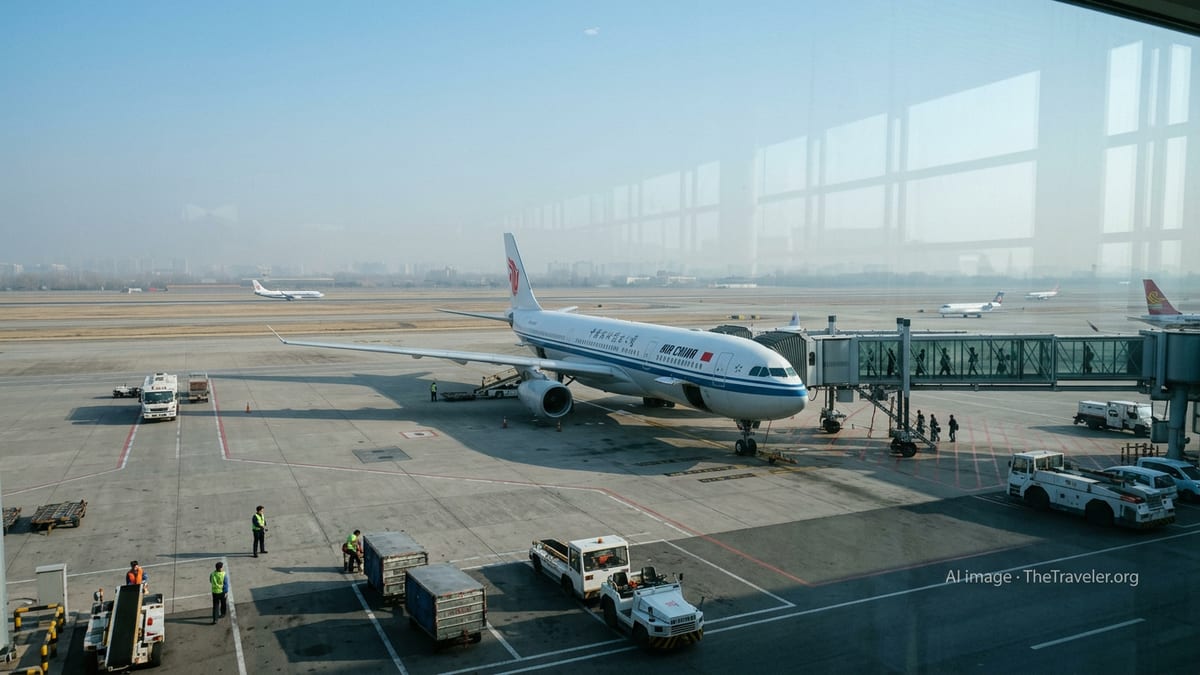
Major Hubs Struggle Under Heavy Operational Strain
The latest disruption has concentrated on key gateways including Beijing Capital, Beijing Daxing, Shanghai Pudong, Shanghai Hongqiao, Guangzhou Baiyun and Shenzhen Bao’an, where dense schedules left limited room to absorb cascading delays. Aviation tracking platforms and domestic media coverage indicate that late arrivals and tight turnaround windows contributed to knock-on effects throughout the day.
Travelers reported extended waits at boarding gates and congested terminal areas as airlines attempted to re-sequence flights and reassign aircraft. In many cases, departures remained technically scheduled while pushback times were repeatedly revised, leaving passengers uncertain about actual departure times.
Ground handling capacity and airside congestion also appeared to play a role. With aircraft arriving behind schedule, ramp crews faced overlapping tasks, from unloading baggage to refueling and catering, on stands already operating close to capacity. The resulting bottlenecks slowed the flow of aircraft through limited runway and taxiway slots at the busiest hubs.
Although only a fraction of flights were ultimately cancelled relative to the overall daily schedule, the imbalance between delays and outright cancellations meant many passengers remained in the system longer, increasing crowding at terminals and stretching airport services.
Weather, Airspace Restrictions and Tight Schedules Intersect
Publicly available meteorological data and domestic aviation reports point to summer storms, low cloud and heavy rainfall over parts of eastern and southern China as key contributors to the disruption. Weather-related constraints typically reduce arrival and departure rates at major hubs, forcing air traffic managers to impose flow controls that ripple through domestic networks.
In addition to weather, airspace management continues to be a structural factor for Chinese aviation. Analysts note that the concentration of commercial traffic through relatively narrow corridors can quickly amplify the impact of any restriction, whether linked to weather, congestion or other operational limitations. When combined with packed summer schedules, even short-lived capacity reductions can translate into sizeable queues of aircraft awaiting departure slots.
Schedule density is another element in the current disruption. Following a sustained recovery in domestic demand, airlines have rebuilt and expanded their route networks, particularly on trunk routes between coastal and inland cities. With aircraft utilization running high to meet demand, there is limited slack in fleets to recover from irregular operations, which can turn localized problems at one hub into nationwide knock-on delays.
Industry observers highlight that the imbalance between the number of delayed flights and relatively few cancellations is consistent with a strategy focused on preserving connectivity. By attempting to operate the majority of planned services, airlines keep city-pair links intact but accept extended delays as a trade-off, especially during peak holiday periods when demand remains strong.
Passenger Experience: Packed Terminals and Tight Connections
For passengers, the immediate impact has been longer lines at check-in, security and boarding, as well as heavier pressure on airport seating and food services. Social media posts and domestic press reports describe travelers struggling to find rest areas in crowded terminals while waiting for revised departure times to be posted on flight information screens.
Missed connections have also emerged as a key pain point. China’s major hubs act as transfer points for passengers connecting between regional cities and coastal economic centers, as well as for a growing volume of international itineraries. When feeder flights arrive late, onward connections can be jeopardized even if long-haul departures remain on schedule, forcing rebookings and overnight stays.
Families traveling with children and elderly passengers appear particularly affected, as long periods spent in terminals during hot and humid summer weather compound fatigue. While airports have expanded commercial and lounge facilities in recent years, surges in demand during disruption events can temporarily overwhelm these additions, leaving many travelers relying on basic waiting areas.
Consumer-rights commentary in domestic media has renewed attention on issues such as the clarity of delay information, the timeliness of schedule updates, and the consistency of assistance policies across different carriers. Travelers are increasingly using mobile apps and third-party platforms to track flight status independently and to compare how different airlines handle rebooking and service recovery.
Operational Response and Capacity Management Efforts
Airports and airlines have responded by adjusting gate assignments, reallocating aircraft and crew, and, in some cases, trimming late-night departures to prevent schedule drift from extending into the following day. Publicly available scheduling data shows that some carriers have opted to consolidate lightly booked flights and prioritize high-demand trunk routes in an effort to stabilize the network.
Ground operations teams have ramped up staffing in baggage handling and check-in during peak periods, aiming to reduce turnaround times where weather and airspace conditions permit. At several major hubs, available information indicates increased use of remote stands and bus boarding to free up contact gates for flights operating close to schedule, although this can lengthen walking and transfer times for passengers.
Aviation analysts following China’s recovery trajectory note that the current disruption underscores the challenge of matching rapid demand growth with resilient capacity. While the overall number of daily flights has returned to or surpassed pre-pandemic levels on many routes, supporting infrastructure such as additional runways, taxiways and terminal expansions tends to lag behind traffic growth.
Industry commentary suggests that, in the near term, refinements to slot allocation, schedule planning and real-time coordination between airlines and air traffic managers will be central to reducing the scale of future disruption events. More flexible use of spare aircraft, dynamic crew rostering and targeted schedule buffers on congestion-prone routes are among the measures observers identify as potential mitigations.
Implications for Domestic and International Travelers
The latest wave of delays and cancellations arrives as China’s aviation sector is working to reinforce its role as a key connector for both domestic mobility and international travel. For residents, reliable air links between inland provinces and coastal economic zones are essential for business, tourism and family visits, particularly during school holidays and major festivals.
For international travelers, the stability of major hubs such as Beijing, Shanghai and Guangzhou is critical, as many itineraries now rely on smooth transfers between domestic feeders and long-haul services. Disruptions that begin with domestic operations can quickly affect outbound flights, tightening connection windows and increasing the risk of missed long-haul departures.
Travel experts advising on China itineraries increasingly recommend leaving wider margins between connecting flights, especially during the summer and major holiday peaks, and remaining flexible regarding routings and departure times. While most flights still operate close to schedule under normal conditions, the recent disruption illustrates how quickly congestion can accumulate when the system is operating close to its capacity limits.
As airlines and airports refine their operational responses, travelers are likely to see continued emphasis on proactive digital notifications, mobile check-in and real-time rebooking tools. These measures, combined with more conservative connection planning by passengers, may help reduce the practical impact of future disruption events even when weather or airspace constraints cannot be fully avoided.