


More news on this day
Severe thunderstorms sweeping across the Northeast on Tuesday led to widespread flight cancellations and delays at Boston Logan International Airport, disrupting travel plans for hundreds of passengers and compounding an already turbulent summer for air travel.
Get the latest news straight to your inbox!
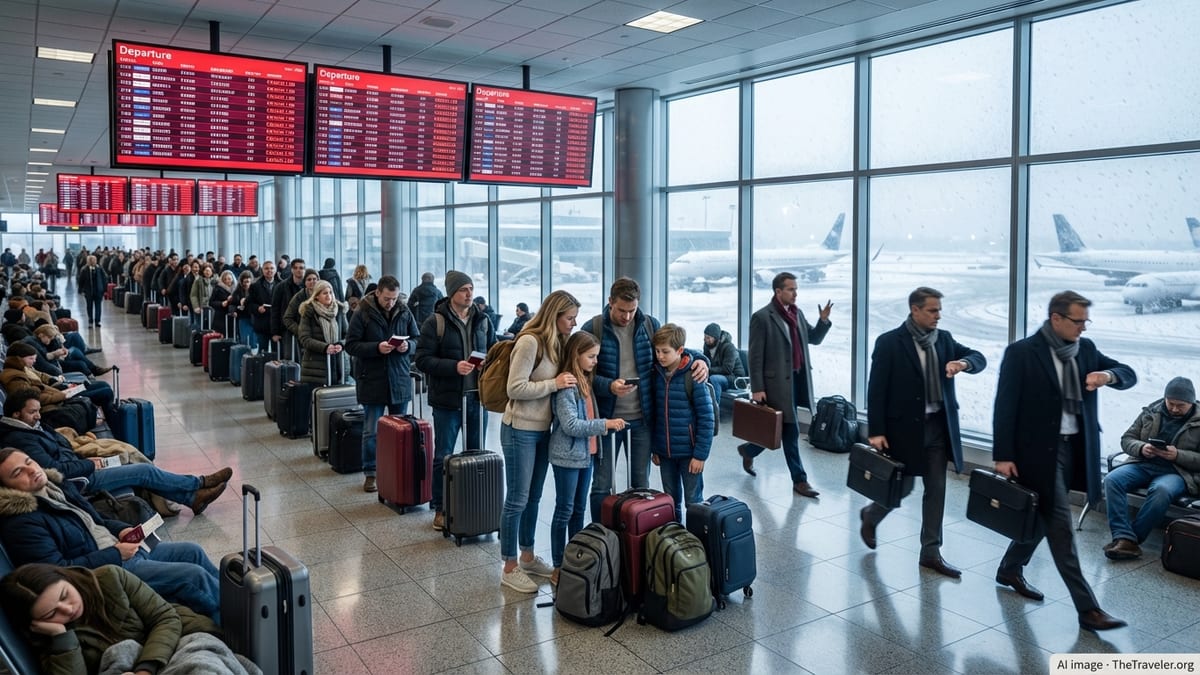
Thunderstorms trigger fresh wave of disruption
Strong storms moving through the Northeast created hazardous flying conditions on Tuesday, prompting airlines to scale back schedules at Boston Logan and slow the flow of arriving and departing aircraft. Publicly available tracking data showed numerous flights to and from key East Coast hubs held on the ground, rerouted, or canceled outright as the weather system intensified over New England.
Operational notices for the region pointed to convective weather and thunderstorm activity as the main drivers of disruption, with traffic management measures designed to space out flights and reduce congestion in storm-affected airspace. The resulting bottlenecks quickly translated into rolling delays at Logan as aircraft and crews struggled to stay in position.
Travelers reported hours-long waits and last-minute schedule changes as airlines adjusted to shifting forecasts. Many passengers arriving on late inbound flights found their onward connections delayed or canceled, with limited rebooking options on already busy midsummer routes.
Ripple effects for airlines and connecting hubs
Flight status boards at Logan showed clusters of cancellations concentrated on routes linking Boston with other major Northeast and Mid-Atlantic airports, where the same storm system has complicated operations. When storms slow or halt traffic at multiple hubs at once, delays tend to cascade throughout the network, and Boston is often among the first airports to feel the impact.
Airlines that rely heavily on Logan for cross-country and transatlantic connections faced particular challenges as disruptions in one part of the system rippled outward. According to widely used aviation tracking services, some carriers saw sequences of Boston flights scrapped or pushed back repeatedly as crews and aircraft missed their scheduled rotations.
Industry analyses of previous weather events indicate that once a critical mass of flights is delayed, recovery can take many hours even after storms move offshore. Aircraft and staff are frequently out of position, and crews may reach duty-time limits, forcing additional cancellations as airlines work to reset schedules.
Storms compound a difficult travel season
The latest round of severe weather comes on the heels of a series of disruptive events at Logan this year, including major winter storms and, more recently, a separate fueling system problem that temporarily halted departures earlier in July. Published coverage of that incident described a ground stop that left aircraft waiting for access to fuel and caused diversions and cancellations affecting travelers across multiple airlines.
While the fueling issue has since been resolved, the combination of that outage with an active summer storm pattern has left many passengers with little margin for error in their itineraries. Accounts shared publicly by travelers in recent days describe missed connections, overnight stays in terminals, and difficulty securing alternative flights on peak travel days.
Aviation researchers note that large coastal airports such as Boston are especially vulnerable during periods of intense convective weather, when strong crosswinds, lightning, and low visibility can limit runway configurations and reduce the number of aircraft that can safely arrive or depart in a given hour. In those conditions, delays tend to build quickly and can extend far beyond the window of the heaviest rain or thunder.
What passengers are experiencing on the ground
Inside Logan’s terminals on Tuesday, passengers encountered long lines at check-in counters and customer service desks as cancellations mounted. Many travelers turned to airline apps and text alerts to track rapidly changing departure times, while others sought information from departure boards that shifted from delayed to canceled with little warning.
Families and business travelers alike reported extended waits in crowded gate areas as storms repeatedly interrupted boarding and taxi operations. Some flights that did depart did so after multiple revised departure times, leaving passengers unsure how long they would be in the air or whether they would still make their connections.
Public posts from affected travelers indicate that rebooking options were often limited to flights one or more days later, particularly on popular leisure routes. In some cases, passengers opted to travel by train or rental car to nearby cities when aviation backlogs made same-day air travel unlikely.
Guidance for travelers amid ongoing storms
With forecasts calling for additional thunderstorms across parts of the Northeast, travel and aviation observers suggest that passengers flying through Boston Logan over the next day should plan for potential disruption. Historically, airlines have responded to similar conditions by issuing flexible travel waivers, allowing some customers to change flights without standard fees when severe weather is expected to affect operations.
Passenger advocates emphasize the importance of monitoring flight status frequently on days when storms are in the forecast, as schedules can change multiple times in a short period. They also recommend allowing extra time at the airport, especially for those with checked baggage or tight connections, in case security lines or boarding processes are slowed by earlier delays.
Analysts studying delay patterns at major U.S. airports note that severe weather events are an increasingly important factor in overall air travel reliability. For travelers at Boston Logan this week, the latest round of storms has underscored how quickly shifting conditions in the sky can upend even carefully planned itineraries.