


More news on this day
Passengers travelling through Manchester Airport today are facing significant disruption, with publicly available flight information showing more than 60 departures and arrivals delayed across a range of airlines and destinations.
Get the latest news straight to your inbox!
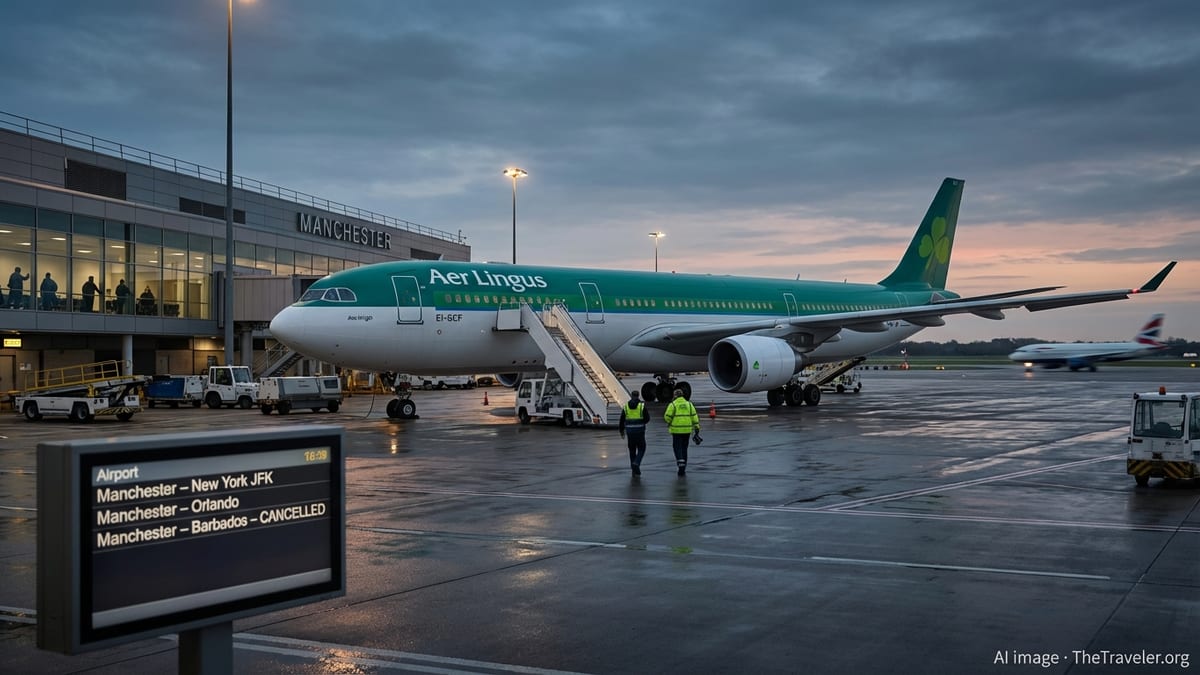
Significant Delays Across Departures and Arrivals
Manchester Airport’s live departure and arrival boards indicate widespread disruption, with scores of services running behind schedule throughout the day. The impact is being felt on both short-haul European routes and longer international services, affecting travellers heading out of the United Kingdom as well as those flying into the North West.
Reports from flight-tracking services and airport data show that the number of affected flights has passed 60 when combining delayed departures and arrivals. Many services are running between 30 minutes and two hours late, while a smaller number are experiencing longer waits at the gate or on the ground before departure.
The disruption appears to be concentrated around the early-morning and late-afternoon peaks, when aircraft rotations are tight and any small delay can quickly spread across multiple routes. Passengers connecting through other hubs, such as Amsterdam, Dublin and various Spanish and Mediterranean airports, are particularly exposed to knock-on effects as schedules slide.
While the airport’s terminals remain open and operating, the volume of late-running flights is creating pressure at check-in, security and boarding gates as passengers adjust their plans around changing departure times.
Routes and Airlines Most Affected
Today’s disruption is spread across several major carriers that use Manchester as a base or focus city. Publicly accessible flight boards show delays on services operated by low-cost airlines serving popular holiday destinations, as well as on flights run by network carriers connecting Manchester with major European hubs.
Short-haul routes to Spain, Portugal, Greece and other leisure markets are among those with the highest number of delayed flights today, reflecting Manchester’s role as a key departure point for package holidays and city breaks. Services to islands and coastal destinations in the Mediterranean are particularly susceptible when early rotations run late, causing aircraft to arrive back in Manchester behind schedule.
Regional and domestic connections are also being affected. Flights to and from key UK and Irish cities, which often operate multiple times per day, are showing a pattern of smaller but persistent delays as aircraft and crews attempt to catch up with planned timetables.
Some long-haul and transatlantic services are additionally running late, although in several cases extended turnaround times and schedule padding are helping to limit the impact on onward connections for passengers.
Operational and Weather Factors Behind the Disruption
Publicly available information suggests that a combination of operational pressures and weather-related constraints across parts of the European network is contributing to today’s disruption at Manchester Airport. When aircraft and crews arrive late from other airports, it can quickly trigger a chain reaction of delays on subsequent flights.
Industry data and historic punctuality reports for Manchester show that reactionary delays, where one late flight causes another to depart late, remain one of the most common causes of timetable disruption. Once morning rotations slip, it can be challenging for airlines to recover the schedule without cancelling services or making significant adjustments later in the day.
Weather conditions at other airports feeding traffic into Manchester, such as low visibility, thunderstorms or strong winds, can reduce runway capacity and lead to en-route restrictions. Even when conditions at Manchester itself are stable, these external factors often result in delayed arrivals that then push back departure times for the same aircraft operating the next leg.
On busy travel days, limited spare aircraft and crew availability mean airlines have less flexibility to substitute equipment or re-crew flights at short notice. As a result, minor operational issues elsewhere in the network can have an amplified effect on an airport with a dense schedule of departures, such as Manchester.
What Today’s Delays Mean for Travellers
For passengers flying from Manchester Airport today, the high number of delayed flights means that carefully timed itineraries may require adjustment. Those with tight connections, particularly on separate tickets, face a higher risk of missed onward flights if delays extend beyond an hour or two.
Travellers are being advised in public guidance and airline communications to monitor their flight status closely through airline apps, text alerts and live airport information displays. Where flights are significantly delayed, rebooking options or rerouting via alternative hubs may be offered according to each airline’s policies and the circumstances of the disruption.
Passengers whose flights are delayed by longer periods may be entitled to assistance such as refreshments or accommodation, depending on the length of the delay, the cause of the disruption and the applicable regulations. Guidance from aviation regulators highlights that compensation and care entitlements can vary based on whether delays are considered within the airline’s control.
With more than 60 flights affected today, those due to travel later in the day are being encouraged, through publicly available advice, to arrive at the airport with sufficient time, keep all travel documentation handy and remain flexible in case boarding times or gate assignments change at short notice.
Manchester’s Recent Record on Punctuality
The disruption seen today follows a broader pattern of fluctuating on-time performance at Manchester Airport over recent months. Official punctuality statistics published for the airport indicate that while a majority of flights typically depart within 15 minutes of schedule, a notable minority experience more significant delays.
Recent reports show that average delays at Manchester can vary considerably month to month, influenced by seasonal demand, weather patterns and operational pressures within airline networks. In some reporting periods, average departure delays have exceeded half an hour on affected flights, reflecting how quickly conditions can deteriorate on busier days.
Travel industry observers note that, although Manchester has invested in infrastructure and terminal improvements, the complexity of modern airline operations means that even well-resourced airports remain vulnerable to external shocks on peak travel days. This includes issues originating at other airports, staffing constraints, air traffic control restrictions and congestion at popular holiday destinations.
For passengers, today’s extensive list of delayed flights serves as a reminder to build extra time into travel plans when flying at busy times of year, to stay closely informed about real-time flight status, and to understand their rights and options if a delay significantly disrupts their journey.