


In 2026, many travelers arrive in Istanbul and experience sticker shock at the ticket counter. The city’s most famous sights have raised prices sharply, and one question comes up again and again: is the Basilica Cistern now an expensive attraction compared with other big Istanbul landmarks, or is the price increase in line with everything else?
Get the latest updates straight to your inbox!
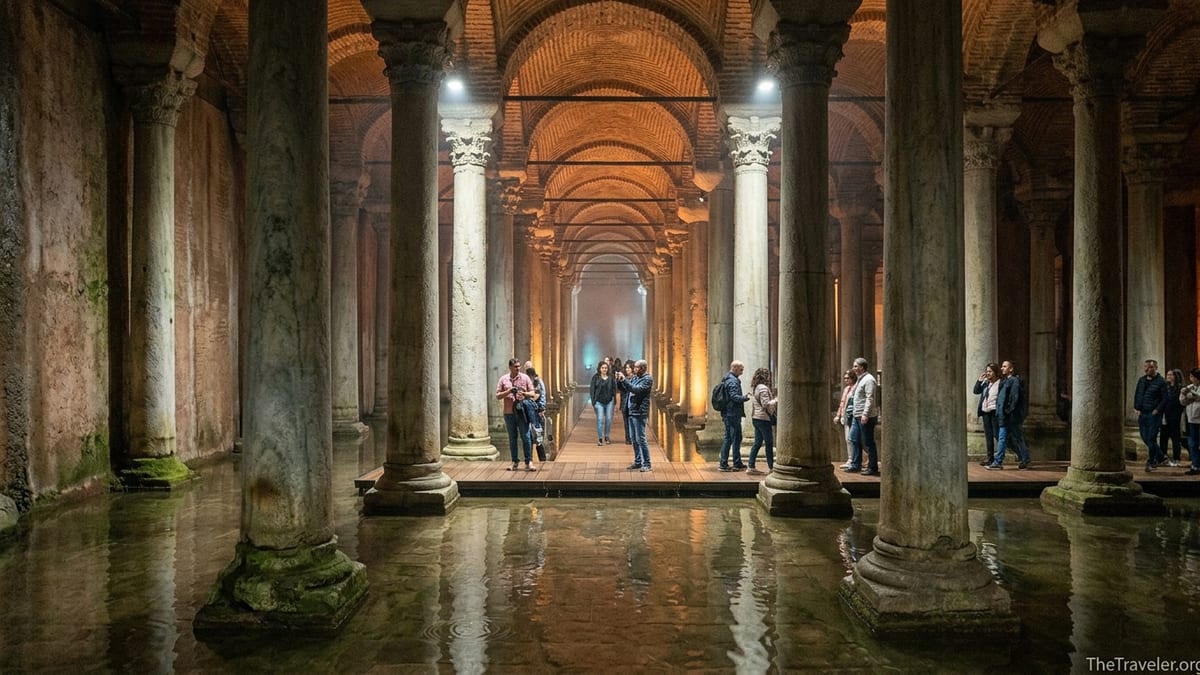
What the Basilica Cistern Costs in 2026
The Basilica Cistern, the vast underground reservoir a short walk from Hagia Sophia in Sultanahmet, has long been one of Istanbul’s most atmospheric and affordable sights. That reputation has changed. According to recent 2026 pricing roundups, a standard foreign adult ticket for the Basilica Cistern now sits in the low 2,000 Turkish lira range during the day, after a steep rise from roughly 1,300–1,400 lira in 2025. Some local travel budget guides describe it as one of the sharpest year‑on‑year increases among Old City attractions, with day tickets hovering around the equivalent of 35–40 euros depending on exchange rates.
Prices are not completely static. In practice, travelers report two main patterns: a higher “day rate” when demand is at its peak, and occasional lower “evening” or shoulder‑hour rates, plus short‑term adjustments when the lira moves suddenly. A visitor paying by card in April 2026 may see a slightly different converted euro or dollar total than someone coming in June, even if the lira price is officially the same, because of bank exchange and fees.
There are also commonly advertised guided‑tour packages from local agencies that bundle Basilica Cistern entry with a guide and a short walking tour of Sultanahmet. These often cost noticeably more than the base ticket. For example, an online agency might sell a “Cistern + guide” experience for 45–55 euros per person, while the official entry alone, paid on the spot in lira, works out cheaper. For cost comparisons in this article, it is important to focus on the official gate price, not on packaged tours that add services and commissions.
Children’s and local residents’ prices, where available, are significantly lower than the foreign adult rate, but these discounts do not apply to most short‑stay tourists. As a result, the price a typical international traveler pays for the Basilica Cistern today feels closer to a “headline” big‑ticket attraction than the budget‑friendly curiosity it once was.
How It Compares With Topkapi Palace
To judge whether the Basilica Cistern is expensive, it helps to set it beside Istanbul’s most famous paid attraction: Topkapi Palace. The official 2026 combined ticket for foreign visitors, purchased at the museum gate and including the palace, Harem and Hagia Irene, is about 2,750 Turkish lira. Independent guides and specialist sites that track prices translate this to just over 50 euros at typical spring 2026 rates, making Topkapi one of the city’s priciest single entries.
Seen against that, the Basilica Cistern sits slightly below Topkapi in absolute price, but not by a huge margin. If the cistern ticket costs a little over 2,000 lira and the palace complex costs 2,750 lira, you are looking at perhaps a 20–30 percent difference, depending on exchange rates. In other words, the Basilica Cistern is now solidly in the “major‑site” price bracket, just one step down from Istanbul’s most expensive museum complex.
Value is more nuanced. A thorough visit to Topkapi Palace can easily fill three hours or more, especially if you tour the Harem and linger in the courtyards and pavilions. Many organized tours schedule half a day here. The Basilica Cistern, by contrast, is a compact underground space: most visitors spend 30–45 minutes wandering the walkways, taking photos of the Medusa heads and the forest of columns, and absorbing the cool, dim atmosphere before moving on.
From a strict “price per hour” angle, Topkapi often works out better value. Spending, for example, 55 euros to explore palace, treasury and Harem over three hours feels different to paying around 38 euros for a 40‑minute walk in the cistern. That difference explains why many travelers on forums and in reviews describe the Basilica Cistern as feeling disproportionately expensive relative to its size and duration, even if the sticker price itself is a little lower than Topkapi’s.
Basilica Cistern vs Hagia Sophia and Nearby Old City Sights
The other natural benchmark is Hagia Sophia, the monumental basilica‑mosque that dominates Sultanahmet Square. Technically, entry to the main prayer hall as a mosque is free, but in practice most short‑term visitors encounter paid systems around it. In 2026, foreigners who want to tour the upper gallery museum space typically pay about 25 euros or the lira equivalent for a ticket. There is also a separate “Hagia Sophia History and Experience Museum” in another building, often sold as a combined package with the gallery for roughly 50 euros. Many travelers complain that sellers push the more expensive combined ticket as if it were the only way to see “the whole Hagia Sophia,” adding to the sense of cost and confusion.
When you put the Basilica Cistern beside that landscape, it ends up priced roughly in the same ballpark as a single Hagia Sophia museum ticket. Depending on exact offers and currency, the cistern may be slightly more expensive than the Hagia Sophia gallery alone, but cheaper than the full Hagia Sophia plus “Experience Museum” combination. For a couple visiting both on individual tickets, that means spending something like 70–80 euros total for the cistern and 50 euros or so for Hagia Sophia, before any tours or audio guides.
Other Old City sights show how much the price ladder has compressed. The Istanbul Archaeological Museums, located behind Topkapi, usually charge significantly less than the Basilica Cistern, with a 2026 foreign adult ticket generally under the 1,000‑lira mark. The Turkish and Islamic Arts Museum on the Hippodrome and the Great Palace Mosaics Museum also tend to sit in the mid‑range, noticeably below the cistern.
As a result, when you plan a day around Sultanahmet, the Basilica Cistern often emerges as the second or third most expensive paid stop on the circuit, after Topkapi Palace and the paid museum section of Hagia Sophia. Travelers on a tighter budget commonly choose between the cistern and one or two museums rather than doing them all in a single day, something that was less common when the cistern was considerably cheaper.
Comparisons With Galata Tower and Other Popular Landmarks
Looking beyond the Old City, Galata Tower in Beyoğlu provides another useful reference point. Official documents and pricing tables for the Ministry of Culture list Galata Tower with foreign visitor fees that, when converted to 2026 tourist rates, work out in a mid‑range band, often noticeably below the Basilica Cistern. While prices vary with new directives, Galata is widely discussed among travelers as significantly cheaper than Topkapi and somewhat cheaper than the cistern, even though it, too, has gone up several times in recent years.
On the ground, many visitors report paying a fee that, once converted, feels closer to 15–20 euros for Galata Tower. That includes elevator access to the viewing deck, where you can spend as long as you like taking in panoramic views of the Golden Horn, Sultanahmet and the Bosphorus. Compared with paying closer to double that for a short underground walk in the cistern, some budget‑conscious travelers feel Galata offers better experiential value for money.
Other major draws, like Dolmabahçe Palace on the Bosphorus, also inhabit the upper end of the pricing spectrum, with combined tickets for palace sections often priced in the same broad range as Topkapi. By contrast, more everyday experiences such as a Bosphorus ferry ride from Eminönü to Üsküdar or Kadıköy remain extremely inexpensive, often costing less than the price of a coffee in a tourist café and giving you an hour of classic Istanbul scenery for just a few dozen lira.
This contrast underscores why the Basilica Cistern now feels like a “premium” stop. In one morning, you might pay as much for a 40‑minute cistern visit as you spend on public ferries and tram tickets over two days. That doesn’t mean the cistern is not worth it, but it does mean its price belongs squarely in the top tier of Istanbul attractions, even compared with celebrated landmarks on the European and Asian shores.
What You Actually Get for the Money
Price comparisons tell only half the story. The other half is the experience itself. The Basilica Cistern is not just any underground structure; it is one of the most atmospheric and photogenic historical sites in Istanbul. Built in the 6th century during the reign of Emperor Justinian, its 336 marble columns lit by warm, low lighting create a dreamlike forest of stone. Shallow water, occasional dripping, and carefully placed lights on the Medusa‑head column bases add to the mood.
For many visitors, that atmosphere is exactly what justifies the higher price. Even seasoned travelers who have seen Roman cisterns elsewhere often describe this one as uniquely theatrical, especially after its recent restoration and lighting redesign. Instagram and social media have turned it into a signature shot of Istanbul, and the ticket price now reflects that global demand much more than the length of time you spend inside.
The cistern also has practical advantages. It offers shelter from summer heat and winter rain, it is compact and easy to navigate, and it generally requires less planning than larger complexes like Topkapi. You can slot a visit between other activities with minimal disruption. That convenience can be valuable for short‑stay travelers who want to see something impressive without committing half a day.
Still, first‑time visitors sometimes leave feeling that the cost was out of proportion to the experience, especially if they rushed through, arrived at peak times when it was crowded, or were not particularly interested in the historical context. Expect to spend more than you might intuitively think a cistern should cost, and go in ready to slow down, read the information boards, and savor the details; that mindset makes the expenditure feel more justified.
Budgeting a Day Around the Basilica Cistern
Because Basilica Cistern tickets now sit near the top of Istanbul’s museum price ladder, planning your day around them makes sense. A realistic 2026 budget for one full sightseeing day in Sultanahmet for a foreign visitor might include the Basilica Cistern (a little over 2,000 lira), Topkapi Palace with Harem (2,750 lira), and either the Hagia Sophia gallery or another museum such as the Archaeological Museums (often under 1,000 lira). Without any tours, that can easily reach or exceed the equivalent of 100 euros for one person at current exchange rates.
To manage costs, some travelers choose one “top‑tier” paid site and pair it with free or cheaper experiences. For instance, you might pay for the Basilica Cistern and then spend the rest of the morning exploring the Hippodrome, the Blue Mosque courtyard and the surrounding streets at no charge. Alternatively, you might focus your budget on Topkapi Palace and skip the cistern, or visit the cistern but opt out of the paid Hagia Sophia museum space and experience the main hall during a quieter prayer time instead.
The Istanbul Museum Pass is worth considering for visitors planning to see several state‑run museums in a short period. Recent official documents list a wide array of covered sites, including the Archaeological Museums, the Great Palace Mosaics Museum and the Turkish and Islamic Arts Museum. However, the pass’s relationship with headline attractions can be complicated; in some years it has excluded certain sections or entire complexes such as specific palace areas or special exhibitions. Always verify whether the Basilica Cistern and your other target sites are fully included before relying on the pass for savings.
Another approach is to stagger high‑cost visits across different days and neighborhoods, mixing in low‑cost experiences like a ferry ride to Kadıköy, a stroll along the city walls at Yedikule, or a walk through Balat’s colorful streets. When the Basilica Cistern becomes one “premium treat” among a broader mix of budget‑friendly activities, the overall cost of an Istanbul trip stays manageable without sacrificing the standout moments.
Is the Basilica Cistern “Worth It” Compared to Other Sites?
Evaluating whether the Basilica Cistern is expensive is partly a numbers exercise and partly a question of personal priorities. On the numbers alone, the cistern now costs clearly more than mid‑tier museums such as the Archaeological Museums or the Turkish and Islamic Arts Museum, often more than Galata Tower, and only slightly less than the flagship Topkapi Palace ticket. That puts it firmly in the upper price bracket for Istanbul attractions in 2026.
Yet for many travelers, the cistern delivers a uniquely memorable experience that justifies that cost. Unlike some museums where you may move through many similar rooms, the cistern offers a single, striking environment: a cool, echoing chamber of stone and water beneath the city streets. Visitors often rank it among their top two or three highlights in Istanbul, alongside the views from Galata Tower or the courtyards of Topkapi Palace.
On the other hand, if you are primarily interested in art, archaeology or Ottoman imperial history, you might find better “value per lira” at other sites. A history enthusiast could spend hours studying inscriptions, sarcophagi and sculptures at the Archaeological Museums for a significantly lower ticket price than the cistern. Likewise, someone fascinated by Ottoman court life may consider Topkapi’s higher cost acceptable because of the depth and variety of what is on display.
One practical way to decide is to imagine which photographs and memories you would regret not having. If the image of wandering among columns in a half‑dark underground reservoir feels as essential to your idea of Istanbul as seeing the skyline from Galata or the mosaic‑covered vaults of Hagia Sophia, then allocating a sizable portion of your ticket budget to the Basilica Cistern makes sense, even if the raw price is high. If not, you might prioritize other sites and keep the cistern as an optional extra.
The Takeaway
So, is the Basilica Cistern expensive compared to other Istanbul attractions in 2026? In simple terms, yes. Its ticket price for foreign visitors now sits close to the city’s top tier, surpassed mainly by the comprehensive Topkapi Palace ticket and some combined Hagia Sophia packages. It is clearly more expensive than mid‑range museums and even many iconic sights like Galata Tower when you convert costs into euros or dollars.
At the same time, the Basilica Cistern offers a distinctive, atmospheric experience that many travelers remember as one of the defining moments of their Istanbul trip. It is compact, easy to fit into a busy itinerary, and visually unforgettable. The higher price reflects both the site’s global popularity and broader policy decisions that have raised foreign visitor fees across the city’s major landmarks.
For most first‑time visitors with a moderate budget, the cistern is still worth serious consideration, but it should be planned consciously rather than treated as a cheap add‑on. Compare its cost with what you would spend at Topkapi, Hagia Sophia and other museums, think about which experiences matter most to you, and build a balanced itinerary that mixes high‑cost highlights with free or low‑cost discoveries around the city. Approached that way, even an expensive ticket can feel like fair value when it buys you a truly unique glimpse into Istanbul’s layered past.
FAQ
Q1. How much does the Basilica Cistern ticket cost for foreign visitors in 2026?
The exact price changes with official adjustments and exchange rates, but most recent reports place the foreign adult ticket in the low 2,000 Turkish lira range, roughly equivalent to the mid‑30s in euros.
Q2. Is the Basilica Cistern more expensive than Topkapi Palace?
No. The Basilica Cistern is generally a little cheaper than the full Topkapi Palace ticket with Harem and Hagia Irene, which sits around 2,750 lira for foreign adults, but the gap is not huge.
Q3. How does the Basilica Cistern price compare with Hagia Sophia?
The cistern usually costs more than a single Hagia Sophia gallery ticket but less than some combined Hagia Sophia plus “History and Experience Museum” packages that are sold around 50 euros.
Q4. Is the Basilica Cistern included in the Istanbul Museum Pass?
The Museum Pass Istanbul covers many state‑run museums, but inclusion rules can change. Travelers should always check the most recent official list before assuming the pass covers the cistern.
Q5. How long should I plan to spend inside the Basilica Cistern?
Most visitors spend about 30–45 minutes inside, walking the platforms, taking photos and reading the information panels. Even with lingering, it is rare to spend more than an hour.
Q6. Is the Basilica Cistern good value for money?
Value is subjective. Compared with mid‑range museums it is expensive for the time spent, but many travelers feel the unique atmosphere and photographs justify the higher price.
Q7. Are there cheaper alternatives with a similar atmosphere in Istanbul?
There are other cisterns and historic sites, some with lower entry fees, but none match the scale and staging of the Basilica Cistern. For budget travelers, mid‑priced museums or free mosques often provide better value.
Q8. Can I save money by booking a Basilica Cistern tour online?
Guided tours can add context but usually cost more than buying the ticket at the entrance. They are best chosen for the guide’s expertise rather than for pure savings.
Q9. Do children or students get discounts at the Basilica Cistern?
Turkish citizens, residents and children often benefit from reduced prices, but foreign visitors on short stays should not assume discounts; rules can be strict and may require local ID.
Q10. If I am on a tight budget, should I prioritize the Basilica Cistern or another attraction?
With limited funds, many travelers prioritize either Topkapi Palace for imperial history or Hagia Sophia for architecture and religious significance, then add the Basilica Cistern if there is room in the budget.