


More news on this day
Thousands of travelers across the United States faced cascading disruptions as at least 855 flights were canceled and more than 7,700 delayed, with major impacts reported in Nevada, California, North Carolina, Florida and the Washington D.C. region, according to real-time tracking data and published aviation reports.
Get the latest news straight to your inbox!
Weather, Congested Skies and Tight Schedules Converge
The latest wave of disruption unfolded as unstable weather, summer thunderstorm patterns and already strained air-traffic capacity combined to slow operations at multiple hubs. Publicly available delay trackers and aviation coverage indicate that convective storms over the East Coast and Southeast have been triggering ground stops and flow-control programs at airports from Charlotte Douglas International to the Washington D.C. area, while Florida and West Coast gateways contend with their own rolling bottlenecks.
Travel industry reports show that even short-lived weather cells can quickly ripple across the system when airlines are operating near peak summer capacity. Aircraft and crews scheduled to make several turns a day have little slack, so a storm-related delay in one region can lead to late arrivals, missed connections and eventual cancellations thousands of miles away. The result is a network-wide slowdown that strands passengers far beyond the immediate impact zone.
Analysts note that this pattern has been increasingly visible in 2026, with federal data showing higher year-over-year cancellation rates in recent months even as airlines add more flights back into their schedules. The current disruption, spanning multiple time zones and a long list of hubs, reflects how sensitive the system remains to weather and airspace constraints at a handful of chokepoints.
Nationwide Impact From Nevada to the Carolinas and Florida
Data compiled from live tracking platforms and recent airport performance summaries point to especially heavy knock-on effects in Nevada and California, where Las Vegas and major West Coast hubs are experiencing holding patterns and longer-than-usual taxi and turnaround times. Delays in these markets have pushed back departures bound for central and eastern hubs, limiting recovery options later in the day.
On the East Coast, operations at Charlotte Douglas, a key connecting hub for the Southeast, have been repeatedly slowed by thunderstorms and arrival metering programs, according to airline performance dashboards and local travel coverage. When Charlotte’s outbound traffic is curtailed, passengers heading to smaller regional airports across the Carolinas, Tennessee and the Mid-Atlantic quickly run out of same-day rebooking choices.
Florida’s already busy skies have added another pressure point. Recent industry reports on storm-driven disruptions note that Fort Lauderdale-Hollywood International, along with nearby Miami and Orlando, has been especially vulnerable to afternoon convective weather that frequently forces temporary ground stops and departure holds. With a high concentration of leisure travelers and tight turnarounds on narrowbody aircraft, even moderate delays quickly spill over into late-evening cancellations.
In the Washington D.C. area, federal delay maps show recurring constraints related to thunderstorms and traffic management initiatives that slow arrivals into both Washington Dulles and Reagan National. Because these airports anchor major domestic and transatlantic networks, any sustained disruption can reverberate across long-haul routes and overnight connections.
Major Carriers and Regional Partners Share the Pain
The disruption has been spread across multiple airlines, with Delta Air Lines, Southwest Airlines, United Airlines, JetBlue and large regional operators such as SkyWest and Republic among those seeing elevated cancellation and delay counts in tracking feeds. These carriers collectively handle a large share of domestic traffic, particularly through hubs like Atlanta, Denver, Dallas-Fort Worth and New York-area airports, which magnifies the ripple effect when operations slow.
Regional affiliates have been especially exposed, according to aviation analysts who track daily performance by carrier. When mainline airlines prioritize recovering long-haul and high-yield routes, shorter regional segments are often first to be trimmed, leading to a higher percentage of cancellations on flights serving smaller or mid-sized cities. That dynamic can be seen in the current wave of disruptions, with numerous short-haul segments scrubbed or pushed deep into delay.
At the same time, real-time delay data shows that no single airline has been spared. Low-cost carriers and boutique operators have also logged significant disruptions at affected hubs, underscoring that the primary drivers are weather, airspace flow limits and the tight interconnectedness of the U.S. route network rather than any one carrier’s internal systems.
Passenger Experiences: Long Lines, Missed Connections and Limited Options
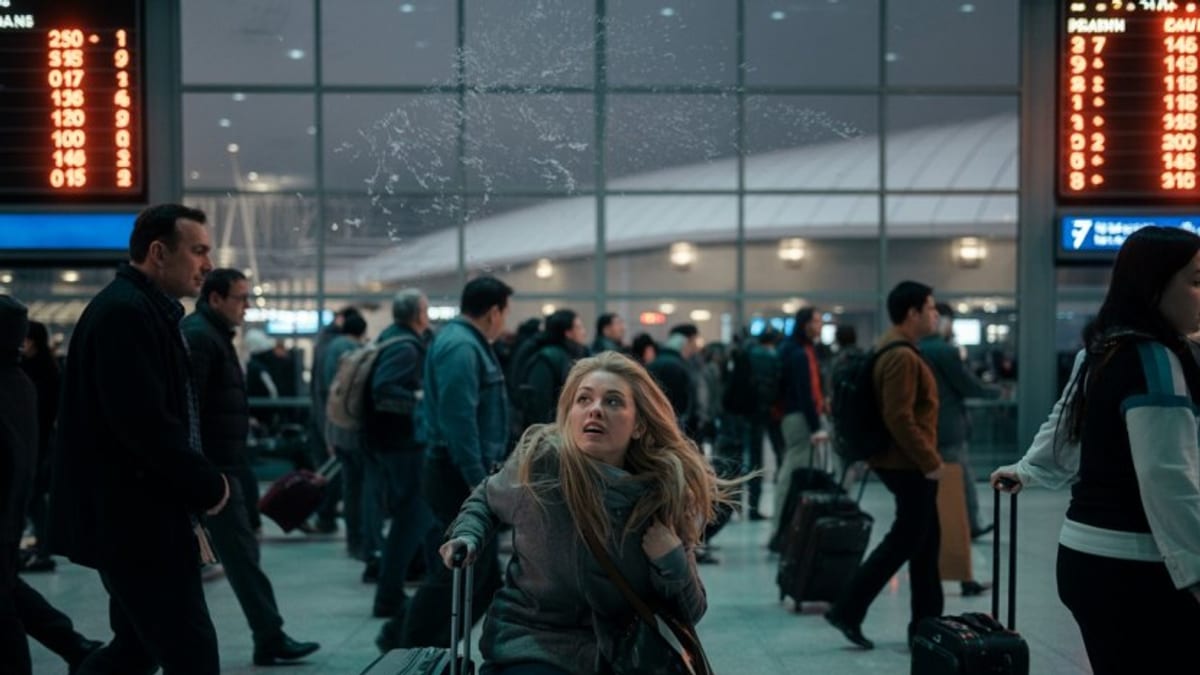
For passengers, the statistics translate into very tangible headaches: long security and customer-service lines, rolling departure times and last-minute cancelations that leave travelers scrambling for scarce hotel rooms. Social media posts and traveler forums from the past several days describe crowds forming around gate podiums as departure boards in Nevada, California, Charlotte, Fort Lauderdale and the D.C. region fill with orange and red delay codes.
Published consumer travel advice notes that when disruption reaches this scale, rebooking flexibility shrinks quickly. Travelers connecting through affected hubs often find that alternative same-day routings sell out within minutes, while checked bags lag behind aircraft redeployments. Late-evening cancellations can be particularly challenging, as smaller airports may have limited overnight staffing, ground transport options and nearby lodging.
Some passengers are reporting that flights which initially appear as modest delays grow into multi-hour waits as crews approach federally mandated duty-time limits or as aircraft are held for connecting customers from highly disrupted inbound flights. That dynamic can lead to a sudden shift from a long delay to an outright cancellation if a crew would time out before reaching the destination.
What Travelers Can Do as Disruptions Continue
With federal aviation maps and commercial trackers still indicating pockets of severe congestion and storm-related ground programs, additional delays and cancellations remain possible into the evening across multiple regions. Travel experts recommend that passengers treat the current environment as highly fluid, particularly if their itineraries touch weather-prone hubs in the Southeast, mid-Atlantic or Florida, or involve tight connections at Western gateways.
Consumer rights guidance points out that since 2024, U.S. regulations require airlines to provide refunds when flights are canceled or significantly delayed and the passenger chooses not to travel, even if carriers are not obligated to pay separate cash compensation for delays. Travelers facing multi-hour disruptions are encouraged to review airline customer-service dashboards that outline each carrier’s policies on meals, hotel accommodation and rebooking assistance in irregular operations.
Frequent flyers and advocacy groups also emphasize the importance of monitoring both airline apps and federal delay maps throughout the travel day, rather than relying solely on initial departure times listed at booking. In a high-disruption window like the one now affecting Nevada, California, Charlotte, Fort Lauderdale, Paradise, Washington D.C. and other markets, early situational awareness and flexible routing can make the difference between reaching a destination the same day or joining the growing ranks of stranded travelers.