


More news on this day
Passengers headed from Atlanta to Peru say a supposed overnight delay turned into days of sleeping in terminals, repeated cancellations and scarce information, leaving some describing the experience as "insane" and questioning how a routine international trip could break down so completely.
Get the latest news straight to your inbox!
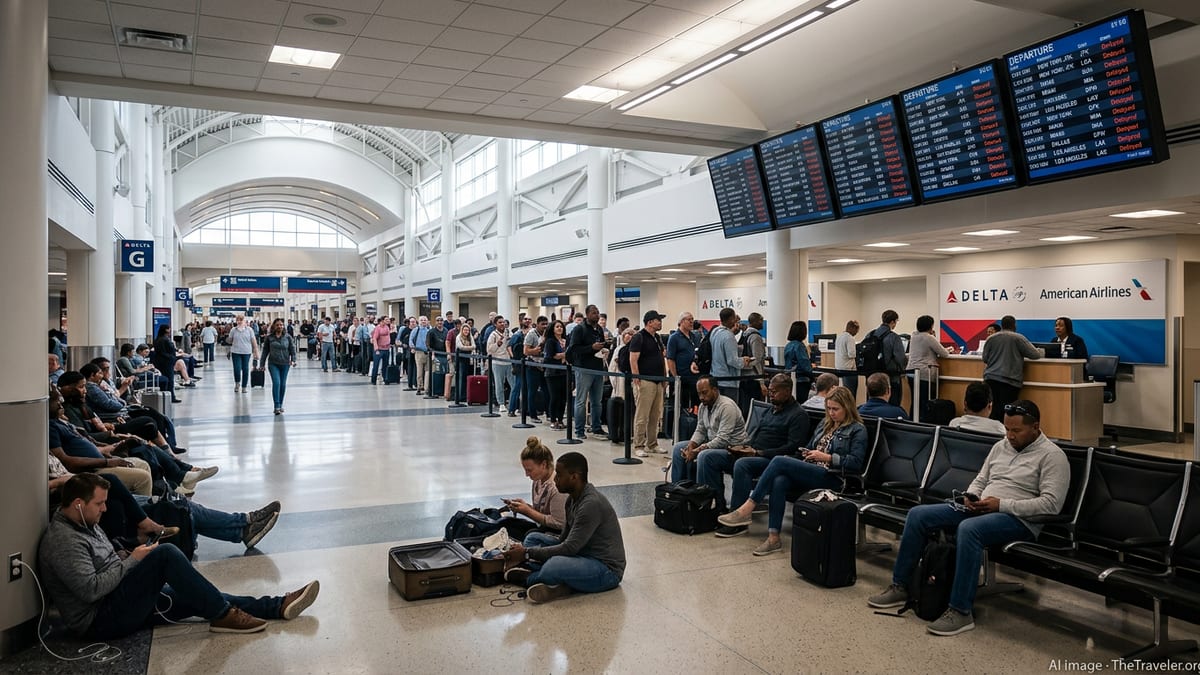
Peru vacation turns into multi day airport ordeal
Reports from Atlanta describe a group of Delta Air Lines passengers who checked in for what they expected to be a standard overnight flight to Lima, Peru, only to find themselves still in Hartsfield Jackson Atlanta International Airport days later. Travelers recounted an escalating series of schedule changes, in which one delayed departure became several cancellations and rolling rebookings with little clarity about when they would actually leave.
Publicly available coverage indicates that the disruption affected passengers on a flight early in the week, with some travelers saying they had already boarded an aircraft before being asked to deplane due to operational issues. After that, they were repeatedly told to return to the gate area for new departure times that did not hold, turning what was meant to be the start of a vacation into an extended stay inside the world’s busiest airport.
Some passengers said they decided to abandon the trip entirely after two or more days of uncertainty, either returning home to nearby cities or trying to piece together alternate itineraries with other airlines. Others remained in Atlanta in the hope that the next scheduled flight to Lima would finally depart, even as confidence in the information they were given wore thin.
Confusion over rebooking, hotels and basic support
Accounts shared in local and national outlets describe significant confusion over rebooking options and basic support such as hotel rooms and meal vouchers. Several travelers said they received hotel accommodations the first night, only to find that later cancellations came with fewer perks as rooms near the airport filled up and staff struggled to keep up with the volume of stranded passengers.
Some passengers reported spending nights stretched out on terminal floors or in gate area chairs after being unable to secure a room or transportation into the city. Others said they were given conflicting instructions about whether they should collect checked bags or leave them in the system, raising concerns about lost luggage for those who ultimately chose to rebook through other cities.
Public information about the incident suggests that rebooking agents were working through large backlogs, with travelers sometimes queuing for long periods only to be told that the next available seats to Lima were days away. For families with children or those who had prepaid tours and domestic flights within Peru, the uncertainty over whether to wait or to scrap their plans added another layer of stress.
Weather, operations and a fragile summer schedule
The disruption unfolded at the height of the busy summer travel period, when airlines run near full capacity and even minor issues can cascade across multiple routes. While the specific combination of factors on the Atlanta to Lima route has not been fully detailed in public information, coverage points to a mix of weather and operational challenges that left crews and aircraft out of position.
Industry analysts note that when a long haul international flight cancels, finding replacement aircraft and rested crews is significantly more difficult than on short domestic routes. Once the original flight from Atlanta did not depart as planned, subsequent efforts to consolidate passengers onto later services or reroute them through other hubs appear to have been hindered by already full flights and tight aircraft utilization.
Reports also highlight that aviation operations remain sensitive to thunderstorms and air traffic control constraints in the southeastern United States, particularly in the warmer months. Even when an individual flight’s immediate weather window appears acceptable, restrictions elsewhere in the system can trigger delays that compound throughout the day and into subsequent days.
Stranded travelers shoulder extra costs and lost time
For many passengers affected by the Atlanta Lima disruption, the financial and personal costs extended well beyond the price of the original ticket. Some travelers described paying out of pocket for additional hotel nights, meals, airport parking and last minute international rebookings when they gave up on waiting for a Delta operated option.
Others said they lost nonrefundable deposits on tours, domestic connections inside Peru and accommodations in Lima and beyond. In some cases, the days spent in the airport consumed nearly the entire length of a planned vacation, leaving travelers to return to work with little to show for the time off they had arranged months in advance.
Publicly available guidance from consumer advocates suggests that passengers on disrupted international flights may be entitled to refunds if they choose not to travel, as well as reimbursement of certain expenses depending on the circumstances and airline policies. However, the process of filing claims and waiting for responses can be lengthy, meaning many stranded travelers are likely to be dealing with paperwork long after their experience in Atlanta has faded from public attention.
Renewed scrutiny of airline customer care
The Atlanta Peru situation has revived debate over how well equipped major carriers are to care for customers when operations go wrong, particularly on routes where alternatives are limited. Social media posts and interviews in published reports show travelers questioning why a problem on a single route could strand them for days, and why communication from the airline appeared inconsistent across different channels.
Consumer groups have been calling for clearer rules around compensation, hotel responsibilities and timetables for rebooking when disruptions stretch beyond a single night. The latest incident feeds into broader concerns that as airlines optimize schedules for efficiency, the system has little slack when unpredictable events occur, leaving passengers to absorb the impact.
For would be travelers to Peru and other international destinations, the episode serves as a reminder to build flexibility into itineraries where possible, consider travel insurance that covers significant delays, and keep essential items in carry on bags in case checked luggage becomes difficult to access during extended disruptions. As peak travel season continues, many passengers in Atlanta and elsewhere will be watching closely to see whether airlines adjust their contingency planning in response to the highly publicized ordeal.