


More news on this day
Flight disruption at Moscow’s main airports has intensified after Ukraine escalated long-range drone operations and publicly urged airlines and insurers to treat Russian airspace as increasingly unsafe for civilian aviation.
Get the latest news straight to your inbox!
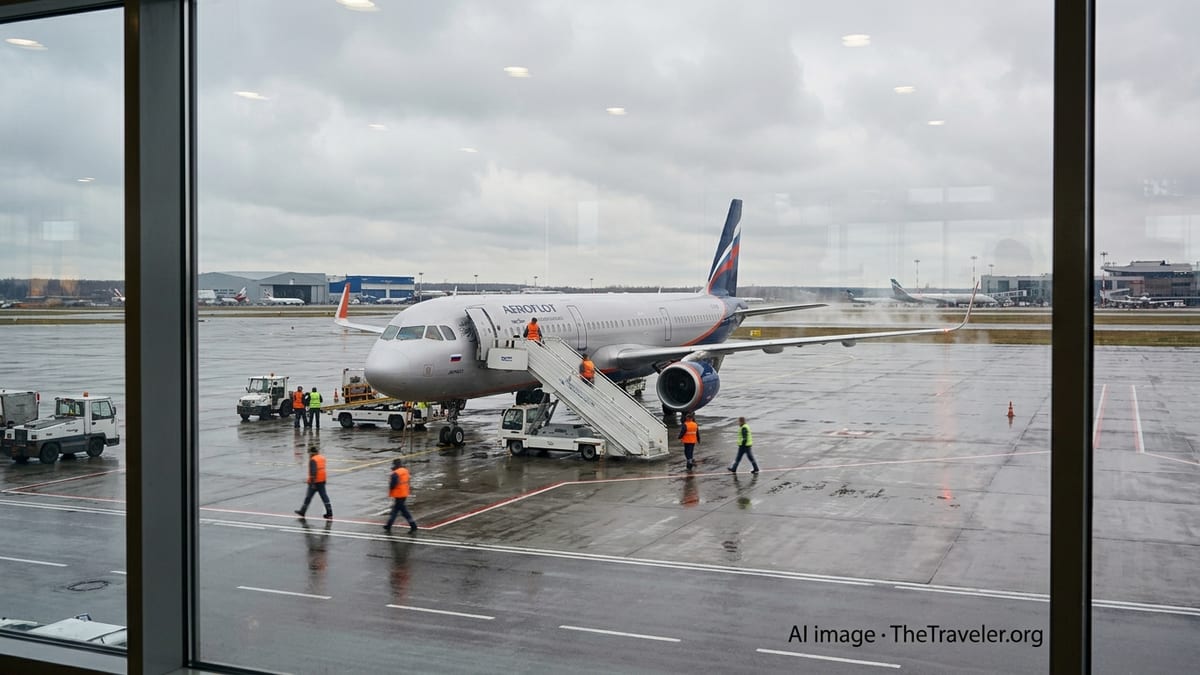
Drone Campaign Triggers Fresh Wave of Moscow Disruptions
Operational turbulence around Russia’s capital deepened on September 3, with reports of renewed restrictions, delays, and cancellations at Moscow’s major airports following a new surge in Ukrainian long-range drone activity. Russian aviation authorities introduced temporary limits on arrivals and departures at Sheremetyevo and Vnukovo for a second consecutive night as air defense systems responded to incoming drones near the capital region.
Regional reporting indicates that scores of flights were either grounded or significantly delayed as aircraft were diverted into holding patterns or rerouted away from the Moscow hub. Data from flight-tracking services cited in local coverage shows hundreds of delays and dozens of cancellations accumulating over two nights as airport operations were repeatedly paused to accommodate air defense activity in the wider Moscow area.
According to figures published by Moscow city authorities and summarized by European media, several hundred drones were detected heading toward the Moscow region over roughly a 28-hour period, with large numbers intercepted on the approaches to the capital. While most drones were reportedly destroyed before reaching key transport infrastructure, the volume of air activity over time has forced airports into frequent shutdowns that ripple through domestic and limited international networks still operating to and from Russia.
Aviation analysts quoted in recent coverage describe these recurring pauses as part of a broader Ukrainian strategy aimed at stretching Russian air defenses and undermining confidence in the reliability of Russian airspace, even when direct physical damage to airport facilities is limited.
Kyiv Presses Global Warning Over Russian Skies
The latest disruption follows a sharper diplomatic and public messaging push from Kyiv directed at the global aviation and insurance sectors. On September 1, Ukrainian President Volodymyr Zelenskyy used a widely reported evening address to argue that escalating drone operations inside Russia would render its skies “completely unsafe,” warning that “the safe days in Russia’s skies are over,” according to European news outlets and regional broadcasters.
Subsequent coverage by specialist aviation and international media notes that Ukraine is not formally threatening civil aircraft, but is signaling that the density and range of unmanned systems in Russian airspace will continue to increase. Publicly available information indicates that Kyiv aims to deter foreign airlines, insurers, and other aviation stakeholders from treating Russian airspace as a routine corridor, particularly for overflights between Europe and Asia.
On September 2, Ukraine’s foreign ministry took the additional step of formally notifying the International Civil Aviation Organization that it views Russian airspace as unsafe for civilian operations, travel-industry outlets and international broadcasters report. The move aligns Kyiv’s public rhetoric with an official communication to the UN aviation agency, reinforcing its argument that commercial traffic faces rising risks from military activity in and around key Russian flight routes.
Risk-advisory firms cited in recent analyses describe Ukrainian drone and missile strikes as increasingly frequent and geographically dispersed, with daily activity expected to continue through 2026, including in regions around Moscow and St. Petersburg. Their assessments suggest that while most incidents still occur within a few hundred kilometers of the Ukrainian border, patterns of deeper strikes make it harder to guarantee stable operating conditions for civil aviation across Russia’s vast territory.
Russian Authorities Vow to Contain Impact on Civil Aviation
Russian officials maintain that they can prevent prolonged disruption to domestic air travel despite the intensified drone campaign. Following Zelenskyy’s warnings and the latest airport interruptions, Russia’s transport minister publicly stated that civil aviation regulators are tightening flight safety and airport security requirements and working with security services to protect routes and infrastructure, according to national and international coverage.
Statements carried by Russian and foreign media emphasize that authorities are coordinating closely with the defense establishment to intercept drones before they can threaten major hubs and to keep closures short. Moscow’s aviation regulator has repeatedly referred to “temporary restrictions” when announcing suspensions of arrivals and departures at airports in the capital region, framing the measures as precautionary pauses rather than long-term shutdowns.
Nonetheless, industry commentators highlight that even brief suspensions, when repeated over many days, can erode passenger confidence and complicate airline scheduling. For travelers using Russian carriers or the limited number of foreign airlines still serving the country, the practical effect has been a growing risk of overnight delays, diversions to secondary airports, and last-minute timetable changes at Moscow’s primary gateways.
Travel-focused outlets note that Russia’s domestic network remains heavily reliant on the Moscow hub system, meaning that repeated interruptions at Sheremetyevo, Vnukovo, and other regional airports can quickly affect passengers far from the frontline or the capital itself.
Airlines and Insurers Reassess Exposure to Russian Routes
The evolving situation leaves airlines and their insurers weighing complex operational and legal considerations. Much of the international traffic that previously overflew Russia has already been rerouted since early in the war, but some carriers from countries outside the core Western sanctions regime continue to serve Russian destinations or cross its airspace on selected routes. Industry reports suggest that these operators now face higher risk premiums and renewed internal debates over whether the commercial benefits justify potential exposure.
Aviation risk consultancies quoted in recent analyses underline that any incident involving a civilian aircraft in contested airspace could raise difficult questions over liability and due diligence. Experts note that Ukraine’s formal notification to ICAO, combined with Zelenskyy’s public warnings and a documented pattern of drone incursions, creates a record that insurers and regulators are likely to scrutinize if an accident or miscalculation were to occur.
For now, Russia’s main carriers continue to schedule flights through domestic and selected international corridors, and there is no blanket global prohibition on entering Russian airspace. However, the combination of repeated tactical airport closures, the prospect of long-term drone disruption, and rising insurance concerns is gradually narrowing the margin for routine operations. Travel-industry observers say this may accelerate a shift in which Russia becomes increasingly isolated from global passenger flows even in the absence of new formal bans.
For travelers, the latest developments highlight the need to monitor airline advisories and booking conditions carefully when itineraries involve Russian airports or airspace. While many leisure and business routes have already moved to alternative corridors, the emerging pattern of disruption around Moscow suggests that reliability rather than outright access may become the defining challenge in the months ahead.
Broader Implications for Regional Air Connectivity
The mounting instability in Russian skies also carries longer-term implications for connectivity between Europe and Asia. Russia spans crucial great-circle routes linking major hubs, and its partial exclusion from international planning over recent years has already pushed some flights onto longer, more fuel-intensive paths. Analysts cited in recent explainers argue that a sustained perception of risk, coupled with Ukraine’s declared intention to keep pressure on Russian airspace, could further entrench these detours.
For carriers that still count on Russian overflights to keep schedules and costs competitive, an environment of recurrent drone alerts and short-notice airspace restrictions complicates operational planning. Even where routes remain legally open, the possibility of rapid closures or reroutings increases crew and fuel contingencies, potentially undermining the commercial case for continuing to use those corridors.
Tourism and business travel flows into Russia have already been sharply reduced since 2022, but the latest developments point to a new phase in which the country’s airspace itself, rather than only its airports, becomes a central point of concern. As Ukraine’s drone capabilities evolve and Russian defenses adapt, the balance between perceived and actual risk will be closely watched by airlines, regulators, and travelers across the wider region.
For now, the immediate effects are being felt most acutely in Moscow, where passengers are contending with overnight suspensions, congested terminals, and prolonged waiting times. Whether the disruption stabilizes or deepens further will depend on both the trajectory of the conflict and the willingness of aviation stakeholders to continue treating Russian skies as part of their regular operating environment.
EU Today: Moscow Airport Disruption Deepens as Ukraine Presses Russian Airspace Warning
Travel Daily News: Ukraine warns ICAO over Russian airspace as Moscow flights face disruption