


Bryce Canyon National Park offers two very different ways to step off the rim and into its world of orange hoodoos: the family friendly Mossy Cave Trail at the park’s northern tip, and the iconic Navajo Loop Trail that plunges straight into the Bryce Amphitheater from Sunset Point. Both are short, both are spectacular, and both are among the park’s most popular walks. Yet they deliver strikingly different experiences. This guide compares Mossy Cave and Navajo Loop in practical, real world terms so you can decide which Bryce Canyon adventure is better for your time, fitness level, and travel style.
Get the latest updates straight to your inbox!
Trail Basics: Distance, Difficulty, and What You Actually Hike
Mossy Cave and Navajo Loop are both short by national park standards, but they feel very different once you are on the ground. According to the Bryce Canyon National Park visitor guide updated in 2024, Mossy Cave is about 0.8 miles round trip with roughly 150 feet of elevation gain, rated easy and typically taking around an hour at a relaxed pace. The trail follows a small stream, the Tropic Ditch, before splitting to a tiny waterfall and a shallow grotto lined with moss and seasonal icicles. Most of the walking is on a broad, packed dirt path with only a few short hills, which means many visitors do it in sneakers and with young kids in tow.
Navajo Loop, by contrast, is a compact but serious hike. The National Park Service lists it at about 1.3 miles with roughly 550 feet of elevation change and a moderate rating. The loop starts at Sunset Point around 8,000 feet above sea level, then drops sharply into the hoodoo filled Bryce Amphitheater on steep, often narrow switchbacks. Even though 1.3 miles sounds short on paper, the combination of altitude, grade, and thin air catches many first time visitors off guard as they climb back to the rim.
In practical terms, Mossy Cave feels like a stroll with some stairs, while Navajo Loop feels like a small mountain hike compressed into one intense hour. If you are driving in from sea level that morning, perhaps from Las Vegas or Salt Lake City, you will likely notice your breathing on Navajo Loop in a way you will not on Mossy Cave.
Time of day also changes how these distances feel. Midday heat in July on the exposed Navajo switchbacks can make the climb feel twice as long, while Mossy Cave’s short length and streamside stretch stay relatively manageable even in early afternoon, especially for families breaking up a long road trip along Utah’s Scenic Byway 12.
Signature Scenery: Hoodoos, Waterfalls, and Slot like Walls
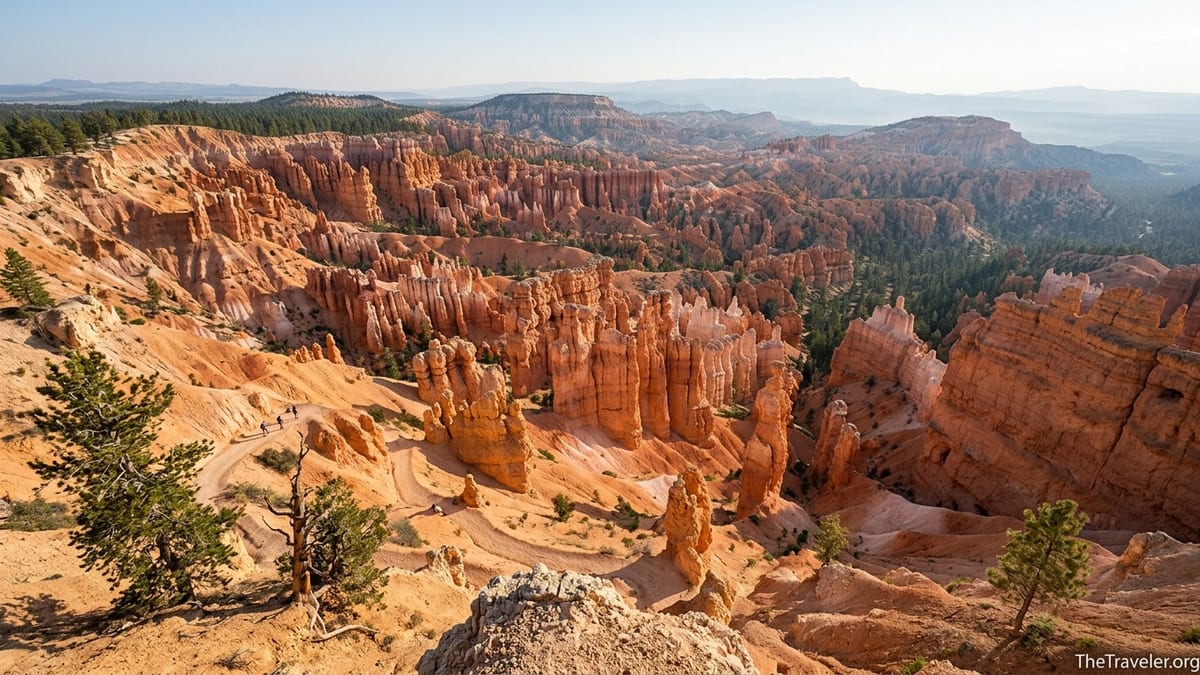
If your goal is the classic Bryce Canyon postcard, Navajo Loop is the clear winner. Starting from Sunset Point, you are looking directly into the Bryce Amphitheater, a dense forest of orange and pink limestone hoodoos that has made the park famous worldwide. Within minutes, the switchbacks drop you past Thor’s Hammer, perhaps the single most photographed hoodoo in the park, and then into towering rock corridors. On the Wall Street side, when open, you walk between near vertical rock walls that rise more than 150 feet, with two tall Douglas fir trees improbably reaching for a sliver of sky.
The Two Bridges side of the loop offers a different kind of drama, with natural rock arches and sweeping views back toward the rim. Even visitors who have hiked in Grand Canyon or Zion often remark that the feeling of walking among tightly packed hoodoos on Navajo Loop is unlike anything they have seen elsewhere in the Southwest.
Mossy Cave delivers smaller scale but surprisingly varied scenery in a very short distance. After leaving the trailhead off Highway 12, the path follows the man made Tropic Ditch, an 1890s irrigation canal that still flows today, lined with cottonwoods and sage. About a quarter mile in, a signed fork sends you right to a seasonal waterfall, where the stream tumbles over a small ledge framed by orange cliffs. Another brief spur to the left leads up to the shallow grotto called Mossy Cave, where in summer water seeps keep the rock damp and green, and in winter these seeps often freeze into curtains of ice.
Crucially, even though Mossy Cave is outside the main amphitheater, you still see plenty of hoodoos and red rock formations above the stream. For travelers who do not want or cannot manage a 500 foot climb into the amphitheater, Mossy Cave offers a taste of Bryce’s geology plus the novelty of a desert waterfall, all within less than a mile of walking.
Accessibility, Crowds, and Who Each Trail Is Best For
From an accessibility and effort standpoint, Mossy Cave is far more forgiving. Its gentle grades and short distance make it popular with multi generational groups. It is common to see grandparents with trekking poles walking alongside children in water sandals, especially in June and July when the stream attracts kids who want to splash at the edge. Visitors staying in nearby towns like Tropic or Bryce Canyon City often drive to Mossy Cave in the late afternoon after a morning on the rim because they know the whole outing, including parking and photos, can be done in under 90 minutes.
Navajo Loop, meanwhile, suits active travelers, reasonably fit adults, and families with older kids ready for a challenge. Hikers with knee or heart issues, or anyone recovering from illness, often find the relentless climb back to the rim demanding, especially on hot or smoky days. For that reason, many visitors in these groups choose to experience the amphitheater from the rim viewpoints and then do Mossy Cave as their main hike.
In terms of crowds, both trails are popular, but they peak at different times and feel different on the ground. Navajo Loop can be shoulder to shoulder by mid morning in peak season, especially when the Wall Street side is open in late spring, summer, and early fall. Sunrise to mid morning is prime time for photographers, so even the first few switchbacks can be packed with people pausing for photos. By 10 a.m., you may find yourself stepping aside frequently to let tour groups or families pass, which can slow your pace significantly.
Mossy Cave sees heavy use, too, but because it is outside the main park entrance and not served by the park shuttle, its crowd pattern is more random. On a typical July day, you might find the small parking lot full by mid morning, with cars circling and rangers recommending visitors return later in the day. However, once you are on the trail, people spread out quickly between the waterfall and the grotto, and the atmosphere often feels more relaxed. For travelers who dislike tight, enclosed trails packed with people, Mossy Cave can feel less intense than the narrow sections of Navajo’s Wall Street.
Seasonal Conditions: Closures, Water Levels, and Weather
Seasonality is one of the biggest practical differences between Mossy Cave and Navajo Loop, and it should heavily influence your choice. The Navajo Loop’s Wall Street side closes most winters and during periods of freeze thaw and rockfall risk. In recent years, that closure has often run from roughly November through April, though exact dates vary with conditions. When Wall Street is closed, Navajo typically functions as an out and back hike down and up the Two Bridges side, sometimes combined with Queen’s Garden to form a longer loop. Visitors who arrive in late March expecting the classic Wall Street experience are often disappointed to find that portion gated off.
Mossy Cave, by contrast, stays open more consistently year round, and its character changes dramatically with the seasons. In summer, Tropic Ditch runs with a modest but steady flow, feeding the waterfall and turning the grotto into a cool, mossy alcove. In late summer monsoon season, brief thunderstorms can swell the creek and darken the rock, adding drama to photos but also making the path muddy in spots. In winter, seep water inside the grotto often freezes into large icicles that can linger well into March, turning Mossy Cave into one of the park’s most photogenic cold season sights.
Winter also reshapes Navajo Loop. Snow and ice build up on the steep switchbacks, and while the park service often packs or lightly grooms the trail, footing can be slick. Many winter hikers on Navajo Loop use traction devices like microspikes and trekking poles, while on Mossy Cave sturdy boots are usually sufficient. Snow can dust the hoodoos on both trails, creating spectacular contrast with the red rock and blue sky, but you should realistically expect a slower pace and colder wind exposure on Navajo’s upper switchbacks.
Shoulder seasons bring their own tradeoffs. In May and October, temperatures are usually ideal for climbing out of the amphitheater, and Wall Street is often open at least part of that window. At the same time, Mossy Cave’s waterfall can be lower in very dry years, and the moss in the grotto may look patchy during prolonged drought. For a first time visitor traveling in late spring or early fall, Navajo Loop usually offers the best combination of comfort and classic scenery, provided you are prepared for the climb.
Logistics: Getting There, Parking, and Combining Trails
Logistics are where Mossy Cave and Navajo Loop differ the most for trip planning. Navajo Loop starts at Sunset Point inside the main portion of Bryce Canyon National Park. During the busy season, typically late spring through early fall, much of the parking near Sunset and Sunrise Points fills early in the day, and the park encourages visitors to use the free shuttle from Bryce Canyon City or from lots near the visitor center. In practice, this means that if you arrive after about 9 a.m. on a busy July Saturday, you may need to leave your car outside the main amphitheater area and ride the shuttle to Sunset Point before beginning the hike.
Mossy Cave sits at the far northern end of the park along Highway 12, about 4 miles east of the junction with Highway 63 that leads to the main entrance. There is a small roadside parking lot and a vault toilet, but no shuttle service. On busy weekends, it is common to see cars lined up along the highway shoulder when the lot fills, and rangers sometimes temporarily close entry to keep traffic safe. Many families staying at motels and campgrounds in the nearby town of Tropic drive to Mossy Cave in the early evening after dinner, when day visitors from Zion have already cleared out and parking is easier.
Both trails integrate well into larger itineraries. A popular Bryce “greatest hits” circuit for active visitors is to hike a combination like Queen’s Garden and Navajo Loop, starting at Sunrise Point and finishing at Sunset Point, sometimes called the Figure 8 when combined with the Peekaboo Loop. This creates a 3 to 6 mile day among the hoodoos, followed by an easy sunset stroll on the paved Rim Trail. Mossy Cave, on the other hand, pairs naturally with a scenic drive day that includes viewpoints along Highway 12 or nearby Red Canyon, because you enter from the same road and do not need to navigate the main amphitheater’s parking congestion.
If you have only half a day in Bryce Canyon and you are staying in Bryce Canyon City, Navajo Loop plus a few rim viewpoints usually provide the most memorable snapshot of the park. If you are driving through with kids on a longer loop between Capitol Reef and Zion and want to avoid shuttle logistics, Mossy Cave is simpler to slot into a tight schedule.
Experiences by Traveler Type: Families, Photographers, and First Timers
For families with younger children, Mossy Cave is often the better first hike. The chance to walk beside water, toss pebbles near the stream, and see a small waterfall holds kids’ attention in ways that steep switchbacks do not. The short distance also makes it easier to turn around if a toddler melts down or a thunderstorm rolls in. Parents pushing jogging strollers will still find some short stair sections challenging, but many families manage with baby carriers or simply letting kids walk most of the way.
Older kids and teens, on the other hand, often enjoy the challenge and drama of Navajo Loop. The feeling of standing at the bottom of Wall Street or beneath Thor’s Hammer can be a trip highlight, especially if they are seeing snow for the first time in winter or sunrise light catching the hoodoos in summer. Many families compromise by doing Mossy Cave on arrival day, perhaps after a long drive, and then tackling Navajo Loop early the next morning when everyone is rested and temperatures are cooler.
Photographers and serious sightseers usually gravitate toward Navajo Loop for its access to the heart of the amphitheater. Sunrise and late afternoon light raking across the hoodoos, combined with the depth of the amphitheater walls, makes for images that feel instantly recognizable as Bryce Canyon. The Two Bridges area and the switchbacks themselves are among the most photographed features in the park. That said, Mossy Cave can be surprisingly rewarding for photographers in winter, when ice formations in the grotto catch soft light and the waterfall sometimes freezes into a sculptural column.
For first time visitors trying to understand “what makes Bryce Bryce,” Navajo Loop usually offers the deeper explanation. By walking between the hoodoos, you feel their scale and see the layering and weathering that created them. Mossy Cave tells a different story: how early settlers diverted water via the Tropic Ditch to irrigate their fields and how that artificial creek now supports moss, willows, and a pocket of cool green life in an otherwise arid landscape. Combined, the two trails show both the geologic and human sides of this high plateau park.
The Takeaway: Which Bryce Canyon Experience Is Better?
Choosing between Mossy Cave Trail and Navajo Loop Trail is less about which is objectively “better” and more about what kind of experience you want from Bryce Canyon. If you want the iconic, bucket list Bryce moment, where you are surrounded by hoodoos in the main amphitheater and staring up at sheer rock walls from the canyon floor, Navajo Loop is hard to beat. It packs the park’s signature scenery into a compact, physically engaging loop that many travelers remember as the standout hike of a Utah road trip.
If your priorities are ease, flexibility, and a gentler introduction to the park’s landscape, Mossy Cave has clear advantages. It is better suited to travelers with limited mobility, very young kids, or tight schedules, and it stays interesting year round with its seasonal waterfall in summer and ice filled grotto in winter. On a practical level, it also avoids the shuttle logistics and rim parking crunch that can complicate a quick stop at Sunset Point.
For many visitors who have the time, the ideal answer is not Mossy Cave or Navajo Loop, but both. Doing Mossy Cave on a travel day gives you an easy taste of Bryce’s red rock and water, while an early morning Navajo Loop on a full park day delivers the amphitheater’s drama at its best light and coolest temperatures. If you must choose only one and you are reasonably fit, Navajo Loop more fully captures what makes Bryce Canyon unique among the national parks of the American Southwest.
Whichever you pick, setting your expectations around distance, difficulty, crowds, and seasons will help you enjoy the hike you choose instead of worrying about the one you skipped. Come prepared with water, layers for Bryce’s high elevation weather swings, and an unhurried schedule, and both Mossy Cave and Navajo Loop can become unforgettable chapters in your Utah travel story.
FAQ
Q1. Is Mossy Cave Trail or Navajo Loop better for families with small children?
For most families with children under about eight years old, Mossy Cave is the better starting point. Its 0.8 mile distance, gentle grades, and streamside setting keep kids engaged without overtaxing them, and parents can easily turn around at the waterfall or the cave if attention spans fade. Navajo Loop’s steep switchbacks and 550 foot climb can be tough for younger kids, especially in midday heat or at high elevation.
Q2. Which trail gives the more classic Bryce Canyon views?
Navajo Loop offers the quintessential Bryce Canyon scenery. From Sunset Point you drop directly into the Bryce Amphitheater, passing Thor’s Hammer, towering hoodoos, and the narrow Wall Street section when it is open. Mossy Cave has attractive hoodoos above the stream and a scenic waterfall, but it does not immerse you in the main amphitheater in the same way.
Q3. How long does it realistically take to hike each trail?
Most visitors complete Mossy Cave in 45 to 60 minutes, including time for photos at the waterfall and grotto. Navajo Loop typically takes 60 to 90 minutes for reasonably fit hikers, but you should plan closer to two hours if you like to stop often for photos, are adjusting to the altitude, or are visiting during crowded summer months when the trail can bottleneck at the switchbacks.
Q4. Are there months when one trail is more likely to be closed?
Yes. The Wall Street side of Navajo Loop usually closes in winter and sometimes in early spring or after heavy rain because of rockfall and ice, turning the route into an out and back on the Two Bridges side or a partial loop with Queen’s Garden. Mossy Cave generally remains open year round, though snow, ice, or high water can make parts of the path slippery. Always check current conditions with Bryce Canyon rangers or posted signs before you hike.
Q5. Can I do both Mossy Cave and Navajo Loop on the same day?
Many visitors comfortably combine both in one day. A common pattern is to hike Navajo Loop early in the morning from Sunset Point, when temperatures are lower and parking or shuttle seats are easier to find, then drive to Mossy Cave in the late afternoon or evening for a relaxed second hike. Together they still total only about 2 miles of walking, though the combined elevation gain, especially from Navajo, can make the day feel full.
Q6. Do I need special gear for either trail?
In summer, sturdy walking shoes, water, sun protection, and a light layer are usually enough for both hikes. In winter and early spring, traction devices such as microspikes and trekking poles are strongly recommended for Navajo Loop’s steep, potentially icy switchbacks. Mossy Cave can also be icy near the grotto in cold weather, but the gentler terrain means careful steps and good boots are often sufficient for most visitors.
Q7. Which trail is less crowded if I want a quieter experience?
Navajo Loop is one of Bryce Canyon’s most popular hikes and can feel very busy between about 9 a.m. and 3 p.m., especially when Wall Street is open. Mossy Cave’s small parking lot limits the total number of people on the trail at once, and while it can still be busy at peak times, the atmosphere tends to feel more relaxed. For the quietest experience on either trail, aim for early morning or late afternoon and avoid holiday weekends.
Q8. Is either trail suitable for someone with knee or heart problems?
Mossy Cave is generally the safer choice for visitors with knee, heart, or breathing issues, because its elevation gain is modest and the trail does not demand a sustained, steep climb. Navajo Loop’s 550 foot ascent at high altitude can put significant strain on knees and cardiovascular systems, particularly on hot days. Anyone with health concerns should consult a medical professional before attempting Navajo Loop and be prepared to take frequent breaks if they decide to hike it.
Q9. How does parking work for Mossy Cave versus Navajo Loop?
Navajo Loop starts at Sunset Point inside the main amphitheater area, where parking can fill early and the park’s seasonal shuttle is often the easiest way to reach the trailhead during peak months. Mossy Cave has a small dedicated lot along Highway 12 with no shuttle access, and when it fills, rangers may ask drivers to return later rather than park along the road. In practice, early morning or evening arrivals improve your chances of an easy parking experience at both trailheads.
Q10. If I have only a few hours in Bryce Canyon, which trail should I choose?
If you are reasonably fit and want the most iconic Bryce Canyon experience in limited time, Navajo Loop is usually the better choice, especially when combined with a brief walk along the rim between Sunrise and Sunset Points. If your time is short and you prefer a lower effort outing with easier logistics, particularly if you are already driving Highway 12 between towns like Tropic and Panguitch, Mossy Cave offers a rewarding snapshot of Bryce’s red rock, water, and hoodoos with less strain and simpler parking.