


At first glance, Mossy Cave Trail looks like the simplest decision of a Bryce Canyon trip. It is short, relatively flat, and rewards you quickly with a manmade waterfall, red rock hoodoos, and a shaded grotto lined with moss or icicles depending on the season. Yet this seemingly effortless walk regularly catches visitors off guard with crowded parking, unexpectedly harsh desert conditions, seasonal hazards, and a few rules that are easy to ignore in the excitement of the scenery. Before you pull into the small lot on Highway 12 and lace up your boots, it pays to understand what most people miss.
Get the latest updates straight to your inbox!
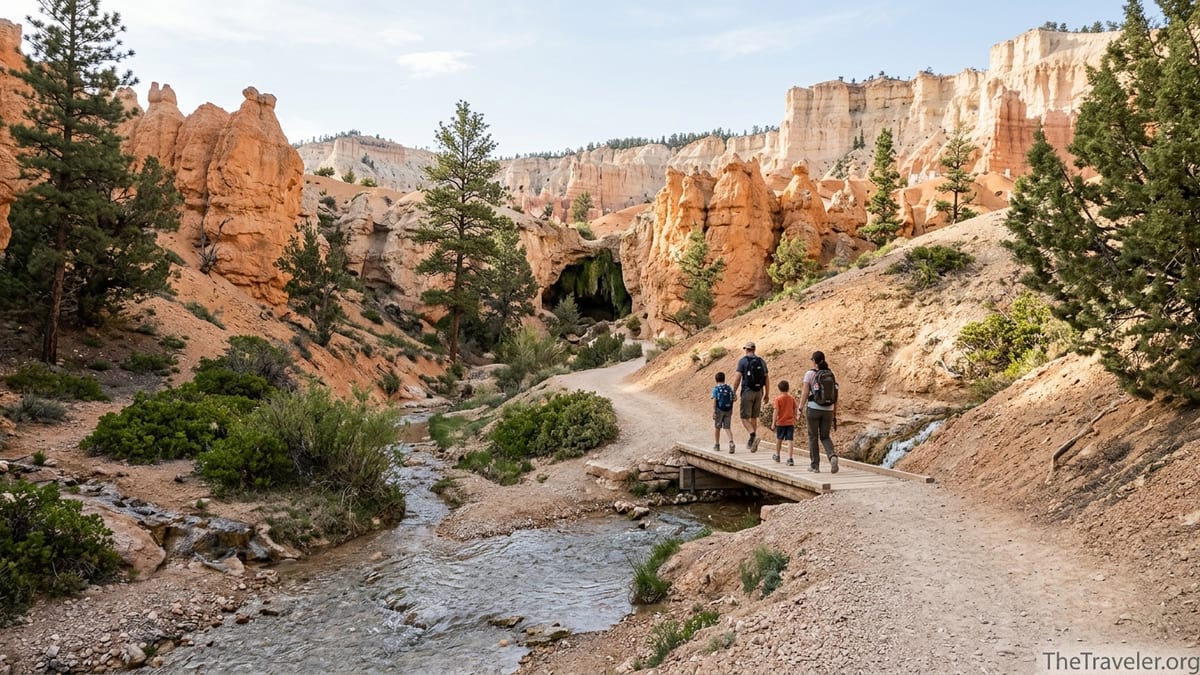
Understanding Where Mossy Cave Fits Into Bryce Canyon
Mossy Cave sits at the northern end of Bryce Canyon National Park, along Utah’s Highway 12, about 3.5 to 4 miles east of the junction with Highway 63 and roughly 7.5 miles by road from the Bryce Canyon Visitor Center. Although the parking area lies outside the main entrance gate, it is still part of the national park, which means standard Bryce Canyon entry fees or a valid America the Beautiful pass are required. Visitors often assume that because they never pass a booth, they are on a free roadside trail and are surprised to learn the same regulations as the rest of the park apply here.
Another often overlooked detail is elevation. Mossy Cave is lower than Bryce Amphitheater’s main overlooks, at about 6,800 feet above sea level compared with 8,000 to 9,000 feet on the rim. That lower elevation makes temperatures slightly milder and the trail more accessible for those affected by altitude, but you are still hiking in high desert. Travelers driving in from Las Vegas or St. George in a single day can feel lightheaded or unusually tired on this “easy” walk if they are not well hydrated and rested from the drive.
Because Mossy Cave requires leaving the main scenic road, it is easy to misjudge the time commitment. From the Bryce Canyon lodge area, the drive to the trailhead typically takes about 15 to 20 minutes each way, depending on traffic and photo stops along Highway 12. Factoring in parking delays in peak season and 45 to 60 minutes on the trail itself, a supposedly quick side trip can easily fill a two-hour block in a carefully planned Bryce and Zion itinerary.
Finally, Mossy Cave offers a rare mix in Bryce: hoodoos, water, and shade in a short family-friendly package. That combination makes it disproportionately popular compared with longer hikes such as Fairyland Loop or Peekaboo Loop. Many visitors who skip it assume it is just another viewpoint, only to realize afterward that it is one of the few places where you can get close to flowing water and a waterfall without serious elevation change.
Parking, Timing, and Crowd Realities
The single most common frustration at Mossy Cave is the parking lot. Official information describes it as small, and that is an understatement in peak season. There are a limited number of standard spaces and a tight turnaround area. On busy summer and holiday weekends, the lot can fill early in the morning and remain congested for hours, with cars idling on Highway 12 waiting to swoop into any spot that opens up. Rangers have periodically adjusted parking patterns here to improve safety and traffic flow, but capacity remains finite.
Unlike the Bryce Amphitheater area, there is currently no park shuttle service directly to Mossy Cave. The free Bryce Canyon shuttle is designed around stops between Bryce Canyon City and the main viewpoints such as Bryce Point, Inspiration Point, and Sunset Point. To reach Mossy Cave you must drive yourself, which means competing for a parking space. That surprises travelers who have structured their visit around using only the shuttle and assumed they would not need to navigate trailhead parking at all.
In practical terms, this means smart timing matters even for a one-mile round-trip walk. Arriving before about 8 a.m. in summer, or closer to sunset in the evening, generally offers a much better experience. Visitors driving between Capitol Reef and Zion often reach Mossy Cave in late morning or midafternoon, exactly when temperatures peak and the lot is fullest. If you are traveling with kids who nap, or you plan a sunrise amphitheater visit, consider placing Mossy Cave directly after an early breakfast in Bryce Canyon City or the small town of Tropic and aim to be at the trailhead as day-trippers are still arriving in the park proper.
When the lot is full, parking along Highway 12 may be restricted or prohibited for safety. State troopers and rangers periodically patrol this stretch of road, and tickets or warnings are not unheard of. Planning an alternate activity, such as driving the main park road to Rainbow Point or stopping for lunch in Tropic, and then trying again later will almost always be more relaxing than circling the lot in tight quarters for half an hour.
The Trail Is Short, but It Is Not a Stroll in a City Park
On paper, Mossy Cave is a simple outing: about 0.8 to 1 mile round trip with roughly 150 feet of elevation gain spread over a compact, well-defined path. It is one of the easiest official hikes in Bryce Canyon. Yet that statistic hides realities that visitors fresh from hours in an air-conditioned rental car often forget. The trail surface is a mix of packed dirt and gravel with some loose rock, several short but noticeable climbs, and drop-offs above the creek at certain points. People wearing flip-flops or smooth-soled fashion sneakers are a common sight, and so are minor slips.
A realistic packing list even for this short hike includes closed-toe shoes with some tread, at least a liter of water per person in warmer months, sun protection, and a small daypack if you plan to carry a camera or snacks. Parents frequently underestimate how quickly children can tire in the dry air and bright sun. A family that leaves the car with no water because “it’s just a quick walk to a waterfall” may find themselves coaxing an overheated five-year-old up the final incline from the cave back to the car.
The trail also splits partway along. At roughly a quarter of a mile from the parking area, you reach a signed junction: one short spur leads left toward Mossy Cave itself, while the other crosses a bridge and continues to viewpoints over the manmade waterfall on Tropic Ditch. Many visitors head straight to the cave, assuming they will “see the waterfall on the way,” and then are confused about how to access the falls before turning back. Taking a moment at the junction to note where each spur goes saves repeated backtracking and helps you budget your time if weather is building or small children are getting tired.
Although Mossy Cave lacks the steep, cliffside exposure of trails like Navajo Loop, you are still responsible for basic canyon safety. The path follows Water Canyon, which can experience higher flows or muddy sections after storms. Staying on the marked trail and keeping children from scrambling down steep banks to the creek minimizes erosion and helps avoid the kind of minor injuries that can derail the rest of a tightly planned Utah road trip.
Water, Seasons, and the “Mossy” Part of Mossy Cave
The second surprise for many visitors is just how much Mossy Cave changes with the seasons. The water flowing through Water Canyon and over the small waterfall near the trail is not a natural stream but Tropic Ditch, an 1890s irrigation canal diverted from the East Fork of the Sevier River to irrigate fields near the town of Tropic. Because it is a managed watercourse, flow levels vary based on irrigation needs and weather. Travelers who come expecting a roaring cascade in late fall may find the waterfall reduced to a trickle, while those arriving in spring after snowmelt or a summer monsoon may see a far more dramatic display.
The grotto that gives the trail its name is equally seasonal. In summer, groundwater seepage and the cooler microclimate inside the alcove foster lush green mosses that make the walls appear carpeted and dripping. In winter, those same seeps often freeze into curtains of icicles, sometimes building into thick columns that can persist well into late season cold snaps. Photography enthusiasts often plan a winter visit specifically to capture the contrast of orange hoodoos, white snow, and blue ice in the cave; yet they can be surprised to find portions of the trail icy or closed for safety after snowstorms.
Because conditions change so much, it is worth stopping at the Bryce Canyon Visitor Center on your way into the park, or checking recent ranger updates and trail condition boards. Staff can often tell you whether Tropic Ditch is running high, whether ice traction like microspikes is advisable, or if the grotto is currently more mossy than icy. In a shoulder-season visit, this can help you choose the best time of day to hike Mossy Cave: early morning to see frost and avoid melting slush, or afternoon when the sun warms the canyon and makes creek-side lounging appealing.
If you are structuring your Utah itinerary around “water hikes” such as The Narrows in Zion or riverside walks in Capitol Reef, it is important to calibrate expectations. Mossy Cave is charming and photogenic, but it is still a short stroll along a narrow canal-fed stream, not a deep slot canyon. Treat it as an accessible taste of water in Bryce’s otherwise dry landscape rather than the central aquatic experience of your trip.
Desert Weather, Flash Flood Potential, and Microclimate Hazards
Because Mossy Cave feels gentle compared with Bryce’s rim-to-floor routes, visitors often underestimate the desert weather and hydrologic risks in Water Canyon. The broader region experiences a pronounced summer monsoon season, particularly from roughly July through September, when intense localized thunderstorms can trigger flash floods in canyons and washes. These events are most notorious in narrow slots, but any drainage can see rapidly rising water, strong currents, and debris.
Flash floods do not always coincide with rain overhead. A storm that dumps heavy rain miles away on the plateau can send a surge of muddy water down Water Canyon while skies above the trail are still partly blue. While Mossy Cave’s channel is relatively open compared with technical canyons, it is still wise to check the day’s flash flood potential forecast at the visitor center or through official bulletins before planning a late-afternoon creek-side picnic along the trail. If dark clouds build, thunder rumbles, or water suddenly turns brown and begins to rise, the safest choice is to move away from the stream and higher onto solid ground along the main trail.
Winter and shoulder seasons introduce a different set of hazards. Snowfall, freeze-thaw cycles, and dripping water from the grotto can create very slick patches on shaded sections of the path, particularly near the cave and on short, steep grades. A surprising number of twisted ankles and falls on “easy” Utah trails happen when compacted snow or invisible ice lingers on high-traffic segments. Lightweight traction devices and hiking poles can make a big difference in stability from late fall through early spring, especially for older visitors or those not accustomed to walking on snow.
Regardless of season, standard desert safety principles still apply at Mossy Cave. Carry water even if the walk looks short, wear a hat and sunscreen, and avoid hiking in the hottest part of the day in mid-summer. Temperatures in Bryce can climb into the 80s or 90s Fahrenheit in July and August at lower elevations, and shade is intermittent on the open sections of trail. Dehydration and heat exhaustion can creep up quickly on travelers flying in from cooler coastal climates who have been sitting on airplanes and in cars for days before their hike.
Etiquette, Safety, and Protecting a Fragile Canyon
Mossy Cave has become a victim of its own accessibility. Its short distance and gentle grade attract families with strollers, casual walkers in sandals, and social media photographers intent on dramatic creek and waterfall shots. Heavy foot traffic in a narrow canyon magnifies every small act of poor trail etiquette, and visitors are sometimes surprised by posted regulations or ranger reminders that feel stricter than they expected for such a short walk.
Swimming or wading in Tropic Ditch and the waterfall pool is strongly discouraged and may be prohibited depending on current management policies. Even where there is no explicit “no swimming” sign, entering the water accelerates bank erosion, stirs up sediment, and can damage fragile plant life that stabilizes the creek. People climbing down steep, crumbly slopes to stand directly under the falls often trigger small rockfalls that affect those below them on the trail and create visible scars that remain for years. Enjoy the water from established viewpoints and flat, durable surfaces instead of treating the channel as an informal swimming hole.
Staying on the marked trail is especially important in this environment. Unlike broad forest paths, the route through Water Canyon traverses cryptobiotic soils, fragile plant communities, and steep, unstable slopes above the creek. Shortcuts carved by visitors eager to cut corners at switchbacks or reach the water more quickly can widen into persistent social trails that fragment habitat and make the main path harder to follow. Parents can set a powerful example by insisting kids avoid scrambling up hoodoos or down loose banks, even when they see others doing so.
Noise and crowding are less visible but still impactful. Water Canyon’s narrow walls and the constant presence of the creek amplify voices. Groups shouting or playing loud music on portable speakers can dominate the soundscape for everyone else, turning a potentially serene walk into something more like a busy city park. Practicing “quiet voices,” letting the sound of the stream and wind through the pines set the ambiance, and yielding courteously on narrow sections of trail help preserve the sense of discovery that makes Mossy Cave special despite its popularity.
How Mossy Cave Fits Into a Wider Southern Utah Itinerary
Most travelers visit Mossy Cave as part of a broader loop through southern Utah’s parks, often pairing Bryce with Zion National Park, Capitol Reef, and roadside stops along Scenic Byway 12. Understanding where this short trail fits in that larger picture can prevent both overplanning and underestimating its value. For example, visitors driving east from Zion may stop first at Bryce Amphitheater for sunrise, hike a loop like Queens Garden and Navajo, then continue along Highway 12 toward Tropic, Cannonville, and Escalante, slipping Mossy Cave in as a late-morning detour. Others overnight in the small motels of Tropic and treat Mossy Cave as an early-evening stroll after dinner.
If you are already accounting for multiple long hikes on your itinerary, Mossy Cave can serve as a recovery walk on a day when energy is low. After descending and climbing back out of the main amphitheater, many hikers appreciate the chance to move their legs without committing to more steep switchbacks. It is also an excellent option for multigenerational groups where grandparents may not feel comfortable with the elevation changes on more demanding trails; everyone can still experience Bryce’s hoodoos and a canyon landscape together.
On the other hand, if you are rushing through Bryce on a single afternoon between longer days in Zion and Arches, it is possible that Mossy Cave might not deserve top billing. In that case, focusing your limited time on the main amphitheater viewpoints and a short rim walk may offer a better sense of Bryce’s signature landscape. Many travelers find that keeping Mossy Cave flexible on their schedule, ready to be dropped if parking is impossible or energy is flagging, preserves their overall trip quality.
Nearby services can influence your planning as well. The town of Tropic, a short drive east, offers small cafes, diners, and grocery options where you can pick up sandwiches or snacks before or after your hike. Bryce Canyon City, closer to the main park entrance, has larger hotels, a general store, and restaurants often used by tour groups. Knowing that you do not need to carry a full meal on the trail makes it easier to treat Mossy Cave as an add-on before lunch or after an early dinner.
The Takeaway
Mossy Cave Trail is a study in contrasts: an easy, family-friendly walk that still demands respect for desert conditions; a manmade waterway and grotto that feel remarkably wild; and a short side trip that can either slide seamlessly into your Bryce Canyon day or create unexpected logistical headaches. The visitors who enjoy it most are those who recognize these contradictions instead of assuming that “short” means “effortless.”
By planning your timing around the small parking lot, preparing for real high-desert hiking conditions even on a one-mile path, and approaching the water features with care and respect, you can experience one of Bryce Canyon’s most rewarding small adventures. Whether you find the grotto draped in moss or shimmering with icicles, Mossy Cave offers a quiet, intimate counterpoint to the grand amphitheater overlooks. Go in with realistic expectations, a bit of local knowledge, and a willingness to share the narrow canyon considerately, and this brief hike can become one of the most memorable parts of your southern Utah journey.
FAQ
Q1. Do I have to pay the Bryce Canyon National Park entrance fee to hike Mossy Cave?
The Mossy Cave Trail is inside the official boundary of Bryce Canyon National Park even though the parking area is on Highway 12 outside the main gate. You are required to have a valid park entrance pass or an America the Beautiful interagency pass to visit. There is no separate fee station at the trailhead, so you should purchase or confirm your pass at the main entrance or online before you go.
Q2. How long does the Mossy Cave hike really take?
The trail itself is less than a mile round trip and most visitors spend about 45 minutes walking at a relaxed pace, taking photos at the waterfall and the grotto. When you add time to drive from the main park area and possibly wait for a parking spot, it is wise to budget 1.5 to 2 hours total in your itinerary, especially during busy summer days.
Q3. Is the Mossy Cave Trail suitable for young children and older adults?
Yes, many families with small children and older travelers hike Mossy Cave because it is relatively short with moderate elevation gain. However, the surface is uneven in places with loose gravel, and there are short uphill sections that can feel strenuous for anyone sensitive to altitude. Closed-toe shoes, sun protection, and carrying water make the experience much more comfortable for all ages.
Q4. Can I swim or wade in the creek and waterfall at Mossy Cave?
The water along the trail is part of Tropic Ditch, an irrigation canal, and entering the stream or pool is strongly discouraged and may be restricted. Wading and swimming contribute to erosion, damage vegetation, and can create safety issues on steep, crumbly banks. It is best to enjoy the water from designated viewpoints and durable, flat areas along the marked trail.
Q5. When is the best season to visit Mossy Cave?
Mossy Cave offers different highlights in different seasons. In summer the grotto is typically lush and green with dripping moss, while in winter it often features striking icicle formations. Spring and early summer can bring stronger water flow in the canal and at the falls, whereas late fall may see lower flow. Your ideal season depends on whether you prefer green moss and warm temperatures or snow and ice contrasts in colder weather.
Q6. Are dogs allowed on the Mossy Cave Trail?
Bryce Canyon National Park has specific rules about pets on trails, and those rules apply to Mossy Cave. Policies can change, so before bringing a dog you should check the most current pet regulations provided by the park and plan accordingly. Even where pets are allowed, they must be leashed and you are responsible for cleaning up after them and minimizing their impact on wildlife and other hikers.
Q7. How crowded does Mossy Cave get, and how can I avoid the busiest times?
Mossy Cave is one of the most popular short hikes in Bryce Canyon, and the small parking lot fills quickly in peak season, especially between late morning and midafternoon. To avoid the worst congestion, aim to arrive early in the day, often before 8 a.m., or later in the afternoon closer to sunset. Weekdays outside major holidays are generally less crowded than weekends in summer.
Q8. Is the Mossy Cave Trail accessible in winter?
The trail is often accessible in winter, but conditions can change quickly with snow and ice. Sections of the path, especially near the grotto and on shaded slopes, may become very slick, and temporary closures are possible after storms. If you plan a winter visit, check current trail conditions with rangers and consider bringing traction devices and warm layers to handle cold temperatures and icy footing.
Q9. Is Mossy Cave worth visiting if I only have half a day at Bryce Canyon?
With limited time, your priorities should usually be the main amphitheater viewpoints and a short rim or below-the-rim hike. Mossy Cave can be a great addition if you have an extra hour and the parking lot is not full, especially if you want to experience water and a quieter canyon. If the lot is jammed and your schedule is tight, it may be better to save Mossy Cave for a future visit and focus on Bryce’s signature overlooks.
Q10. What should I bring specifically for the Mossy Cave hike?
For most of the year, you will want comfortable closed-toe walking shoes, at least a small water bottle per person, sun protection such as a hat and sunscreen, and a light layer in case breezes in the canyon make it cooler than expected. In winter and early spring, add traction devices and warm clothing. A small daypack for a camera, snacks, and a lightweight rain shell is helpful, but you do not need heavy technical gear for this short trail.