


Mossy Cave Trail is one of Bryce Canyon National Park’s easiest and most surprising hikes, combining hoodoo views, a desert waterfall and a shady grotto in less than a mile. Because it starts outside the main entrance gate along Utah’s Scenic Byway 12, many travelers either miss it completely or underestimate how popular and busy it has become. This guide walks you through the route step by step, with realistic tips on parking, timing, conditions and safety so you can make the most of this short but memorable walk.
Get the latest updates straight to your inbox!
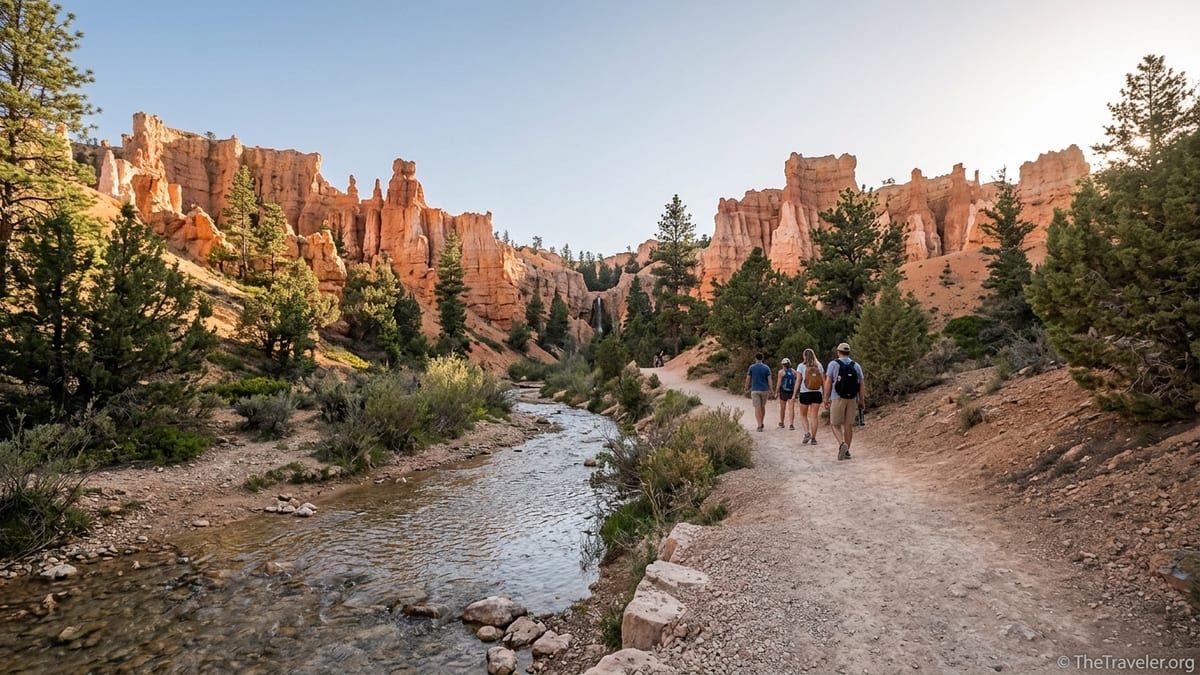
Where Mossy Cave Trail Is and Why It Matters
Mossy Cave Trail sits in the northeastern corner of Bryce Canyon National Park along Utah State Route 12, about 3.5 to 4 miles east of the junction with Highway 63 that leads to the main park amphitheater. Unlike most Bryce hikes, you will not drive through the fee station or start from a rim viewpoint. Instead, you pull into a small roadside parking lot just after crossing a bridge over Water Canyon, making Mossy Cave feel more like a roadside stop than a classic national park trailhead.
This location makes Mossy Cave especially appealing to road trippers traveling between Bryce Canyon, the town of Tropic and other Highway 12 destinations such as Escalante. Many visitors stop either on their way into the park or as a “cool-down” walk after tackling steeper trails like Queen’s Garden or Peekaboo Loop. Because it offers close-up hoodoos, a stream and a waterfall without major elevation gain, the National Park Service highlights it as one of Bryce’s easiest hikes for families and visitors adjusting to high altitude.
The setting is also geologically distinct. Water Canyon, which Mossy Cave Trail follows, is a true stream-carved canyon. Higher up the slopes you will see the classic lumpy, broken texture of Bryce hoodoos and fins, while the lower walls near the creek form a smoother V-shape typical of a water-carved ravine. You get an unusual side-on view of Bryce’s formations rather than the more familiar amphitheater vistas at Sunrise and Sunset Points.
Because Mossy Cave is outside the main fee booth area, some travelers assume it is free or unregulated. In reality, it is still inside Bryce Canyon National Park boundaries and subject to the same entrance fee or pass requirements as the rest of the park. Rangers periodically patrol and check windshield passes, and signs remind visitors that park rules on pets, drones and off-trail travel apply here as well.
Trail Stats, Difficulty and Who It Is Best For
According to recent National Park Service trail guides, Mossy Cave is approximately 0.8 miles round trip, with about 150 feet (46 meters) of elevation gain. That distance includes the main path from the parking lot up Water Canyon to the fork and then the spur to the grotto. Walking to both the waterfall viewpoint and the cave adds a few extra minutes but still usually keeps total hike time under an hour for most visitors.
In terms of difficulty, Mossy Cave is rated easy. The path is well-defined, relatively wide, and mostly packed dirt and gravel with some short, moderately steep sections as you approach the fork and climb to the viewpoints. There are a few stone steps and railings near drop-offs, but no scrambling or exposure. Healthy adults and school-age children typically complete the hike in 20 to 40 minutes of actual walking time, plus whatever they spend wading, taking photos or resting in the shade.
This trail is especially suitable for families with young kids, older travelers who might struggle with Bryce’s steeper rim-to-canyon routes, and anyone coming from lower elevations who is still acclimating to Bryce’s high plateau. At just under 7,000 feet of elevation, Mossy Cave sits several hundred feet lower than main-rim viewpoints, which can make breathing a bit easier for those sensitive to altitude.
That said, “easy” at Bryce still means you are on an unpaved trail. Sturdy walking shoes or light hiking shoes are strongly recommended. Rangers consistently report that many injuries in the park happen when visitors hike in sandals, flip-flops or slick fashion sneakers on loose gravel. Even on Mossy Cave’s short path, a slip on the pebbly slopes or near the creek can lead to twisted ankles or falls.
Step-by-Step Route: From Parking Lot to Waterfall and Cave
From the parking lot along Highway 12, you will see a clearly signed trailhead and a vault toilet. After a short walk on flat ground, the trail crosses a small footbridge over the Tropic Ditch, the irrigation canal that brings water from the East Fork of the Sevier River into Water Canyon. This man-made ditch, completed in the 1890s by Mormon settlers, is why the creek and waterfall exist here at all; without it, this side canyon would likely be dry most of the year.
Immediately after the bridge, the path begins a gentle uphill climb along the right side of the flowing stream. As you head into the canyon, look to your left for textbook Bryce vistas: orange and pink hoodoos and fins rising above green pinyon and juniper. In early summer, the contrast between the bright red sandstone, the blue sky and the narrow ribbon of water feels almost surreal in what is otherwise a semi-arid landscape.
Roughly a quarter-mile in, you will reach a signed fork. The right-hand spur continues along the creek, passing a second bridge and ending at a small but photogenic waterfall where Tropic Ditch drops over a sandstone ledge. Many visitors, especially families with kids, linger here to play in the shallow pools, cool their feet and photograph the falls with the hoodoos in the background. Flow varies by season and recent rainfall, so in late summer drought years the waterfall may be more of a trickle, while after storms it can be surprisingly robust.
Back at the junction, the left-hand spur climbs a short hill and curves toward the base of a shallow alcove in the cliff: the so-called Mossy Cave. In summer, constant seepage keeps the interior damp and supports a fringe of moss and ferns, a sharp contrast to the dry slopes outside. In winter and early spring, the dripping water often freezes into impressive icicles and pillars of ice that fill the grotto, turning this easy walk into a cold-weather highlight. The official trail ends at a fenced viewpoint just outside the cave, and visitors are asked not to step into or climb around the alcove to protect fragile plants and reduce erosion.
Parking, Crowds and How to Time Your Visit
Mossy Cave’s biggest challenge is not the terrain but the parking. The official lot is small relative to the hike’s popularity, with spaces for roughly a few dozen vehicles at most. During peak summer season and on mid-day weekends from roughly late May through September, it is common to see cars lined along the shoulder of Highway 12, sometimes with rangers on site to manage congestion or direct visitors away when parking reaches unsafe levels.
If you want to park legally and avoid stress, target early morning or late afternoon. Arriving before about 8:30 a.m. in July or August typically gives you a good shot at a space, as many Bryce visitors focus on sunrise at the amphitheater first. Late-day visits after 5:00 p.m. often see turnover as day-trippers head back toward their hotels in Bryce Canyon City, Tropic or Panguitch. The softer evening light along the canyon walls also makes for better photographs and cooler temperatures in midsummer.
Travelers staying in nearby lodging in Tropic sometimes time their visit for early evening, pairing a short walk to Mossy Cave with dinner in town afterwards. Because Mossy Cave is only about a 10-minute drive from Tropic, it can be a convenient outing after a full day in the main park when you do not want another long drive. Conversely, visitors driving in from Escalante or Kodachrome Basin State Park often stop at Mossy Cave as their first taste of Bryce before continuing on to the main viewpoints.
Note that there is no shuttle service to Mossy Cave. Bryce Canyon’s seasonal shuttle buses cover the main amphitheater area between Bryce Canyon City and Rainbow Point, but they do not extend along Highway 12 to this trailhead. You will need your own vehicle or a private tour that specifically includes a stop at Mossy Cave. Bicyclists on Scenic Byway 12 occasionally visit, but should be cautious about narrow shoulders and fast-moving traffic near the parking area.
Seasonal Conditions: When to Go and What to Expect
Mossy Cave is generally accessible year-round, but your experience will vary greatly by season. From roughly mid-spring through mid-autumn, the trail is usually snow-free, and the creek and waterfall flow steadily thanks to irrigation releases and snowmelt. This is the best time if you want kids to splash in the water, photograph the falls with full flow, or enjoy green vegetation along the stream.
Summer brings both the biggest crowds and the highest temperatures. While Bryce is cooler than many Utah parks, afternoon highs in July and August can still reach the upper 70s or low 80s Fahrenheit at Mossy Cave’s elevation. The canyon offers some shade, but sun exposure is significant on the open sections, and reflected light from pale sandstone can intensify UV. Plan to carry water for every member of your group, even though the hike is short. A common pattern is families arriving straight from the car with no water, only to find the heat more draining than expected at altitude.
Late summer and early fall can be particularly scenic. Cottonwood and willow trees along the creek show subtle color change, crowds thin on weekdays once schools are back in session, and daytime temperatures are often comfortable in the 60s and low 70s Fahrenheit. Many photographers aim for late September or early October visits to capture this mix of fall color and steady water flow without snow or ice.
In winter, Mossy Cave transforms. Snow along the trail can create slippery conditions, and park rangers strongly recommend traction devices such as microspikes on shoes if there has been recent snowfall or freezing weather. The payoff is dramatic: the grotto often fills with thick ice formations, and the contrast between snow-covered hoodoos, blue sky and the dark opening of the cave can be spectacular. Because the parking area sits lower than the main rim, it is sometimes accessible on days when upper roads or steeper trails are closed due to ice or storms, but you should always check current conditions at the visitor center before setting out.
Safety, Etiquette and Protecting a Fragile Canyon
Despite its easy rating, Mossy Cave presents real hazards if visitors ignore basic safety advice. Loose gravel on slopes, especially near the creek bank, can lead to sudden slides. Stay on the designated trail and behind railings, particularly around the waterfall, where a fall from the ledge could cause serious injury. Climbing down to the very edge of the falls or scrambling up side slopes for a better selfie is both unsafe and prohibited.
Footwear is a recurring theme in Bryce Canyon safety reports, and it applies here. Light hiking shoes or trail runners with good tread provide enough support for Mossy Cave, while flip-flops, smooth-soled casual shoes and unsupportive sandals increase your risk of slipping. If you or your children plan to wade in the creek, consider bringing separate water shoes or sturdy sandals with toe protection that you can swap into at the water’s edge, rather than hiking the entire trail in them.
Water play itself requires care. The creek is shallow and usually gentle, but the rocks are often slick with algae, and cold water can numb feet quickly in shoulder seasons. Parents should supervise children closely near the stream and waterfall, and everyone should avoid damming the creek, moving large rocks or digging into banks. These activities accelerate erosion and can harm aquatic invertebrates and vegetation that are still adjusting to the presence of a perennial stream in an otherwise dry environment.
Finally, respect the ecological and cultural history of the area. The Mossy Cave grotto is a delicate microhabitat whose mosses and ferns are easily damaged by trampling. Signs ask visitors not to enter the cave or touch the formations, and rangers increasingly enforce this rule as visitation grows. Similarly, the story of the Tropic Ditch reflects a late 19th-century engineering effort that still delivers irrigation water to the town of Tropic. Treat the canal and its infrastructure as working utilities, not playground equipment, and avoid climbing on diversion structures or channel walls.
Practical Trip Planning: Fees, Facilities and Nearby Stops
Although Mossy Cave’s trailhead lies outside the main entrance gate, it is within Bryce Canyon National Park, and an entrance fee or valid national parks pass is required. Many travelers purchase or show their pass at the main park entrance and then visit Mossy Cave at some point during the same day. If you are only driving Highway 12 and not entering through the fee station, it is still your responsibility to have a valid pass displayed in your vehicle when parked at the trailhead.
Facilities at Mossy Cave are limited. A vault toilet serves the parking area, and there are trash receptacles, but no potable water, picnic tables or shade shelters. Plan to fill your bottles at the main visitor center, Bryce Canyon City, or your lodging before driving to the trail. Because there is no cell service in parts of the park and along Highway 12 can be spotty, do not count on using navigation apps or ride-hailing services from the trailhead.
For many travelers, Mossy Cave fits naturally into a half-day or full-day Bryce itinerary. One common pattern is to spend the morning exploring the main amphitheater viewpoints and a below-the-rim trail like Queen’s Garden or Navajo Loop (checking current closures for sections such as Wall Street or switchbacks), take a midday break in Bryce Canyon City for lunch, and then drive out to Mossy Cave in late afternoon for a cooler, gentler walk. Families coming from lodging in Tropic often reverse this order, starting with Mossy Cave and then continuing up to the main rim for sunset.
Nearby points of interest along Highway 12 include turnouts with distant views over the Tropic Valley and the small town of Tropic itself, which offers motels, cabins and campgrounds that can be quieter and sometimes more affordable than Bryce Canyon City. Travelers combining Bryce with other Utah parks might drive Highway 12 east toward Kodachrome Basin State Park and Escalante, using Mossy Cave as a final stop before leaving the Bryce area.
The Takeaway
Mossy Cave Trail compresses many of Bryce Canyon’s signature experiences into a short, accessible walk: hoodoos on the skyline, a surprising ribbon of water, and an alcove that stays damp and green in summer or glitters with ice in winter. Its location along Highway 12 makes it easy to reach, whether you are based in Bryce Canyon City, Tropic or simply passing through on a longer road trip across southern Utah.
To get the most from your visit, think like a local ranger. Arrive early or late to avoid the tightest parking crunch, wear real walking shoes rather than casual sandals, bring water even if the hike seems short, and resist the temptation to scramble off trail or climb into the cave. Small choices like keeping children away from steep banks, packing out all trash and staying behind railings help preserve this fragile canyon and keep it pleasant for everyone.
Whether you are introducing young children to their first national park hike, stretching your legs between scenic drives, or seeking out Bryce’s lesser-known corners beyond the famous amphitheater, Mossy Cave offers an easy, satisfying detour. With a bit of planning and respect for the landscape, this little trail can become one of the most memorable parts of your Bryce Canyon visit.
FAQ
Q1. How long does it take to hike the Mossy Cave Trail?
Most visitors complete the 0.8-mile round-trip hike in 30 to 60 minutes, including time spent at the waterfall and grotto for photos, rest and water play.
Q2. Do I need to pay the Bryce Canyon entrance fee to visit Mossy Cave?
Yes. Mossy Cave is inside Bryce Canyon National Park boundaries, so the regular park entrance fee or a valid national parks pass is required even though the trailhead is along Highway 12.
Q3. Is Mossy Cave Trail suitable for young children and older adults?
Yes. The trail is short, rated easy and has only about 150 feet of elevation gain, so it is popular with families and older visitors who may find steeper rim trails challenging.
Q4. What kind of footwear should I wear on Mossy Cave Trail?
Wear sturdy walking shoes or light hiking shoes with good tread. The path is unpaved with loose gravel, and poor footwear like flip-flops or slick sneakers increases the risk of slipping.
Q5. Can I swim or wade in the water at Mossy Cave?
You may typically wade in shallow sections of the creek near the waterfall, but the water is cold, rocks are slippery, and you should supervise children closely and avoid climbing on or near the falls.
Q6. When is the best time of year to visit Mossy Cave?
Mid-spring through early fall offers easy access and flowing water, while winter can be spectacular for seeing ice formations in the grotto, provided you are prepared for snow and ice on the trail.
Q7. Is the Mossy Cave Trail open in winter?
It is often accessible in winter, but conditions vary with storms. Snow and ice can make the path slippery, so check current conditions at the visitor center and consider traction devices for your shoes.
Q8. Are there restrooms or water at the trailhead?
There is usually a vault toilet and trash cans at the parking area, but no potable water. Fill your bottles in Bryce Canyon City, at the visitor center or at your lodging before arriving.
Q9. Can I take my dog on the Mossy Cave Trail?
Pets are generally not allowed on most unpaved trails in Bryce Canyon National Park, and that typically includes Mossy Cave. Verify current pet regulations with the park before your visit.
Q10. How crowded does Mossy Cave get and how can I avoid the worst of the crowds?
The small parking lot often fills by late morning in summer. Aim for early morning or late afternoon visits, especially on weekends, to increase your chances of finding legal parking and enjoying a quieter trail.