


On a busy summer afternoon at Bryce Canyon National Park, Sunset Point can feel like a festival. Buses hiss, camera shutters click and visitors cluster shoulder to shoulder along the rim. Yet only a 10 minute drive away, families splash in a creek, photographers frame a 30 foot waterfall against burnt orange cliffs and a cool grotto drips with moss and icicles. This is Mossy Cave Trail: a one mile walk that delivers the Bryce Canyon experience in miniature, without the crowds or the lung busting climbs. For many travelers, it turns out to be the park’s most underrated surprise.
Get the latest updates straight to your inbox!
What Makes Mossy Cave Trail So Special
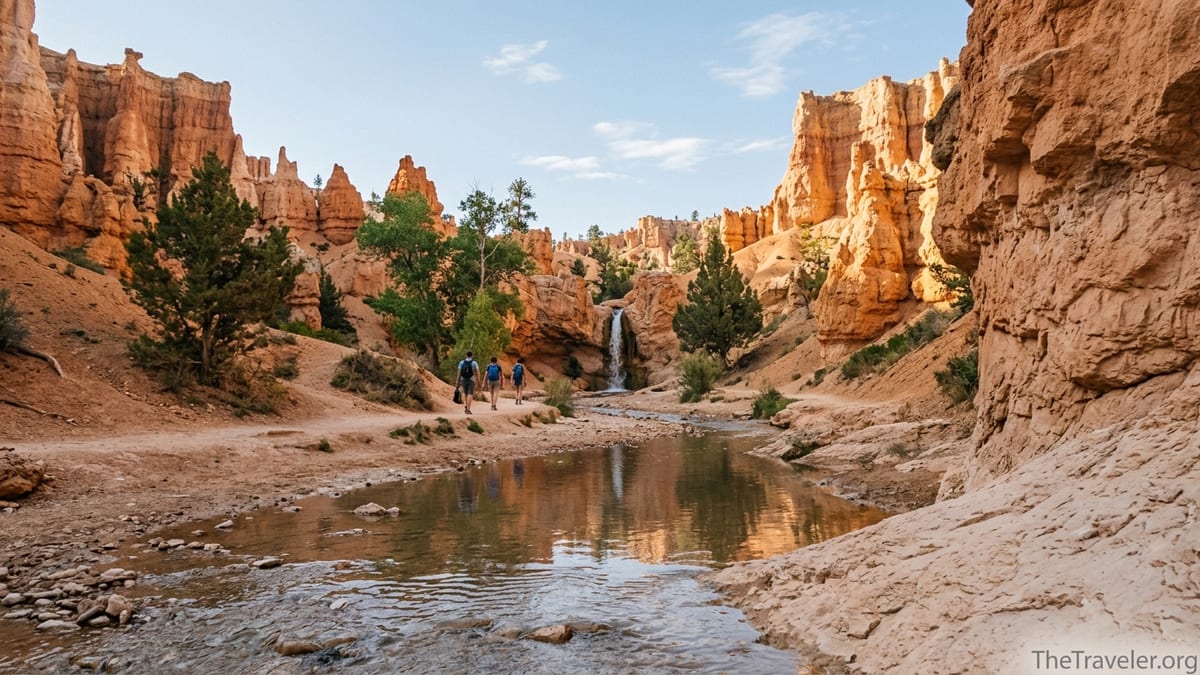
Mossy Cave Trail sits at the northern edge of Bryce Canyon National Park along Utah’s Scenic Byway 12, a few miles east of the main park junction. Officially, it is one of Bryce’s easy hikes: an out and back of about 0.8 to 1 mile round trip with roughly 150 feet of elevation gain, usually walked in 45 to 60 minutes. Instead of dropping steeply from the rim like the park’s famous Navajo or Peekaboo loops, this path gently follows a stream through Water Canyon toward a moss lined grotto and a small waterfall. The scale is modest, but the variety is striking for such a short distance.
Along the way you still get the Bryce classics. Hoodoos and thin fins of orange rock rise above the canyon walls, and in several spots the trail briefly climbs to viewpoints where you can look down on the creek and across to sculpted spires. Travelers who might not be up for a 600 to 1,000 foot climb into the main amphitheater can still stand beneath Bryce’s storybook rock formations here, only a few minutes from the car. It is one of the very few places in the park where you can pair a desert waterfall with hoodoos in the same photograph.
There is also the element of surprise. Visitors often arrive with low expectations because Mossy Cave is not on as many must hike lists as Queen’s Garden or the Rim Trail. Yet between the running water, cool grotto and easy access, it quietly delivers some of the most varied scenery per step anywhere in Bryce. Travel bloggers and regional hiking sites now describe it as a “hidden gem” precisely because people tend to discover it by word of mouth rather than by glossy brochure.
The National Park Service still categorizes Mossy Cave as an easy streamside walk, but park materials now warn that the small parking lot fills quickly and that the area has become very crowded between late morning and late afternoon in peak season. That tension between an easy, family friendly stroll and its relatively low profile inside the park is part of why it remains underrated: most first time visitors simply do not realize there is a waterfall hike tucked into Bryce’s northern boundary.
A Bryce Canyon Sampler Without the Big Climbs
For many travelers, Bryce’s biggest challenge is not logistics or lodging but altitude. Much of the main amphitheater sits between about 8,000 and 9,000 feet above sea level. The famous Navajo Loop drops steeply from Sunset Point and then demands a stiff climb back up on either Wall Street or the Two Bridges side. Even reasonably fit visitors from low elevations can find themselves winded after a few switchbacks, especially if they are already tired from driving over from Zion or the North Rim of the Grand Canyon.
Mossy Cave offers a very different experience. The trail is among the park’s lower elevation walks, with only about 150 feet of total ascent spread across less than half a mile one way. Most of that gain comes in a short final push up to the cave itself. Instead of leaving from the rim, you start near the canyon bottom and amble gently uphill. Families who might hesitate to commit to a two or three hour loop in the amphitheater can usually handle Mossy Cave after dinner or between scenic overlooks.
This makes the trail especially attractive to multi generational groups. A typical example: grandparents in their early seventies traveling with adult children and school age grandkids might tackle the paved Rim Trail between Sunrise and Sunset Points in the morning, rest over lunch in Bryce Canyon City, then head out to Mossy Cave around 5 p.m. when the light softens and temperatures drop. The kids can wade in the shallow edges of the creek under supervision, grandparents can choose how far up the trail they want to go, and everyone is back at their cabin or motel in time for an early night.
It is also a welcome option for travelers who are short on time. Someone doing a whirlwind circuit of southern Utah’s parks might only have half a day inside Bryce. A realistic itinerary could include sunrise at Bryce Point, a short descent on the Queen’s Garden trail, lunch in the lodge area, then a leisurely drive out to Mossy Cave before continuing east toward Escalante. The fact that Mossy Cave trailhead lies right off Highway 12 means you can walk it without having to double back into the main park road system.
A Rare Mix of Water, Hoodoos and Human History
What truly sets Mossy Cave apart is its relationship with water. Bryce Canyon is famous for sculpted stone, not streams. The amphitheater’s hoodoos exist because this side of the Paunsaugunt Plateau receives enough freeze thaw action to fracture the rock, but visitors rarely see flowing water in the main viewpoints. Mossy Cave is different. Here, a clear stream threads through Water Canyon, feeding a roughly 30 foot waterfall that runs strongest in spring snowmelt or after summer storms, and continues at a gentler flow through much of the year.
The twist is that this water is not entirely natural. The creek is part of the historic Tropic Ditch, a late nineteenth century irrigation project in which settlers diverted water from the East Fork of the Sevier River through almost 10 miles of hand dug canal to reach the arid benchlands near the town of Tropic. Today that cultural history is literally etched into the landscape of the trail. As you walk, you are following a man made watercourse that transformed the surrounding communities while simultaneously creating one of Bryce Canyon’s most distinctive short hikes.
For travelers, this adds a layer of storytelling that many of the park’s rim viewpoints lack. A guide might pause above the falls to explain how farmers once depended on this engineered stream to grow alfalfa and fruit trees, even as today’s visitors dip their hands in the cool current for a bit of relief from the high desert sun. Parents walking with older kids often use the hike to talk about water rights in the West, or to compare the small Tropic Ditch to the massive dams they might see later on the Colorado River near Page or Lake Powell.
Then there is the cave itself. Despite the name, Mossy Cave is more of a shallow grotto or alcove than a deep cavern. In summer, seeps in the back wall keep it damp and carpeted with green moss that contrasts sharply with the orange and cream cliffs outside. In winter, those same seeps freeze into chandeliers of icicles that can linger into late spring on colder years. It is one of the few places inside the park where you can photograph ice formations and running water with hoodoos in the background without committing to a serious backcountry trek.
Season by Season: When Mossy Cave Shines
Mossy Cave can be hiked year round, and each season changes the character of the walk. In spring, especially from late April into May in typical years, snowmelt swells the Tropic Ditch. The waterfall is often at its fullest, and the creek runs briskly along the trail. Daytime highs at Bryce still hover in the 40s to 60s Fahrenheit during many spring weeks, so layers, a windproof jacket and shoes that can handle a little mud are practical. Travelers booking shoulder season lodge rooms or RV sites in nearby Bryce Canyon City or Tropic often find Mossy Cave less crowded than in mid summer, particularly in the early morning or late afternoon.
Summer brings more visitors but also some of the best chances for playful water scenes. On warm July or August afternoons, it is common to see children wading ankle deep near the stream crossings while adults rest in the scant shade of cottonwoods and junipers. Because the official park newspaper and website now warn that Mossy Cave’s trailhead can be extremely congested from mid morning to early evening, experienced travelers often plan a sunrise hike before breakfast or a golden hour stroll after dinner. Staying at a motel in Tropic, for instance, makes it easy to drive the short distance up Highway 12 after 6 p.m., when parking frees up and temperatures begin to fall.
Autumn is arguably the most underrated season on an already underrated trail. As crowds thin across the Colorado Plateau, daytime highs become more comfortable for hiking and the creek often returns to a moderate, steady flow. Cottonwoods along the wash may yellow by October, adding streaks of color against the orange hoodoos. Travelers road tripping Highway 12 between Bryce and Capitol Reef frequently build Mossy Cave into a relaxed afternoon leg stretch, pairing it with overlooks near Red Canyon or a late lunch in Bryce Canyon City.
Winter transforms the area yet again. Snow dusts the hoodoos, the creek forms delicate shelves of ice, and the grotto lives up to its name as a cave of moss and long icicles. Park services caution that surface conditions can be icy, so traction devices like simple rubber and metal microspikes, which cost roughly 20 to 40 dollars a pair in outdoor shops, are useful if the trail is packed snow. For photographers staying at the lodge in the short winter operating season, or at nearby cabins and motels that stay open year round, Mossy Cave can be an accessible way to capture Bryce’s famous winter contrast of red rock and white snow without committing to a longer, riskier descent.
Practical Tips: Access, Parking and What to Expect
One reason Mossy Cave stays somewhat off the radar is its location. The trailhead lies outside the fee booth area, along Highway 12 about 3.5 to 4 miles east of the junction with the main Bryce Canyon road. Even so, it is still considered part of the national park, and the standard entry fee or an America the Beautiful interagency pass is required. Rangers and signs at the trailhead periodically remind visitors that parking here is for park guests and that shoulder parking on the highway is both unsafe and prohibited.
The parking lot itself is small by comparison with major viewpoints in the amphitheater. On a busy July Saturday, it may fill as early as 9 or 10 a.m., and cars sometimes circle waiting for spots to open. When that happens, the most practical strategy is to move on and return during a quieter window rather than idling or attempting to park along the road. Travelers staying more than one night in the area often find that a weekday evening or a shoulder season visit provides a much calmer experience, with ample space to park and linger at the falls.
Facilities are modest but sufficient for a short outing. Vault toilets are available at the trailhead, and informational signs explain both the natural features and the human history of Tropic Ditch. There is no potable water here, so visitors should fill bottles in Bryce Canyon City, at the main visitor center or at their lodging before driving out. The trail surface is firm native soil and small gravel, not pavement, and includes a couple of short, steeper grades and steps. Sturdy walking shoes with decent tread help on loose sections, especially for those not used to hiking on uneven ground.
From the parking area, the path crosses a small bridge and then parallels the creek. At roughly a quarter mile, a fork offers two choices: bear right and climb briefly to an overlook with views of the waterfall from above, or stay left to follow the creek upstream to the base of the falls. Many visitors do both, returning to the junction and then continuing up canyon toward Mossy Cave at the trail’s far end. Allowing an hour lets you stop for photographs, dip your hands in the water, and read the interpretive signs without rushing.
Who Will Love Mossy Cave Trail
Mossy Cave appeals to a broad range of travelers, which is part of why it leaves such a strong impression on those who make the detour. Families with young children appreciate that the entire walk can be completed between snack breaks, and that there are clear, engaging landmarks to keep kids motivated: first the creek crossing, then the waterfall, then the cave. Grandparents accompanying the family can turn around at any point and still feel they have seen the heart of the canyon.
Photographers often rank Mossy Cave high on their Bryce itineraries once they have experienced it. The combination of moving water, a vertical drop and eroded hoodoos offers compositions that differ from the standard rim overlooks. A typical late afternoon scene might feature backlit spray from the falls, a line of ponderosa pines on the canyon rim and warm light catching the lumpy skyline of hoodoos beyond. Because the trail is short, it is easy to time a visit to match golden hour without worrying about hiking back in the dark.
Travelers on a tight budget or tight schedule also find Mossy Cave rewarding. Someone staying in a budget motel in Panguitch or Cannonville, who perhaps cannot afford guided horseback rides or full day tours, can still experience a waterfall and hoodoo lined canyon here for the same price as a standard park entry. The only additional costs are basic hiking gear like sun hats, refillable water bottles and perhaps a pair of child sized trekking poles bought en route at a regional outdoor store.
Finally, Mossy Cave is a strong choice for those easing into national park travel. A couple on their first big road trip through Utah might be intimidated by the idea of 8 mile rim to canyon loops or rugged backcountry routes. Starting with a one mile walk that still showcases Bryce’s geology, history and changing seasons can build confidence. After a positive experience at Mossy Cave in the morning, they might feel more comfortable trying the short but spectacular Queen’s Garden Trail in the afternoon or tackling a ranger led walk the next day.
Staying Safe and Protecting the Canyon
Like all of Bryce Canyon, Mossy Cave may look inviting but it demands basic respect. The creek and waterfall are shallow, and visitors frequently step into the water near the lower crossing or pose for photos on rocks close to the falls. While this can be safe with care, wet sandstone is slippery and falls can lead to sprains or scrapes. Keeping children within arm’s reach near drop offs, wearing shoes with grip rather than slick flip flops, and avoiding climbing directly on the waterfall face all reduce risk.
Desert conditions can also catch travelers by surprise. Even though this trail is short, sun exposure is significant at midday and afternoon thunderstorms are common in July and August. Lightning can strike canyon rims and ridgelines around Bryce. Planning an early or late walk with at least one liter of water per person, a wide brimmed hat and broad spectrum sunscreen is just as important here as on longer hikes. If you see dark clouds building or hear thunder, the safest move is to return to the car rather than pressing on to the cave.
Equally important is caring for the fragile environment along the trail. The moss in Mossy Cave depends on a delicate balance of moisture and shade. Touching it, carving into the alcove walls or stepping off the established path can damage growth that takes years to recover. Likewise, staying on the designated trail protects cryptobiotic soils and native plants that bind the canyon slopes together. Park signs encourage a simple mantra that applies perfectly here: take only photographs, leave only footprints on the main path.
Finally, be a considerate visitor at the trailhead. If the parking lot is full, do not create new spaces along the highway shoulder or block other vehicles in. Instead, use the time to explore a different part of Bryce or nearby Red Canyon and return during a quieter window. As visitation has grown, the National Park Service has periodically evaluated options for improving safety and visitor flow at Mossy Cave. Responsible choices from individual travelers help preserve the intimate feel that makes this short hike so memorable.
The Takeaway
Mossy Cave Trail will probably never rival Bryce Canyon’s big amphitheater hikes in fame, and that is part of its charm. In less than a mile, it compresses many of the park’s signatures into a single, approachable walk: hoodoos, high desert skies, a surprising waterfall and a cool, moss lined grotto shaped as much by human ingenuity as by nature. For families, first time visitors and travelers short on time or energy, it may quietly become the highlight of a Bryce visit.
Plan your day so that you can stroll this canyon in the soft light of morning or evening, listen to water sliding over stone and feel the temperature drop as you step into the shady alcove at the trail’s end. In a park defined by grand vistas and sweeping amphitheaters, Mossy Cave offers something rarer: an intimate, small scale encounter with Bryce’s landscape that feels discoverable, personal and pleasantly underappreciated.
FAQ
Q1. How long is the Mossy Cave Trail and how much time should I plan?
The trail is roughly 0.8 to 1 mile round trip with about 150 feet of elevation gain. Most visitors complete it in 45 to 60 minutes, allowing time for photos at the waterfall and a brief stop inside the grotto.
Q2. Do I need to pay the Bryce Canyon National Park fee to hike Mossy Cave?
Yes. Although the trailhead sits outside the main entrance station along Highway 12, it is still within the national park boundary, so the standard Bryce Canyon entry fee or a valid national parks pass is required.
Q3. Is Mossy Cave Trail suitable for young children and older adults?
Generally yes. The distance is short and the elevation gain is modest, which makes it popular with families and multi generational groups. However, the path is unpaved with some uneven sections and short, steeper grades, so very small children and anyone with limited mobility should take their time and use sturdy footwear.
Q4. When is the best time of day to hike Mossy Cave?
Early morning and late afternoon or early evening are ideal. Parking is easier, temperatures are lower and the light is softer for photography. Midday, especially in summer, can bring both heat and crowding in the small parking lot.
Q5. Will there always be a waterfall and moss at Mossy Cave?
Water flows in the creek year round in most years, but the strength of the waterfall varies with snowmelt and recent rainfall. Moss in the cave is more vibrant in warmer months when seepage is steady. In winter the grotto often features icicles instead of lush green moss.
Q6. Can I swim or wade in the creek on Mossy Cave Trail?
The creek is shallow and many visitors do wade briefly near the lower crossings to cool off. Full on swimming is not practical, and it is important to step carefully on slippery rocks, avoid climbing directly on the waterfall and follow any posted safety guidance or seasonal restrictions.
Q7. Is the Mossy Cave Trail accessible by the park shuttle?
No. The Bryce Canyon shuttle system serves the main amphitheater area along the park road, but it does not extend to the Mossy Cave trailhead on Highway 12. You will need a private vehicle, a tour that specifically includes the stop, or a bicycle confident in sharing the highway.
Q8. What kind of footwear and gear do I need for this hike?
Closed toe walking shoes or light hiking shoes with good tread are recommended, as the trail includes loose gravel and short steep sections. A hat, sunscreen, at least one small bottle of water per person and a light jacket in cooler months are usually sufficient. In winter, simple traction devices can help on icy patches.
Q9. How crowded does Mossy Cave get and how can I avoid congestion?
During peak season from late spring through early fall, the small parking lot can fill between late morning and late afternoon, especially on weekends and holidays. To avoid congestion, aim for an early start before 9 a.m., visit on a weekday if possible, or time your walk for the early evening when many day trippers have already left.
Q10. Can I bring my dog on the Mossy Cave Trail?
Pets are not allowed on Mossy Cave Trail, in line with most unpaved trails inside Bryce Canyon National Park. Service animals that meet official definitions are permitted, but other dogs must remain in areas where pets are explicitly allowed, such as certain paved viewpoints and campgrounds.