


Two hours apart yet worlds different in feel, Indian Creek and Moab offer wildly contrasting versions of Utah’s red rock desert. One is a quiet corridor of cliffs and cottonwoods where nights are dark and campfires crackle under a thousand stars. The other is a full-service adventure hub with bike shops, food trucks, busy trailheads and easy access to two of America’s most famous national parks. Deciding where to base yourself can shape your entire trip. Here is how Indian Creek and Moab stack up so you can choose the Utah outdoor destination that truly fits your travel style.
Get the latest updates straight to your inbox!
Getting Oriented: Two Desert Worlds Along the Same Highway
Indian Creek and Moab sit off US Highway 191 in southeastern Utah, but they serve very different types of trips. Moab is the main town in the region, a lively base for Arches and Canyonlands national parks, Dead Horse Point State Park and dozens of famous mountain bike and 4x4 trails. Indian Creek, by contrast, is a remote corridor along Utah State Route 211 at the northern edge of Bears Ears National Monument, best known for world-class crack climbing, quiet campgrounds and rock art sites like Newspaper Rock.
From Moab, reaching Indian Creek is roughly a 40-mile drive south on US 191, then west on State Route 211 along the Indian Creek Corridor Scenic Byway. That paved road dead-ends at the Needles District entrance of Canyonlands, so when you commit to Indian Creek you are driving into a cul-de-sac of cliffs and mesas rather than a through-route town. This geography is part of why the Creek stays so peaceful compared to Moab’s constant motion.
If you picture mornings with coffee in a real café before heading out to hike Delicate Arch or bike the Slickrock Trail, Moab is almost certainly your base. If your idea of the perfect day is racking up for sandstone cracks at Supercrack Buttress, wandering to petroglyph panels at dusk and cooking dinner beside your tent, Indian Creek is much closer to your ideal.
Vibe & Atmosphere: Quiet Canyons vs Lively Adventure Town
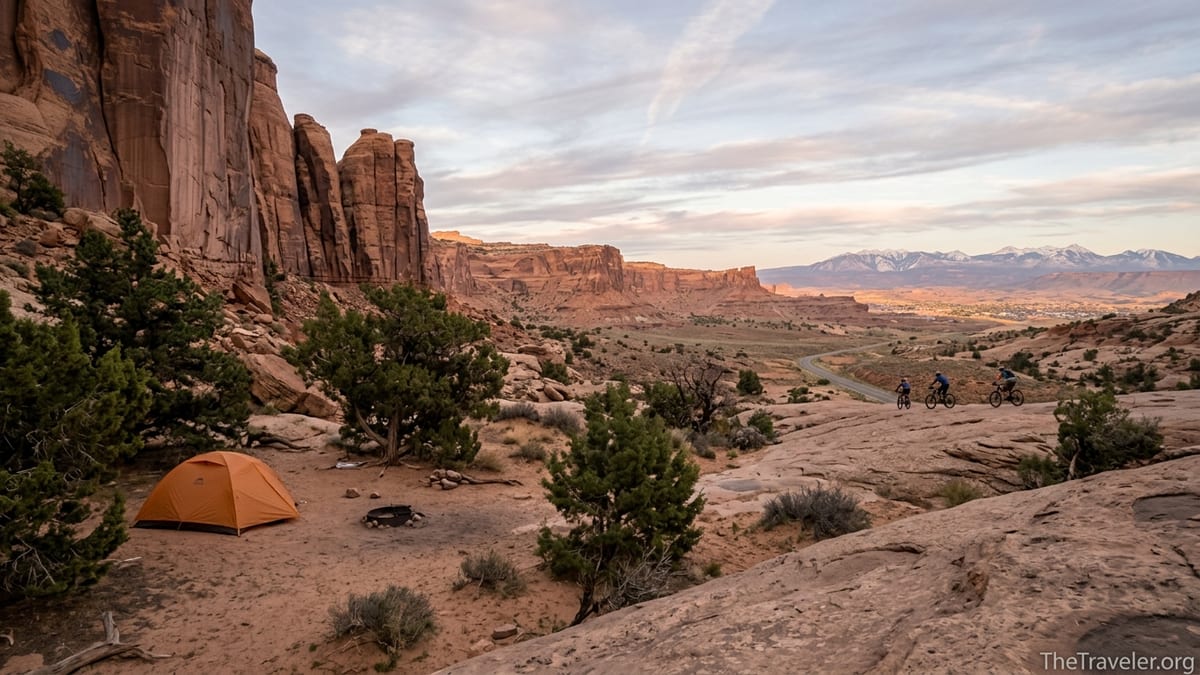
Indian Creek is about solitude. The landscape is dominated by sheer sandstone walls, sagebrush flats and the ribbon of cottonwoods along the creek itself. Apart from a handful of primitive campgrounds like Superbowl, Creek Pasture and Hamburger Rock, there are no services in the corridor: no gas, no groceries, no cell towers with dependable reception. Nights are extremely dark and quiet, broken mainly by coyotes and the wind. For many visitors, that silence is the main attraction.
On a typical autumn evening at Indian Creek, you might see scattered campfires, climbers sorting cams and ropes on tailgates, and stargazers stretched out in camp chairs. It feels more like a dispersed base camp than a resort destination. Even in high season, you can often step a few minutes off the road and feel entirely alone, especially if you are not bound to the most famous climbing crags.
Moab, by contrast, hums from sunrise to late evening for much of the year. The main drag fills with pickup trucks carrying bikes and rafts, jeeps with roof tents and rental cars heading for Arches. In town you will find multiple gear shops, outfitters, breweries, taco stands, coffee roasters and busy sidewalks in spring and fall. It is still a small town at heart, but in peak periods like April, May, September and October, it feels like an international base camp for desert adventure.
If you want energy, social options and a choice of restaurants after a long day outside, Moab delivers. If you would rather trade those comforts for a quieter, more contemplative desert experience, Indian Creek is likely a better match.
What You Can Do There: Activities by Travel Style
Indian Creek is specialized. Its headline draw is traditional crack climbing on steep sandstone walls. Climbers travel from around the world to test themselves on parallel fissures that eat cams and demand solid jamming technique. If you do not climb or at least have a partner who does, you will find fewer structured activities, but there is still value for hikers, photographers and those who simply enjoy long walks in open country and evenings in camp.
Even for non-climbers, the drive along State Route 211 is a highlight. It passes Newspaper Rock, one of the densest rock art panels in Utah, where you can easily spend an hour tracing petroglyphs etched over centuries. Short side wanderings into side canyons reveal pools, cottonwood groves and quiet viewpoints over Indian Creek Canyon. The Needles District of Canyonlands at the end of the road opens up longer hikes through spires and narrow slots, though overnight permits book out well ahead in high season.
Moab is about variety. Within an hour’s drive you can hike arches in Arches National Park, descend into the canyons of Canyonlands, ride more than 100 miles of singletrack on trail systems like Moab Brand Trails and Klondike Bluffs, or join a commercial river trip on the Colorado. Classic rides range from the famous Slickrock Bike Trail, a looping rollercoaster of sandstone domes, to more beginner-friendly routes at Dead Horse Point State Park, where the Intrepid Trail System offers gentle singletrack with enormous canyon views.
For non-technical visitors, Moab also offers scenic drives along the Colorado River on Utah Highway 128, accessible viewpoints at Dead Horse Point and Island in the Sky, and ranger-led walks in the national parks during much of the year. Adventure outfitters in town can arrange jeep safaris, canyoneering outings, guided hikes, hot-air balloon flights and half-day rafting trips, making Moab particularly good for first-time desert visitors who want a curated experience.
Access, Logistics & Seasonality: How Easy Is Each Base?
From a logistics perspective, Moab is the clear winner. The town has a wide range of lodging, from simple motels that sometimes dip near the 100-dollar range in quieter winter weeks to midrange hotels and upscale lodges that can reach several hundred dollars per night in spring or fall. There are private campgrounds with showers and hookups, grocery stores, gas stations, an urgent care clinic and multiple gear-rental businesses. If you arrive without equipment, you can usually rent bikes, climbing gear, rafting gear or even a fully outfitted jeep.
Indian Creek requires more self-reliance. You will typically stock up in Moab or Monticello before turning onto State Route 211. The corridor’s primitive campgrounds are generally first-come, first-served and offer basic vault toilets and picnic tables without hookups. Fees are modest compared to in-town RV parks, but you need to bring all your own water, food and firewood and pack out waste responsibly. Because cell coverage is patchy to nonexistent in many spots, you should download maps and know your route before leaving the highway.
Seasonality also matters. Both Moab and Indian Creek can be extremely hot in midsummer, with daytime highs often above 90 degrees Fahrenheit. Spring and fall, especially April to early June and late September through October, are prime seasons. In Moab, that means crowded trailheads, scarce last-minute lodging and busy restaurants, but also cooler hiking temperatures and more guided trip departures. At Indian Creek it may mean full campgrounds on weekends and clusters of vans at popular walls, though midweek and shoulder months can still feel very quiet.
Winter brings a different personality. Light snow can dust the cliffs at Indian Creek and some dirt roads become muddy or icy, but sunny days in the 40s or 50s can still allow climbing or hiking if you are prepared for cold nights. Moab in winter is calmer and cheaper, with some services on shorter hours but many trails delightfully uncrowded and iconic viewpoints open for photography in low-angled light.
Costs & Comfort: Budgeting for Each Destination
Indian Creek can be very budget-friendly if you are equipped to camp. Primitive BLM campground fees in the corridor are typically modest per night for a basic site, and there are no extra resort-style costs once you are there. Your main expenses are transportation, fuel, food you brought with you and any climbing gear you might have purchased or rented beforehand. Because there are no restaurants, bars or tours to tempt you, it is relatively easy to keep spending low.
The trade-off is comfort. You will be living outside full-time, often without cell service or easy access to showers. If you are visiting in shoulder seasons, you may need cold-weather camping gear to stay comfortable at night. This suits self-sufficient travelers, climber vans and people who consider a star-filled sky part of the experience, but it can be a shock to those used to hotel amenities.
Moab offers a full spectrum of price points. Budget travelers might camp at public campgrounds outside town or share a basic motel room. At the midrange, it is common to see nightly hotel rates in popular months that rival major cities, especially for properties with pools or canyon views. Guided adventures add to the bill: a half-day guided mountain bike tour, jeep safari or rafting trip can easily run into the low hundreds of dollars per person, especially with gear and transport included.
Food choices also differ. In Moab you can grab budget-friendly burritos or burgers, sit down for wood-fired pizza after a long ride, or splurge on a multi-course meal featuring Utah-sourced ingredients. In Indian Creek your “restaurant” is your camp stove, possibly supplemented by a cooler of fresh food from Moab. If you enjoy cooking simple meals under the stars, that is part of the appeal. If you want espresso in the morning and a cold draft beer poured by someone else at day’s end, Moab will feel much more compatible with your style.
Who Each Destination Suits Best
Indian Creek is an excellent match for climbers, experienced backcountry campers and travelers who value quiet over convenience. If you are the kind of person who is happy to spend the day working a single climbing route, journaling in camp, photographing changing light on the canyon walls or sitting by the creek with a book, the Creek’s slow pace will feel like a gift. It also shines for those who care deeply about dark skies and a sense of remoteness that is increasingly rare along paved roads.
Moab is ideal for mixed groups and first-time desert visitors. Families can combine short kid-friendly hikes in Arches with an easy bike ride on the paved Moab Canyon Pathway or an afternoon at a town park. Friends with differing skill levels can split up for the day, with some tackling technical bike trails like Captain Ahab while others join a scenic drive to Dead Horse Point. In the evening everyone gathers back in town for ice cream and live music on a patio.
If you are planning a once-in-a-decade trip from far away, Moab’s breadth of activities and easier logistics make it a safer bet as a primary base. You can still day-trip to the Indian Creek corridor from Moab for the scenic drive, rock art and a taste of its big-sky solitude, then return to your hotel bed. If you are a repeat visitor or traveling primarily to climb and camp, basing yourself at Indian Creek for several days and making the occasional supply run to Moab can be a rewarding way to tilt your trip toward quiet.
Many seasoned travelers blend both. They may spend an initial couple of nights in Moab to hit headline hikes like Devils Garden and enjoy town amenities, then shift their base to Indian Creek for three or four nights of climbing, campfires and early nights under the Milky Way. Thinking of the destinations as complementary rather than competing can help you design a richer itinerary.
Culture, History & Impact: Traveling Responsibly in Both Places
Beyond recreation, both Moab and Indian Creek sit in landscapes with deep cultural and ecological significance. Indian Creek lies within the northern part of Bears Ears National Monument, an area with thousands of archaeological sites and ongoing meaning for tribes including the Navajo Nation, Hopi, Ute Mountain Ute, Ute Indian Tribe and Zuni. Rock art panels, cliff dwellings and artifact scatters are common, some visible from the road and others hidden in side canyons.
Responsible travel here means treating every cultural feature with restraint: viewing rock art like Newspaper Rock without touching the panels, staying on established paths near archaeological sites, and resisting the urge to pick up pottery shards or other artifacts. Camping well away from water sources and packing out all trash are also critical in this fragile desert, where plants and soils take decades to recover from damage.
Moab has a different set of pressures. Its popularity means trail congestion, parking shortages at national park trailheads and competition for limited water resources in a high-desert environment. Choosing to visit in shoulder seasons when possible, carpooling to trailheads, respecting parking limits and staying on designated routes whether you are hiking, biking or driving a 4x4 can help spread out the impact. Supporting local businesses that prioritize sustainability and Indigenous perspectives can also make your trip more meaningful.
In both destinations, simple habits make a difference: use refillable water bottles, minimize single-use plastics, keep noise down in camp or lodging areas and give wildlife plenty of space. The more thoughtfully you travel, the more likely these landscapes will retain the qualities that drew you there in the first place, whether that is the echoing silence of an Indian Creek sunset or the sunrise glow on the fins above Moab.
The Takeaway
Choosing between Indian Creek and Moab is less about which is objectively better and more about what kind of desert experience you are craving. If you want cafes, bike rentals, guided trips and effortless access to famous postcard views, Moab is the obvious base. You will trade some solitude for variety and convenience, but you will gain an enormous menu of things to do in a compact area.
If, instead, you dream of waking up to frosty mornings at a quiet campsite, spending long days under towering cliffs and falling asleep in deep silence with the Milky Way overhead, Indian Creek will fit you far better. Its lack of services is not a drawback but part of its character, rewarding travelers who are prepared and patient.
For many, the best answer is “both.” Start in Moab to get your bearings and tick off bucket-list hikes, then carve out a few days to slow down in the Indian Creek corridor, driving the scenic byway, pausing at rock art sites and, if you climb, testing your jams on those famous sandstone cracks. By experiencing these two desert worlds side by side, you will not just visit Utah; you will understand the spectrum of what its canyon country can be.
FAQ
Q1. Is Indian Creek suitable if I do not rock climb?
Yes, but it is a quieter, more limited experience. You can enjoy the scenic drive along State Route 211, visit Newspaper Rock, walk short canyon routes and access the Needles District of Canyonlands. If you want structured activities, guided trips and many hiking options, Moab is usually a better primary base.
Q2. How long does it take to drive between Moab and Indian Creek?
Driving from central Moab to the main Indian Creek corridor along State Route 211 typically takes around 1.5 hours, depending on traffic and stops. Many travelers visit Indian Creek as a full-day excursion from Moab, combining the scenic drive, rock art viewing and short walks before returning to town in the evening.
Q3. Can I stay in a hotel near Indian Creek?
There are no hotels or lodges directly in the Indian Creek corridor. The closest full-service accommodations are in the towns of Moab and Monticello along US Highway 191. Most visitors who want to be based in Indian Creek camp at primitive BLM campgrounds like Superbowl, Creek Pasture or Hamburger Rock and make occasional trips to town for supplies.
Q4. Which destination is better for families with children?
Moab is generally more family-friendly because of its amenities, easier access to short hikes in Arches and Canyonlands, paved bike paths and variety of lodging and dining options. Families can balance active days with comfortable evenings in town. Indian Creek can work for experienced camping families who are comfortable being self-sufficient and whose children are happy with low-key days in camp and simple explorations.
Q5. Do I need a 4x4 vehicle for Indian Creek or Moab?
You can reach both Moab and the main Indian Creek corridor on paved roads in a standard vehicle. Many classic viewpoints and trailheads in Arches, Canyonlands and along State Route 211 are accessible without four-wheel drive. However, some popular jeep routes and remote trailheads around Moab and in canyon country do require high clearance and 4x4. If you do not have such a vehicle, you can join a guided jeep tour for those specific routes.
Q6. When is the best time of year to visit?
Spring and fall, roughly April to early June and late September through October, are generally the most comfortable times for both Moab and Indian Creek, with cooler temperatures and long daylight. These months are also the busiest, so expect more competition for campsites and lodging. Summer can be extremely hot, and winter brings quieter conditions with the possibility of snow and cold nights.
Q7. Is it easy to find camping at Indian Creek?
Camping at Indian Creek is first-come, first-served and can fill on busy spring and fall weekends, especially around popular climbing events or holidays. Arriving earlier in the day, targeting midweek nights and being flexible about which campground you choose improves your chances. Always come prepared with enough water and supplies in case your first-choice site is full.
Q8. Can I visit both Moab and Indian Creek in a short trip?
Yes. In three to five days you can comfortably spend a couple of nights based in Moab for headline hikes and bike rides, plus a full day or overnight exploring the Indian Creek corridor. With a week or more, many travelers split their time more evenly, using Moab for resupply and town comforts and Indian Creek for extended camping and climbing.
Q9. Which destination is better for mountain biking?
Moab is the clear choice for mountain biking, with extensive trail systems like Moab Brand Trails, Klondike Bluffs, the Slickrock Bike Trail and the Intrepid Trail System at nearby Dead Horse Point State Park. Indian Creek has no comparable built trail networks for bikes and is primarily a climbing and camping destination.
Q10. How should I prepare for limited services at Indian Creek?
Before heading to Indian Creek, stock up on food, water, fuel and any last-minute gear in Moab or Monticello. Download offline maps, bring a paper map as backup, and plan to be self-sufficient for the duration of your stay. Be ready for variable weather, cold nights in shoulder seasons and little to no cell service. Following Leave No Trace practices will help protect the fragile desert environment you came to enjoy.