


For skiers planning winter 2026–2027 in Europe, snow reliability is no longer something to take for granted. Warm spells in recent seasons have closed low runs in December and turned valley pistes to slush by March, even as high-altitude and glacier resorts continued to offer cold, dry snow. A newly published analysis from tour operator Inghams Ski has compared 133 popular resorts across the Northern Hemisphere over seven winters, focusing on snow reliability and operational performance. Combined with long-range forecasts for 2026–2027 and independent altitude rankings, that research points clearly to a group of European resorts that are best placed to deliver consistent snow, open lifts and worthwhile value in the coming season.
Get the latest updates straight to your inbox!
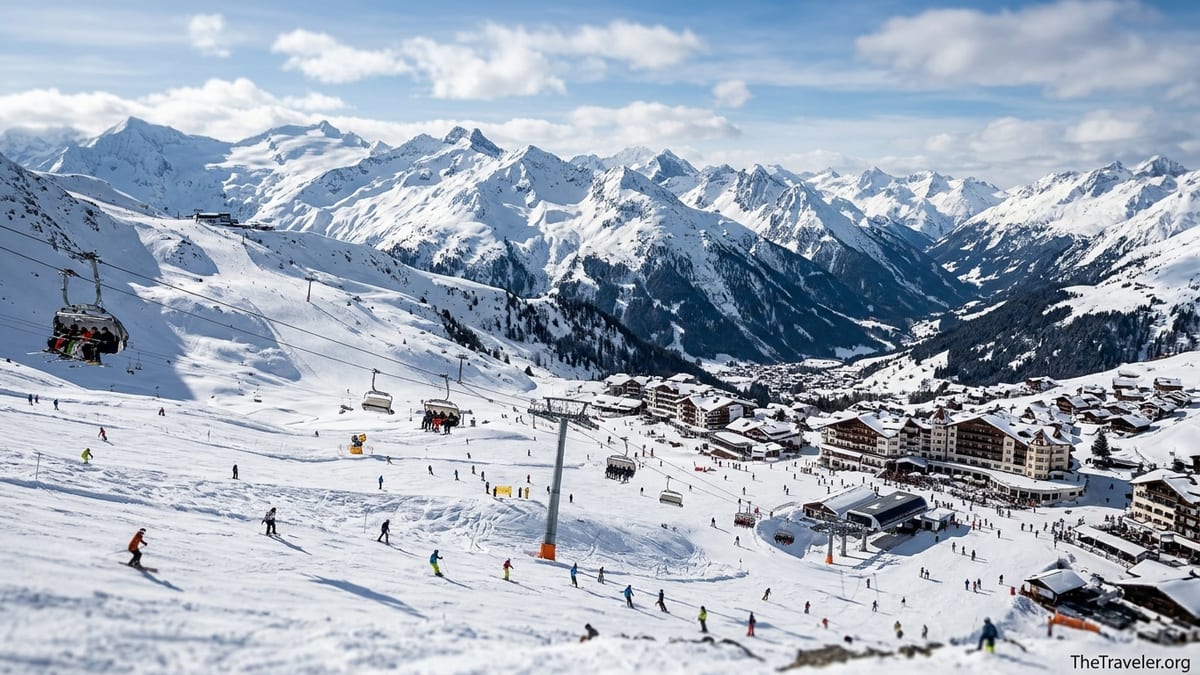
How the 2026–2027 snow reliability study was built
The new Inghams Ski research, released in October 2026, set out to quantify which ski destinations have handled recent weather volatility most consistently. Analysts looked at seven recent winter seasons across 133 well-known ski resorts and regions, scoring them on two main factors: natural snowfall and something they call “mountain running,” essentially how reliably lifts and pistes stayed open from day to day. Resorts that repeatedly kept a large share of their terrain open, even in leaner winters, scored highest.
The resulting index does not simply reward the snowiest places. Instead it highlights resorts and regions that combine altitude, snowmaking and resilient operations. Norwegian resort Geilo, for example, tops the table with a snow reliability score close to 90 out of 100, underlining how a northerly latitude can compete with the Alps. Within the core Alpine countries, Austrian areas such as Obertauern and Filzmoos score strongly thanks to their reputation for deep snow and steady lift operations, while high Swiss destinations including Zermatt and Saas-Fee also perform well.
The study confirms what many regular skiers already suspect: altitude remains the single strongest predictor of reliable snow, but it is not the only one. Orientation to the sun, the proportion of slopes above 2,000 metres, modern snowmaking and how quickly a resort responds to storms all matter. The findings are backed up by long-range outlooks for winter 2026–2027 from forecasting services that see the Alps likely to trend somewhat milder at low levels, but potentially wetter overall, favoring resorts that can catch that moisture as snow higher up.
For travelers, the practical takeaway is straightforward. If you are booking far in advance for winter 2026–2027 and cannot change dates at the last minute, focus first on resorts with substantial terrain above 2,000 metres, good snowmaking and a proven record of keeping a high percentage of runs open during up-and-down seasons.
High-altitude heavyweights: where elevation does the work
Among Alpine destinations, a handful of high-altitude resorts stand out as the safest bets for midwinter and spring 2027. Val Thorens in France, set at 2,300 metres and rising to about 3,200 metres, is the highest major ski village in Europe. Most of its pistes sit above 2,000 metres and a large share face north, which helps preserve snow quality. In most recent seasons Val Thorens has opened significant terrain by late November and kept skiing into early May, even when nearby lower valleys struggled with rain on lower runs.
Across the border in Switzerland, Zermatt combines serious altitude with a vast ski domain shared with Cervinia in Italy. The lift system climbs to nearly 3,900 metres at the Klein Matterhorn, giving access to glaciated slopes and some of the coldest snow in Europe. For winter 2026–2027, local operators plan to run the main winter season from early November on the glacier side through early May, with additional lifts and sectors phasing in from late November. Zermatt is also one of the few European areas to offer meaningful autumn and spring skiing, although temporary summer closures in 2022 and 2026 have underlined how sensitive even glaciers are to heat.
Austria offers its own cluster of elevated strongholds. Obergurgl-Hochgurgl, perched between roughly 1,800 and 3,000 metres at the end of the Ötztal, is marketed domestically as one of the country’s most snow-sure non-glacier resorts. It typically opens in mid to late November and often stays open into late April, with nearly all pistes above 1,800 metres and extensive snowmaking to reinforce early-season coverage. Nearby Sölden combines two glacier sectors with high lifts up to around 3,340 metres, offering another robust option for November or April trips.
These destinations are rarely cheap, and they can be busy in peak holiday weeks, but their altitude gives them resilience in winters where freezing levels yo-yo. For travelers who must book long in advance for school holidays or fixed annual leave, the premium can buy real peace of mind.
Glacier access: the ultimate insurance, with caveats
Glacier skiing remains the most powerful form of snow insurance in Europe, though it now comes with environmental and operational caveats. Resorts such as Hintertux, Stubai, Kitzsteinhorn above Kaprun, Saas-Fee and Zermatt all have high glacier plateaus that allow skiing well outside the traditional December to April window. In early November 2026, operational trackers already list Hintertux, Stubai, Zermatt and Saas-Fee as open with modest but skiable snow bases on their glacier pistes.
Hintertux, in the Zillertal region of Austria, is one of the very few European ski areas that aims to operate lifts year-round. Its glacier reaches about 3,250 metres and offers around 60 kilometres of pistes in full winter, with a majority of runs above 2,500 metres. Stubai Glacier, marketed as Austria’s largest glacier ski area, sits at similar altitudes and usually opens a broad network of lifts from October through early May. Kitzsteinhorn, above the village of Kaprun, is another reliable choice; for the 2026–2027 season, its glacier area began winter operations in October and ski passes are expected to remain valid until early May.
In Switzerland, Saas-Fee is especially noteworthy for long, cold seasons. The lifts climb to around 3,600 metres, and independent snow guides highlight its ability to hold snow deep into spring. Zermatt’s glacier sector has historically run through much of the year but, as noted, summer 2026 saw an early shutdown due to heat and thunderstorms. Italy’s Breuil-Cervinia, linked to Zermatt, adds further high glacial terrain up to roughly 3,480 metres, making the combined area one of the most altitude-secure lift networks in Europe.
The caveat is that glacier skiing can feel more limited and exposed in midwinter compared with larger linked areas. Early in the season or late in spring, skiing may be confined to upper glacier runs reached by a handful of high lifts, and storm or wind closures are not uncommon. Glaciers are also under intense climate pressure, prompting some resorts, such as La Plagne in France, to scale back glacier lift operations in favor of “rewilding” and preserving snowpack higher up. Travelers who prioritize glacier access for reliability should remain flexible on daily plans and expect occasional weather-related interruptions.
Snowfall history versus modern snowmaking
Snow reliability is often described in terms of average snowfall, but long-term climate research on European skiing paints a more nuanced picture. Historical studies have used thresholds such as 30 centimetres of snow cover for at least 100 days per season to define natural snow reliability. Under that definition, many mid-altitude Alpine resorts still meet the mark in a typical winter, but a growing share would fall short in warm years without artificial snowmaking.
Resorts have responded by investing heavily in snowmaking and snow farming. Kitzbühel in Austria, for instance, is known for opening an early-season piste on the Resterkogel sector using stockpiled and covered snow from the previous winter, sometimes offering a single artificial strip of skiing as early as October even when surrounding meadows are still green. Large French domains such as Alpe d’Huez and La Plagne have mapped out dozens of kilometres of snowmaking coverage, allowing them to maintain key link runs and home pistes in marginal conditions.
Heavy natural snowfall can still define certain places. Filzmoos and Obertauern in Austria, for example, have reputations as local snow magnets, regularly recording deep midwinter bases and scoring highly in the 2026 Inghams reliability index. In Switzerland, parts of the Valais and Bernese Oberland frequently see significant storm totals, while Italy’s Dolomites can enjoy prolonged cold spells with frequent smaller snowfalls that preserve excellent piste conditions. Yet even many of these high-snowfall regions now rely on snowmaking at lower elevations to guarantee lift access back to the village at season edges.
For travelers, the key practical question when comparing resorts for winter 2026–2027 is not just “how much snow falls here,” but “how much of the main ski area sits high and shaded” and “how dense is the snowmaking network on crucial connections.” Resort factfiles, piste maps and independent snow-resort rankings that list base and top station elevations can help answer those questions in a concrete way before booking.
Operational performance, lift networks and crowd management
The Inghams study’s “mountain running” score is one of its most useful contributions for guests planning the coming season. Rather than looking only at snowfall, it tracks how often lifts and pistes are actually open, capturing factors such as wind exposure, avalanche risk, maintenance issues and how quickly resorts dig out and groom after storms. A resort that receives abundant snow but suffers frequent weather closures can score lower than a slightly drier but better-sheltered area.
Large, modern lift systems provide flexibility when conditions change. The linked 3 Vallées area around Val Thorens offers multiple routes between valleys, so if one sector closes for wind, others often remain available. In Austria, the Sölden and Obergurgl-Hochgurgl areas benefit from parallel lift lines that can absorb crowds when a key gondola or chair must pause. Swiss areas such as Verbier, with top lifts reaching about 3,300 metres, give access to several aspects and altitudes, helping skiers chase the best snow as temperatures swing during the day.
However, scale can also mean crowds, especially during European school holidays. Recent traveler reports and crowd analyses for the Alps suggest that the busiest weeks of winter 2026–2027 will again cluster around Christmas and New Year, late February and early March. On peak days, even highly snow-reliable resorts can see lift queues and tracked-out pistes by late morning. Travelers seeking a balance of snow reliability and calmer slopes might look at high-altitude but slightly smaller areas such as Saas-Fee, Obertauern or the glacier sectors of Kaprun and Stubai outside holiday periods.
Operational performance also intersects with safety. Resorts that score well for mountain running typically have robust avalanche control, clear piste marking and well-drilled patrols, especially when storms load upper slopes. For visitors in winter 2026–2027, paying attention to daily bulletins in resort and being ready to adapt plans if upper lifts stay closed for control work remains essential, even in the most snow-reliable destinations.
Costs and value: where snow reliability meets the budget
High-altitude security often carries a price premium, and early price surveys for winter 2026–2027 reflect that. Zermatt, Val Thorens and many of the larger French and Swiss domains feature among the most expensive lift passes and on-mountain prices in Europe. A six-day adult lift ticket in these flagship areas can run to several hundred euros, and mountain restaurant prices for a simple lunch are correspondingly higher than in smaller Austrian or Italian resorts.
There are, however, more affordable options that still perform well for snow reliability. In Austria, Obertauern and the glacier-linked area of Kaprun with the Kitzsteinhorn often undercut the headline Swiss and French prices while offering higher-than-average snow security. In Italy, Livigno has become known for its combination of tax advantages, relatively moderate lodging costs and high-altitude slopes reaching close to 2,800 metres. Independent guides for the 2026–2027 season often cite it as a strong value choice for January and March, when snow reliability is strong but demand is slightly lower than at Christmas or Easter.
Norwegian resorts highlighted in the Inghams study, such as Geilo and Hemsedal, complicate the cost picture. On-mountain prices and transport from central Europe can be higher, but snow and operational reliability are excellent thanks to cold temperatures and robust grooming. For travelers originating in the United Kingdom or Scandinavia, package deals that include flights, accommodation and lift passes can sometimes offset the higher day-to-day costs compared with the Alps.
To keep budgets under control without sacrificing snow reliability in winter 2026–2027, it can be worth combining a snow-sure resort with off-peak dates. Booking the second or third week of January, or mid-March outside Easter holidays, can reduce accommodation prices substantially compared with Christmas or mid-February while still taking advantage of the best snow months in many high-altitude resorts.
When the snow is strongest in winter 2026–2027
Long-range seasonal forecasts for the European Alps, Andorra and Scotland suggest that winter 2026–2027 may again feature relatively mild spells at low altitude but above-average precipitation overall. Forecasters highlight that, in such a pattern, resorts with extensive terrain above about 2,000 metres should be best positioned to turn that additional moisture into snow rather than rain. Early signals in September and October 2026, including the first snows on high peaks in Switzerland and Austria, support the view that high terrain will accumulate cover steadily through late autumn.
Historically, the most reliable window for good snow in the Alps runs from early January through early March, and the latest outlooks for 2026–2027 do not suggest a radical departure from that. January often offers the firmest pistes and coldest temperatures, while February layers on additional depth at higher altitudes. March can deliver excellent conditions across high domains such as Val Thorens, Zermatt, Saas-Fee, Obergurgl and Livigno, particularly on north-facing slopes, even as lower south-facing runs begin to soften in the afternoon sun.
Early-season skiing in late November and December 2026 looks most dependable at glacier resorts and very high areas. Operational data from early November already show glaciers such as Hintertux, Stubai, Kitzsteinhorn, Zermatt and Saas-Fee open with modest but improving snow bases. By mid-December, high non-glacier resorts like Obergurgl and Val Thorens are expected to have a substantial share of terrain running, though lower Alpine valleys may still be reliant on snowmaking.
Late-season prospects into April 2027 again favor altitude. Glaciers and high north-facing bowls should retain winter-like snow well into the month, while mid-altitude areas may pivot to spring-skiing conditions with firm mornings and soft afternoons. Travelers seeking reliable snow around Easter would be wise to focus on areas with top lifts above 2,700 or 3,000 metres or with glacier access.
Matching destinations to different types of skiers
Snow reliability means different things for different kinds of travelers. Strong skiers chasing off-piste lines may prioritize deep midwinter snow and easy access to high, ungroomed terrain, putting areas like Zermatt, Verbier, Val Thorens and Sölden near the top of their lists. For them, the combination of altitude, large vertical drops and frequent storms, as highlighted in recent snow-sure rankings, can yield the most rewarding conditions in January and February, provided they respect avalanche guidance.
Families and mixed-ability groups often look for easy logistics, gentle pistes and reliable nursery slopes. The 2026 guide to snow-sure family resorts singles out destinations such as Zermatt, Obergurgl and Stubai Glacier for their blend of snow reliability, varied terrain and child-friendly services. In these resorts, beginner areas are typically located at mid-station heights where snow remains dependable, and ski schools can shift lessons up the mountain if lower slopes thin out in a thaw.
Budget-conscious travelers and students, meanwhile, may accept slightly lower altitude in exchange for lower prices if they can be flexible on dates. Lesser-known but still relatively snow-reliable areas in Austria and Italy can offer solid midwinter skiing at more accessible costs, especially in January or late March. Using the Inghams index and independent altitude-based rankings as a cross-check can help travelers pick spots where most skiing still takes place above 1,800 or 2,000 metres even if the village itself is low.
Finally, those focused on early-season training or extending their season into April and May will likely gravitate towards glacier resorts like Hintertux, Stubai, Kitzsteinhorn, Saas-Fee and the glacier sector of Zermatt and Cervinia. For winter 2026–2027, these areas again look poised to offer the widest windows for snow-sure skiing outside the traditional core months.
Planning a resilient ski holiday for winter 2026–2027
The emerging picture for winter 2026–2027 is one of contrast. High-altitude and glacier resorts across the Alps look well placed to deliver another season of reliable snow, long operating periods and varied terrain. Lower and mid-altitude areas will still offer enjoyable skiing, especially in midwinter, but are more exposed to rain events and short thaws that can interrupt valley runs or delay full-area openings, particularly in December.
For travelers, the most robust strategy combines three elements. First, choose destinations with significant terrain above 2,000 metres, ideally with lifts reaching toward or beyond 2,700 or 3,000 metres, and with a track record of strong “mountain running” scores. Second, when budgets allow, favor dates from early January through early March, when both natural snowfall and temperatures usually align in favor of good conditions. Third, stay flexible within your chosen resort, adjusting plans to daily weather and snow reports rather than relying on fixed preconceptions of when and where the snow will be best.
The latest research and operational data show that European skiing remains remarkably adaptable in the face of climate change, especially in the highest and most northerly regions. By aligning destination choice, timing and expectations with that reality, skiers heading to Europe in winter 2026–2027 can still find the reliable snow, open lifts and satisfying descents that define a great mountain holiday.