


More news on this day
Air travel across Europe experienced another day of heavy disruption as more than 200 flights were cancelled and over 2,300 delayed, with widespread knock-on effects from volcanic activity near Catania combining with operational pressures at major hubs in England, Germany, Greece, Italy and the Netherlands.
Get the latest news straight to your inbox!
Volcanic Ash From Etna Shuts Catania and Ripples Across Networks
Operations at Catania Fontanarossa Airport in Sicily were severely curtailed after overnight volcanic activity from Mount Etna forced the suspension of all arrivals and departures for much of Monday. Publicly available information from the airport and Italian media indicates that a blanket halt on traffic was initially imposed until early afternoon, leaving aircraft and crews out of position and triggering a cascade of cancellations and diversions across multiple European carriers.
Reports from industry trackers show that the broader European network recorded around 207 cancellations and more than 2,300 delays through the day, with Catania emerging as a focal point of disruption. Airlines including Ryanair, easyJet, Wizz Air, ITA Airways, British Airways, Lufthansa, KLM, SAS and Air France all had services to and from the Sicilian hub affected, as operators sought alternatives while airspace around the volcano was assessed for safety.
With Catania handling high summer tourist volumes and serving as a key gateway to eastern Sicily, the shutdown quickly translated into missed connections across Europe. Flights that would normally route passengers on to northern Europe, including Germany, the Netherlands and the United Kingdom, were either cancelled outright or significantly delayed as aircraft remained grounded away from their next scheduled rotations.
Observers note that volcanic ash poses particular risks for jet engines, so closures in the vicinity of Etna tend to be conservative. The timing, at the height of the busy summer travel period, has amplified the impact on airline schedules and passenger journeys well beyond southern Italy.
Major Hubs in England, Germany, Greece, Italy and the Netherlands Affected
While Sicily supplied the initial shock to the system, the heaviest visible strain on the day’s operations appeared at major northern European hubs. Flight-status data and passenger-rights monitors for the region indicate that airports in England, Germany, Greece, Italy and the Netherlands all registered elevated levels of disruption, contributing to the tally of 207 cancellations and more than 2,379 delays.
London’s main airports, including Heathrow and Gatwick, reported a mix of late-running European arrivals and short-haul cancellations as carriers tried to rebalance fleets. In Germany, Frankfurt and Munich saw growing delays across intra-European links, reflecting the central role of these hubs for Lufthansa and its partners. The combination of diverted aircraft, crew hour limits and congested airspace led to increasingly irregular patterns as the day progressed.
Amsterdam Schiphol, a critical base for KLM, also experienced knock-on disruption, with publicly available statistics indicating dozens of delayed flights and a smaller but notable number of cancellations. In southern Europe, Athens and several Greek island gateways reported longer turnaround times and delayed departures, as schedules interconnected with services routed through northern hubs that had already fallen behind time.
Italian airports beyond Catania, including Rome and Milan, were not immune. Additional congestion appeared where airlines attempted to re-route Sicily-bound passengers through alternative airports, adding to already busy peak-season operations and eating into the limited spare capacity many carriers hold during July.
Lufthansa, KLM, British Airways and Ryanair Among Hardest Hit
Across Europe’s airline landscape, the operational picture was particularly challenging for some of the continent’s largest network and low-cost carriers. Passenger compensation platforms and live-disruption dashboards show that Lufthansa, KLM, British Airways and Ryanair were all prominent in the day’s disruption statistics, both in outright cancellations and in extended delays.
Lufthansa, heavily reliant on its Frankfurt and Munich hubs, has already been managing an intense summer marked by schedule reductions and high demand. The latest wave of irregular operations added fresh strain to a network that must carefully balance long-haul connections with dense short-haul feeds. Even a limited number of cancellations in and out of Munich or Frankfurt can cascade into missed long-haul connections hours later.
KLM’s operation at Amsterdam Schiphol, long regarded as sensitive to air traffic and staffing constraints, registered numerous late departures on European routes as aircraft and crews arrived off-schedule from southern Europe. British Airways, centered on London, faced delays on key trunk routes to continental Europe, particularly where rotations intersected with Italian and Greek services exposed to the Catania shutdown and wider Mediterranean congestion.
Ryanair, Europe’s largest low-cost carrier by passenger volume, was also affected, with several of its high-frequency routes touching Catania and other Italian destinations temporarily halted or rescheduled. Although the airline is often able to use spare aircraft and rapid turnarounds to recover from disruptions, the complete suspension of movements at a single airport limited the options for swift recovery on affected Sicily routes.
Passengers Confront Long Queues, Rebookings and Limited Alternatives
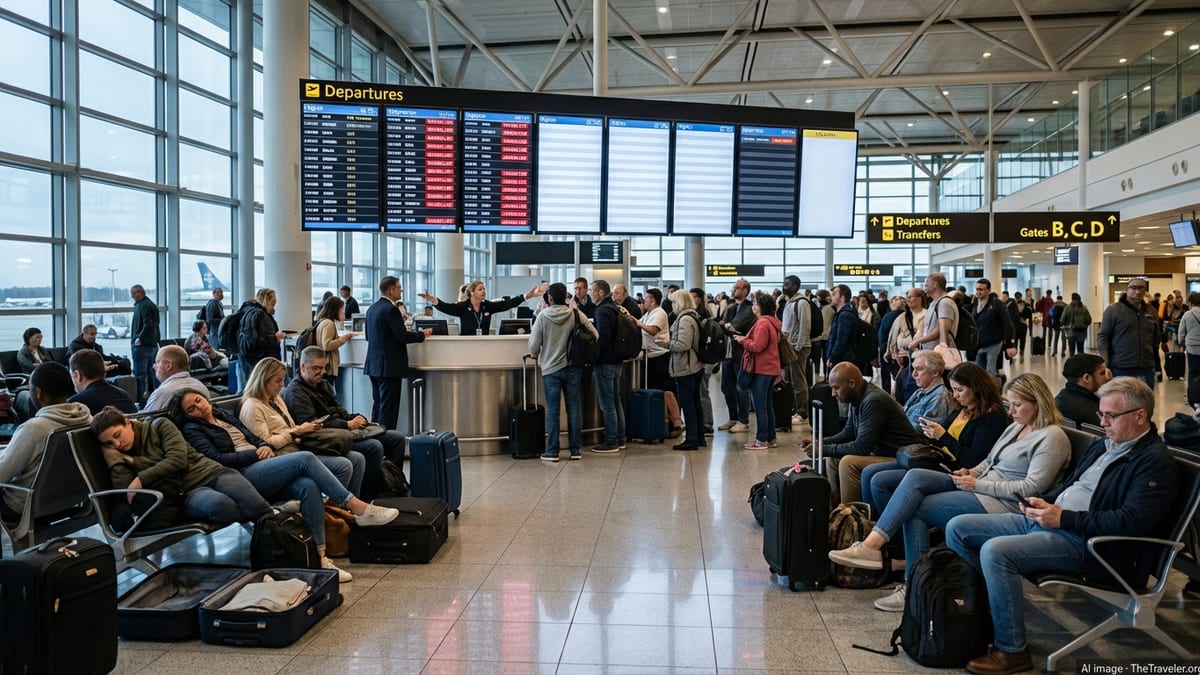
For travelers, the cumulative effect of 207 cancellations and thousands of delays translated into long lines at check-in and customer-service desks across multiple countries. With many flights already running at or near full capacity because of peak-season demand, rebooking options were limited, particularly for passengers needing to reach or depart from Sicily, Greece or smaller secondary airports.
Publicly accessible advisories from airlines and airports throughout the day urged passengers to monitor digital channels closely, use mobile apps where possible, and avoid traveling to airports before confirming their flight status. Many travelers faced overnight stays while awaiting the resumption of normal operations at Catania and the availability of replacement seats on alternative routings through Rome, Milan, Munich, Amsterdam or London.
Given that the primary trigger of the disruption in Sicily was volcanic activity, observers expect that many cancellations will be classified as resulting from extraordinary circumstances. Under European and UK air passenger rules, this can limit eligibility for financial compensation even when rerouting and care obligations still apply. Passenger advocacy groups nevertheless encourage travelers to keep documentation of delays and cancellations in case specific circumstances fall outside those exemptions.
In addition to immediate inconvenience, the latest disruption underscores how tightly coupled European aviation networks have become. A closure at a regional airport such as Catania, combined with already stretched summer capacity at large hubs, can generate system-wide delays that reach well beyond the immediate zone of volcanic ash or adverse weather.
Outlook for the Coming Days as Airlines Work to Restore Schedules
As operations gradually resume at Catania and the volcanic ash cloud is reassessed, airlines are expected to focus on repositioning aircraft and crews to restore more regular patterns of flying. However, industry trackers often note that the effects of a severe one-day shock can linger for several days, especially when aircraft are stationed overnight at the wrong bases or when crew rosters have to be restructured to remain within legal duty limits.
Carriers including Lufthansa, KLM, British Airways and Ryanair are likely to continue making short-notice adjustments to their networks over the next 24 to 48 hours, prioritizing key trunk routes and high-demand leisure destinations. Some lightly booked services may face rescheduling or consolidation to free up capacity for stranded passengers from the worst-affected flights.
With overall European cancellation and delay figures already elevated this summer, analysts point to a fragile balance between strong passenger demand and operational constraints such as fuel costs, air traffic control capacity and staffing. Any further weather-related or environmental disruptions, including renewed volcanic activity, could quickly translate into additional days of widespread delays and cancellations.
Travelers planning journeys in the coming days are being advised by consumer groups and aviation commentators to build in extra time for connections, stay flexible on routing, and keep a close eye on real-time flight information. While the worst of the current wave of disruption is expected to ease as airports reopen and backlogs are cleared, the episode serves as another reminder of how susceptible European air travel remains to sudden shocks at a single critical node.