


More news on this day
An investigation is underway in Repentigny, northeast of Montreal, after a Canadian National (CN) freight train derailed Sunday in a residential district, disrupting a key rail corridor but, according to early reports, sparing the community from injuries or hazardous material leaks.
Get the latest news straight to your inbox!
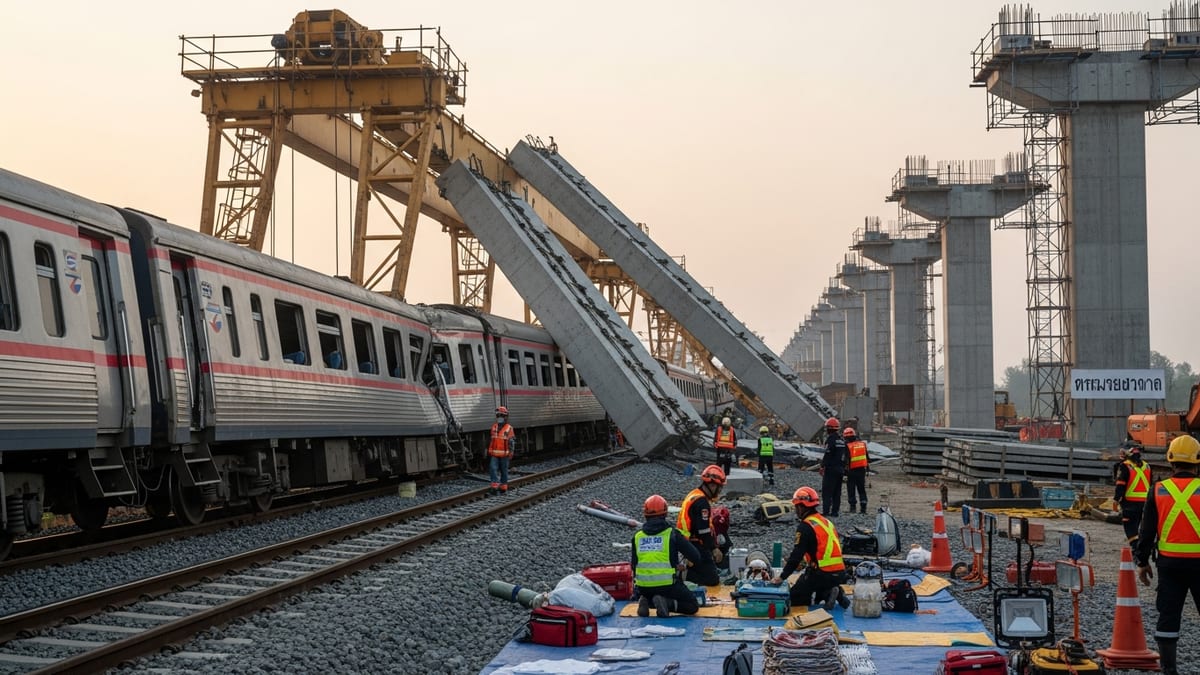
Federal investigators deployed to derailment site
Publicly available information from the Transportation Safety Board of Canada (TSB) indicates that a team of rail specialists has been deployed to Repentigny to examine the circumstances surrounding the derailment. The TSB reports that the incident occurred on Sunday, 5 July 2026, when a CN freight train left the tracks in the Le Gardeur sector, a neighborhood on the north shore of the St. Lawrence River.
According to published coverage, roughly 40 to 45 railcars were involved, with a significant number leaving the rails and coming to rest close to nearby homes. Investigators are expected to document track conditions, inspect rolling stock and braking systems, and gather data from on-board recorders as part of the initial fact-finding phase.
Early information from Canadian news outlets describes the derailment as non-fatal, with no serious injuries reported. Reports also indicate that the consist appeared to be made up largely of standard freight cars rather than tankers loaded with dangerous goods, easing fears of fire or toxic releases in the immediate aftermath.
The TSB typically focuses on identifying systemic safety issues rather than assigning civil or criminal liability. In Repentigny, that work is expected to include a review of train handling, track maintenance history and traffic patterns along a busy freight route just beyond Montreal’s eastern fringe.
Residential neighborhood shaken but largely spared
The derailment took place near the intersection of local streets in Le Gardeur, a mainly residential area of Repentigny where houses, small businesses and community facilities sit close to the CN right-of-way. Images and video circulating in local media show toppled freight cars scattered alongside the tracks, some of them leaning at sharp angles only a short distance from backyards and fences.
Reports from Quebec news outlets indicate that emergency responders quickly established a security perimeter and asked residents to avoid the area while they assessed the risk. Publicly available information from municipal channels suggests that, as response efforts progressed, there was no need for large-scale evacuations or shelter-in-place orders, given the absence of hazardous material leaks.
Even without physical damage to homes, the sight of multiple derailed railcars in such a built-up district has unsettled many residents. Coverage from regional broadcasters notes that local officials have acknowledged the anxiety generated by the incident and have encouraged residents to follow municipal updates for information about cleanup operations and any temporary access restrictions.
For travelers and commuters who use the broader Montreal region as a gateway to Quebec’s tourism destinations, the Repentigny derailment underscores how closely rail infrastructure and residential life coexist along the north shore corridor. The line involved is a key artery for freight moving to and from the metropolitan area, and its proximity to homes is now drawing fresh scrutiny.
Rail operations disrupted on corridor northeast of Montreal
The derailment has forced a temporary shutdown of a segment of CN’s freight route northeast of Montreal, according to publicly available operational updates and media coverage. Rail traffic has been suspended or rerouted while crews and investigators work around the damaged cars and torn-up track.
Reports indicate that specialized heavy equipment has been brought to the site to re-rail salvageable cars, remove damaged wagons and clear debris from the right-of-way. Once the wreckage is removed, track crews are expected to replace rail, ties and ballast before the line can safely reopen at normal speeds.
Although the affected route primarily handles freight, the disruption reverberates through the region’s transportation system. Freight reroutes can create congestion elsewhere on the rail network, potentially affecting schedules and capacity in and around Montreal. Travelers heading through the province by rail are being advised, through published operator and media advisories, to monitor service updates in case freight congestion influences passenger timetables on nearby lines.
Local road traffic has also been affected near the derailment site, with road closures and detours in place around level crossings and access points used by emergency and rail recovery crews. For visitors driving between Montreal and destinations along the north shore, short-term delays are possible as cleanup continues.
Safety questions and memories of past Quebec derailments
The Repentigny incident is renewing public discussion about rail safety in Quebec, particularly in communities where freight lines pass close to homes and schools. Commentaries in regional media highlight longstanding concerns about the mix of heavy freight traffic and densely populated districts along key rail corridors.
Observers are drawing comparisons with previous accidents in the province, including high-profile derailments that have shaped public attitudes toward rail operations. While the Repentigny derailment did not result in mass casualties or significant environmental damage, it has reinforced questions about track maintenance standards, train speeds through urban areas and the routing of potentially hazardous cargo.
For the travel sector, these issues intersect with broader debates about sustainable transportation in Canada. Rail is often promoted as a lower-emission alternative to long-haul trucking, yet incidents such as the Repentigny derailment highlight the importance of ensuring that safety investments keep pace with traffic growth on busy freight corridors.
Publicly available information suggests that formal findings from the TSB investigation may take months to be released. In the meantime, the Repentigny derailment is likely to feature in ongoing policy conversations about how Canada balances the economic benefits of freight rail with the safety of residents and travelers who live, work and move alongside the tracks.
What travelers and visitors should know now
For visitors planning itineraries that include the Montreal region, current information indicates that the immediate impact of the Repentigny derailment is concentrated on freight operations and local road access near the site. There are no widely reported injuries or hazardous material spills, and tourism infrastructure in and around Montreal continues to operate normally.
Travelers using intercity or regional passenger rail are encouraged, based on publicly available advisories, to check for potential knock-on effects from freight disruptions, such as schedule adjustments or minor delays. Airlines, buses and highways serving Montreal and nearby destinations remain unaffected by the incident itself.
Those staying in Repentigny or neighboring communities may encounter detours, noise and visual impacts as heavy equipment remains on scene for cleanup and track repair. Local news outlets and municipal channels are providing the most detailed information on access restrictions around Le Gardeur while the investigation and remediation work proceed.
As the TSB’s inquiry advances, the Repentigny derailment is expected to yield recommendations that could influence future rail infrastructure upgrades, operational practices and land-use planning near tracks. For travelers who rely on Canada’s rail network, the outcome of this investigation will form part of a broader effort to keep journeys safe while maintaining the crucial flow of goods that underpins the country’s tourism and wider economy.