


More news on this day
A major multi-car freight train derailment near the Neshaminy Falls area of Bensalem, Pennsylvania, triggered a large emergency response, temporary shelter-in-place alerts and concerns about possible hazardous material risks just days before the busy Fourth of July travel period.
Get the latest news straight to your inbox!
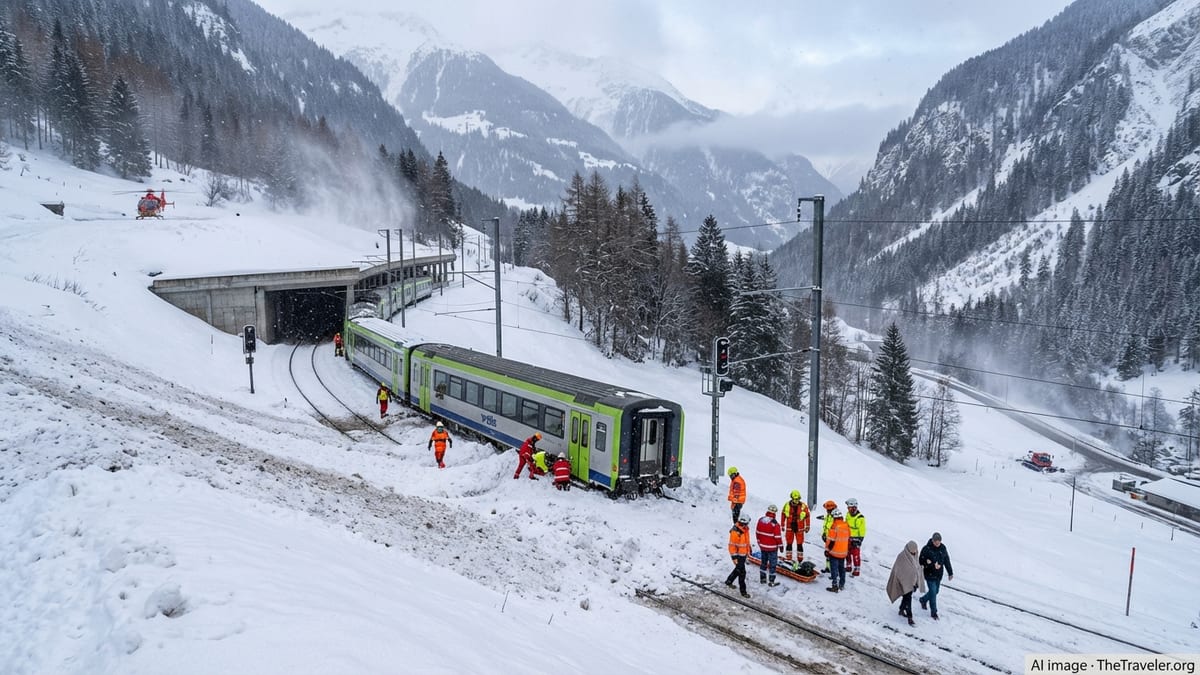
Derailment Near Neshaminy Falls Sends Freight Cars Off the Tracks
Published coverage indicates that the derailment occurred on the afternoon of Tuesday, June 30, 2026, on a freight line in Bensalem Township, Bucks County, between Street Road and the Neshaminy Falls station. Multiple reports describe a significant portion of the train leaving the tracks, with more than a dozen railcars involved and several lying at angles or overturned along the right of way.
Images and video shared by local outlets show freight cars scattered beside the tracks close to residential neighborhoods and commercial corridors, underscoring how close the incident came to heavily populated areas. The positioning of the derailed cars appears to have blocked the corridor in both directions, halting freight movements through the area while crews worked to stabilize and clear the scene.
Initial information points to the train being a freight consist rather than a passenger service. Published accounts so far have not indicated any fatalities, and early reports describe only minor or no injuries among train crew and nearby residents. The cause of the derailment remains under investigation, and there is no confirmed timeline yet for when full findings might be released.
Hazmat Teams Deployed Amid Early Chemical Concerns
The derailment quickly raised concerns about possible hazardous materials, prompting specialized hazmat teams to respond. According to publicly available information, some of the derailed cars were reported to be tank cars or other equipment that could potentially carry industrial products, leading to a cautious approach while crews verified what was on board and whether any leaks had occurred.
For several hours after the crash, parts of Bensalem were under a shelter-in-place advisory as responders checked for chemical releases and monitored air quality around the site. Residents were urged through official channels and local media to remain indoors, close windows and limit outdoor activity while assessments were underway.
By later in the evening, multiple outlets were reporting that responders had found no evidence of hazardous material leaks from the derailed cars. The lack of confirmed releases significantly reduced the risk of acute environmental or health impacts in the surrounding neighborhoods, although the presence of hazmat teams and emergency vehicles underscored how seriously the possibility was treated.
Local Community Experiences Major Disruption
The derailment unfolded adjacent to residential streets and near commercial properties, and the emergency response brought visible disruption across the immediate area. Road closures were reported around the tracks as fire, police and technical teams established a perimeter, restricting vehicle traffic near the site for much of the afternoon and evening.
Residents described on social platforms and in local coverage hearing a loud noise as cars left the tracks, followed by a rapid buildup of sirens and helicopter activity overhead. Some reported temporary anxiety over whether a passenger line had been involved, given the proximity of regional rail infrastructure serving commuters in and out of the greater Philadelphia area.
As information clarified that the incident involved a freight consist and that no hazardous leaks had been detected, the emphasis shifted toward the logistical challenges of clearing heavy rail equipment near homes and businesses. Heavy machinery and cranes are likely to be required to re-rail or remove damaged cars, a process that can take days depending on track damage and the condition of the rolling stock.
Rail and Road Travel Impacts Ahead of Holiday Weekend
The derailment comes at a particularly sensitive moment for travel across the Northeast, with the Fourth of July holiday period set to begin later in the week. Freight traffic along the corridor through Bucks County is a key part of regional supply chains, and any extended closure or restriction on the line may require rerouting or rescheduling of trains over the coming days.
Passenger rail operations in the vicinity appeared to continue on separate tracks, but local coverage notes that delays or service adjustments remain possible as investigators and heavy equipment occupy nearby areas. Travelers relying on commuter or intercity trains through southeastern Pennsylvania are being advised in public reporting to check for schedule updates in case of residual disruption.
On the roads, earlier shelter-in-place guidance and detours near the derailment zone added to congestion on local routes that already experience peak-hour traffic. With large holiday volumes forecast across the region, transportation agencies and travelers will be closely watching how quickly the corridor can be restored to normal operations.
Broader Safety Spotlight on Freight Rail
The Bensalem derailment adds to a series of recent freight rail incidents that have drawn renewed scrutiny to rail safety, particularly where lines pass close to populated suburbs and town centers. National transportation safety discussions in recent years have increasingly focused on the risks associated with long freight trains, aging infrastructure and the transport of hazardous materials through residential communities.
While the Bensalem event did not result in confirmed chemical releases, its visuals of crumpled freight cars near homes echo scenes from other high-profile derailments. Safety advocates regularly cite such incidents when calling for accelerated infrastructure investment, stricter maintenance regimes and further upgrades to tank car design standards, especially for trains that may carry flammable or toxic substances.
Investigators will be examining track conditions, equipment performance and train handling in the moments before the derailment, along with weather and any other contributing factors. Findings from this case are expected to feed into the wider policy conversation about how to reduce derailment risk while maintaining the vital role freight rail plays in the regional and national economy.