


More news on this day
Thousands of passengers across China are facing major travel disruption after a fresh wave of operational problems triggered 3,438 delayed services and 123 cancellations at key airports including Beijing, Changsha, Shanghai, Shenzhen, Chongqing and Dalian, affecting major carriers such as Air China, China Eastern, XiamenAir and Hainan Airlines.
Get the latest news straight to your inbox!
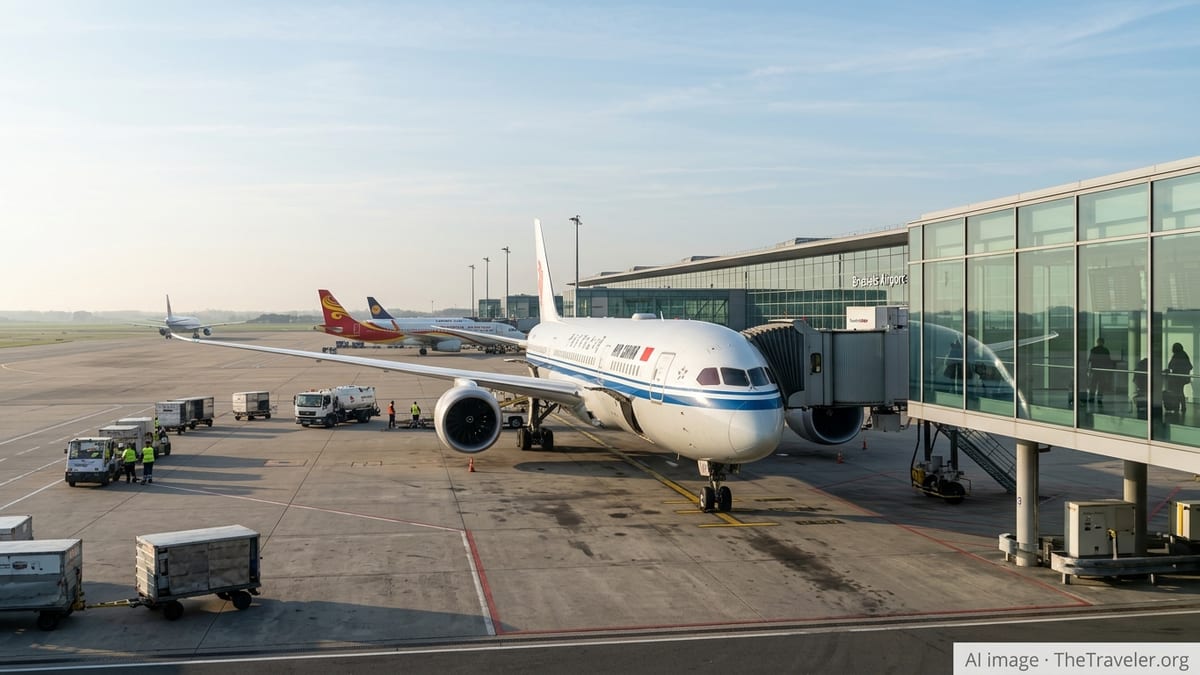
Widespread Disruptions Across China’s Key Aviation Hubs
Operational data compiled from multiple flight-tracking platforms and industry reports indicates that the disruption has hit a broad swathe of China’s domestic network, with delays and cancellations concentrated at large hubs that handle dense traffic flows. Beijing’s dual airports, Shanghai’s Pudong and Hongqiao, Shenzhen Bao’an, Chongqing Jiangbei, Changsha Huanghua and Dalian Zhoushuizi have all reported elevated levels of late-running services compared with typical early-summer patterns.
The figures of 3,438 delayed flights and 123 cancellations over a short disruption window suggest a system under acute strain. Recent episodes in April and May, when more than 1,400 delays and over 160 cancellations were logged in a single day across major eastern and central hubs, underline how quickly operational pressures can cascade across interconnected schedules once bottlenecks emerge.
Reports indicate that the latest wave of disruption coincides with the ramp-up to China’s busy summer travel period. Airlines have been adding capacity and frequencies on popular domestic corridors linking Beijing, Shanghai, Guangzhou, Shenzhen, Chengdu and other cities, leaving thinner margins in both aircraft and crew availability when irregular operations occur.
Major Carriers Face Knock-on Effects
Large state-linked airlines appear to be absorbing much of the impact. Publicly available operational snapshots and recent coverage of similar disruption days show China Eastern, Air China and China Southern frequently among the most affected when delays spike at Shanghai, Beijing and Shenzhen. XiamenAir, Hainan Airlines and several regional carriers also feature in delay and cancellation tallies at secondary hubs and on feeder routes.
Industry data from previous disruption events this spring indicates that even when absolute cancellation numbers remain relatively limited, the breadth of impact can be significant for carriers that rely heavily on a handful of mega-hubs. When rotations are delayed at Shanghai or Beijing, aircraft and crews may arrive late into cities such as Changsha, Chongqing or Dalian, forcing adjustments to subsequent departures and creating rolling knock-on effects throughout the day.
Recent performance statistics for individual routes, including trunk services between Chongqing and Shanghai or Beijing and Changsha, show that some flights have seen average delays measured in hours during earlier disruption periods. While specific figures vary by day and airline, these patterns highlight the vulnerability of highly banked domestic schedules when weather, congestion or airspace restrictions intervene.
Weather, Congestion and Structural Constraints
Published coverage of China’s aviation operations in recent months points to a familiar mix of factors behind the recurring disruption. Adverse weather conditions, particularly convective storms around key hubs, have repeatedly reduced airport acceptance rates and forced air traffic management to slow departures and arrivals. When such measures coincide with peak travel periods, the backlog can build rapidly.
In parallel, China’s main east coast and central corridors remain some of the most crowded airspaces in Asia. Analysts note that traffic has been recovering steadily on many domestic routes, while new and reinstated international services add further complexity to scheduling. With runway and apron capacity finite at major hubs, even small time losses can ripple into larger delays as ground handling, slot times and crew duty limits intersect.
Reports examining earlier clusters of cancellations across Guangdong, Beijing, Shanghai and Yunnan also highlight how airlines sometimes pre-emptively suspend or consolidate flights in response to extended weather systems or air traffic control constraints. While such decisions help maintain overall network stability and safety margins, they can amplify disruption for passengers booked on the affected services.
Impact on Passengers and Domestic Tourism
The timing of the latest disruption is particularly sensitive for domestic tourism and business travel. China’s airlines and airports entered the 2026 summer season planning for higher volumes, with more leisure demand to coastal destinations and inland cultural hubs, alongside a continued rebound in corporate travel on main business corridors such as Beijing–Shanghai and Beijing–Shenzhen.
When delays cluster at transfer-heavy hubs, passengers on connecting itineraries are often hardest hit. Missed onward flights and forced overnight stays have been a recurring theme in recent traveler accounts following earlier disruption days. Even when flights ultimately operate, late arrivals can erase valuable vacation time or cut into work schedules, increasing frustration for those who planned tight itineraries.
Tourism operators monitoring the situation note that while individual events of this scale typically do not derail overall seasonal demand, repeated waves of disruption can influence traveler behavior. Some domestic travelers are reportedly favoring direct point-to-point flights or adjusting plans to avoid the busiest hubs and peak travel times when possible.
What Travelers Should Do If Flying Through Chinese Hubs
Travel risk specialists and consumer travel resources advising on recent Chinese flight disruption clusters recommend that passengers adopt a more conservative approach to planning journeys through the country’s main hubs. Longer minimum connection times, especially when transiting through Beijing, Shanghai, Shenzhen or Guangzhou, can provide a buffer against knock-on delays elsewhere in the network.
Travelers are also encouraged to monitor their flight status closely in the 24 to 48 hours before departure using airline apps and airport information channels. When disruption is already reported at an origin or transit hub, same-day schedule changes or proactive rebooking onto earlier services may reduce the risk of missed connections.
In addition, passengers are urged to familiarize themselves with each carrier’s policy on rebooking and accommodation when flights are significantly delayed or cancelled. While compensation frameworks differ from those seen in some other regions, understanding available options in advance can help travelers navigate long queues at service desks and make faster decisions if plans are upended at short notice.