


More news on this day
Successive delays and cancellations on key routes to Sardinia during the early summer peak are drawing criticism from passenger advocates, who argue travelers are increasingly being treated like parcels rather than paying customers.
Get the latest news straight to your inbox!
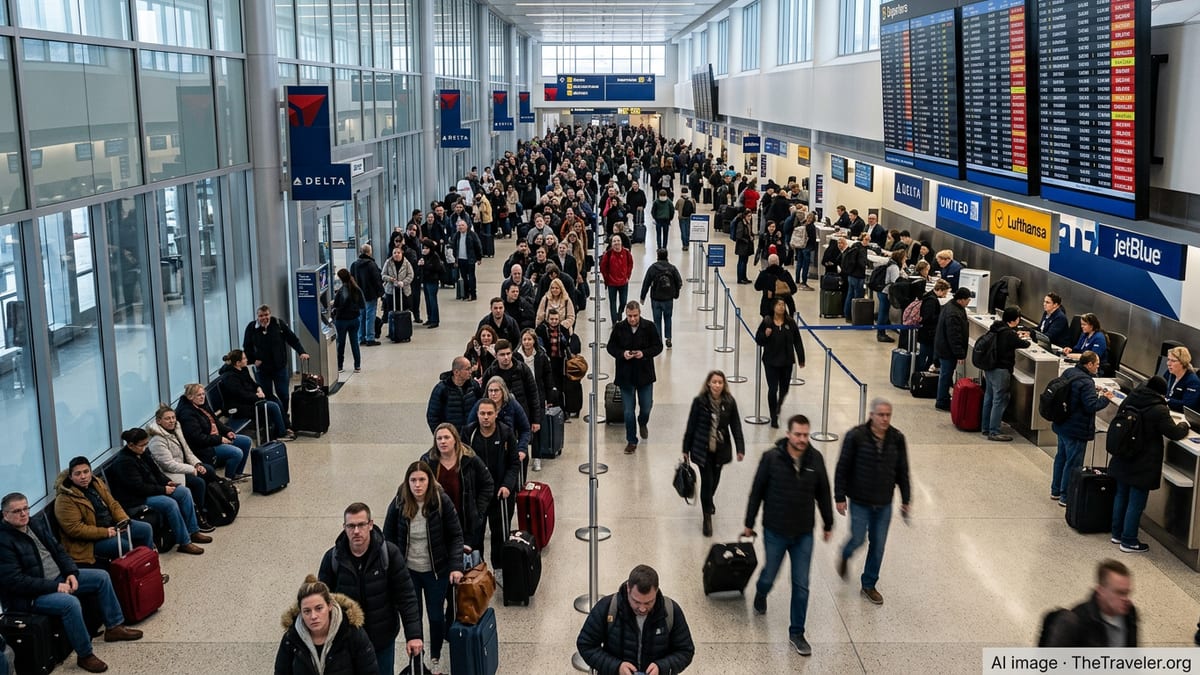
Peak-season disruption on routes to the island
Reports from Italian and European media indicate that flights serving Sardinia’s main airports, including Cagliari, Olbia and Alghero, have faced multiple delays and schedule changes as the summer season gathers pace. Travelers heading to the island for holidays or family visits describe hours-long waits, last-minute gate changes and rolling departure times that make planning onward connections extremely difficult.
Traffic to Sardinia typically surges from late spring through August, when both Italian residents and international visitors converge on the island’s beaches and resorts. Publicly available data and recent coverage suggest that this seasonal spike, combined with tight airline schedules and limited spare aircraft, is amplifying the impact when any disruption occurs.
Travelers on social platforms and in local press accounts report overnight delays on some services, particularly on low-cost and leisure-focused routes linking Sardinia with northern Italy and other European cities. In several cases, passengers described learning of new departure times only minutes before scheduled boarding, leaving them uncertain whether to seek accommodation or remain in the terminal.
Consumer advocates note that while irregular operations are not unusual during busy travel periods, the frequency and duration of this summer’s disruptions on island routes are beginning to stand out. Published commentary from passenger rights organizations in Italy points to Sardinia as one of several Mediterranean destinations where service reliability is under pressure.
“Treated like parcels”: frustrations over communication and care
The phrase “treated like parcels” has become a recurring theme in public complaints about flight delays affecting Sardinia. Travelers describe feeling moved from queue to queue, with limited information and little sense that their individual circumstances are being considered. Some posts shared with local media detail families with young children, elderly travelers and passengers with medical needs left without clear guidance during long waits.
Accounts from recent disruptions highlight basic issues such as insufficient seating at crowded gates, sparse updates over airport public address systems and difficulty reaching airline customer-service channels once delays stretch beyond a few hours. Passengers report being directed to chatbots or generic call centers, only to receive automated responses that do not reflect real-time conditions at Sardinian or mainland airports.
Several consumer groups argue that this treatment reflects a wider industry problem rather than a single carrier or route. They point out that when aircraft and crews operate at the limits of their schedules, customer care can become an afterthought. As a result, passengers describe a sense of being handled as logistical units to be moved when convenient, rather than as travelers needing timely, accurate information and basic comfort during a disruption.
Advocacy organizations also warn that inconsistent handling of delays can fuel tension at airports. When some passengers receive meal vouchers or hotel rooms and others do not, or when information at the gate differs from what appears in an airline’s mobile app, frustration can quickly escalate.
Passenger rights under EU rules
Under European Union Regulation 261/2004, travelers departing from or arriving in EU airports on EU carriers have defined rights when flights are significantly delayed or cancelled. Publicly available guidance from national aviation bodies explains that, depending on the length of delay and the distance of the flight, passengers may be entitled to meals, refreshments, hotel accommodation and, in some cases, financial compensation.
For many of the routes linking mainland Italy and other European cities with Sardinia, the key thresholds are relatively low because the distances are short. Guidance published by consumer associations notes that compensation levels on intra-EU flights of up to 1,500 kilometers can reach 250 euros per passenger when delays exceed three hours on arrival and are not caused by extraordinary circumstances such as severe weather or air-traffic control restrictions.
In addition to compensation, EU rules emphasize the right to care. This typically includes access to food and drink in relation to the waiting time, hotel stays when an overnight delay is required and transport between the airport and the accommodation. Passenger advocates stress that these rights apply regardless of whether the carrier is a full-service or low-cost airline, and that travelers to or from Sardinia should keep receipts and written records if they need to file claims later.
Legal specialists in air-passenger claims note that enforcing these rights can take time. Travelers are usually required to submit complaints directly to the airline first, and only escalate to national aviation authorities or small-claims procedures if responses are delayed or denied. Nevertheless, published case summaries suggest that courts in Italy and elsewhere in Europe have repeatedly upheld compensation claims where carriers were unable to demonstrate extraordinary circumstances.
Causes behind the summer bottlenecks
Industry commentary points to a combination of structural and seasonal factors behind the recent wave of delays affecting Sardinia-bound flights. Airlines have rebuilt networks rapidly since the pandemic, often with tight turnarounds at popular leisure destinations. When an incoming aircraft arrives late because of earlier weather or air-traffic issues, knock-on effects can ripple through the day’s schedule, leaving island routes particularly exposed.
Operational complexity has also increased. Carrier timetables show more point-to-point services between secondary cities and Sardinia, operated by a mix of low-cost, charter and regional airlines. While this variety gives travelers more choice, it can limit the options for rebooking when something goes wrong, especially late at night or on peak weekends.
Reports from aviation analysts highlight additional constraints, including pilot and cabin-crew shortages in parts of Europe and limited spare capacity in maintenance and ground-handling services at smaller airports. When disruptions coincide with high passenger loads, even minor technical checks or crew duty-time limits can trigger lengthy delays.
Local tourism officials have previously warned that unreliable air links can damage Sardinia’s reputation as an accessible holiday destination. Travel agents and tour operators are therefore watching this summer’s performance closely, with some already advising clients to allow extra buffer time between flights and onward ferry, rail or rental-car arrangements.
What travelers to Sardinia can do now
Consumer organizations recommend that travelers heading to Sardinia in the coming weeks take a few practical steps to reduce the stress of potential delays. Booking earlier flights in the day, leaving wider connection windows and avoiding tight same-day transfers to cruises or long-distance ferries can create more margin if schedules slip.
Passengers are also encouraged to check airline apps and airport departure boards regularly on the day of travel and to ensure that contact details are updated in bookings so that carriers can send notifications. Keeping essential items such as medications, chargers and a change of clothes in hand luggage can make extended waits more bearable if checked bags become temporarily inaccessible during an unplanned overnight stay.
Travel-insurance specialists suggest reviewing policy terms carefully, as some plans include coverage for additional accommodation and meals in the event of long delays, while others may be more limited. Where coverage exists, insurers typically require detailed documentation, including confirmation of the delay from the airline and receipts for any out-of-pocket purchases.
Above all, passenger-rights groups urge travelers not to assume that long delays are simply an unavoidable part of modern air travel. By understanding EU protections, documenting what happens in real time and submitting formal claims when appropriate, they argue that customers can push airlines and regulators toward better handling of disruptions on Sardinia routes and across Europe’s crowded summer skies.