


More news on this day
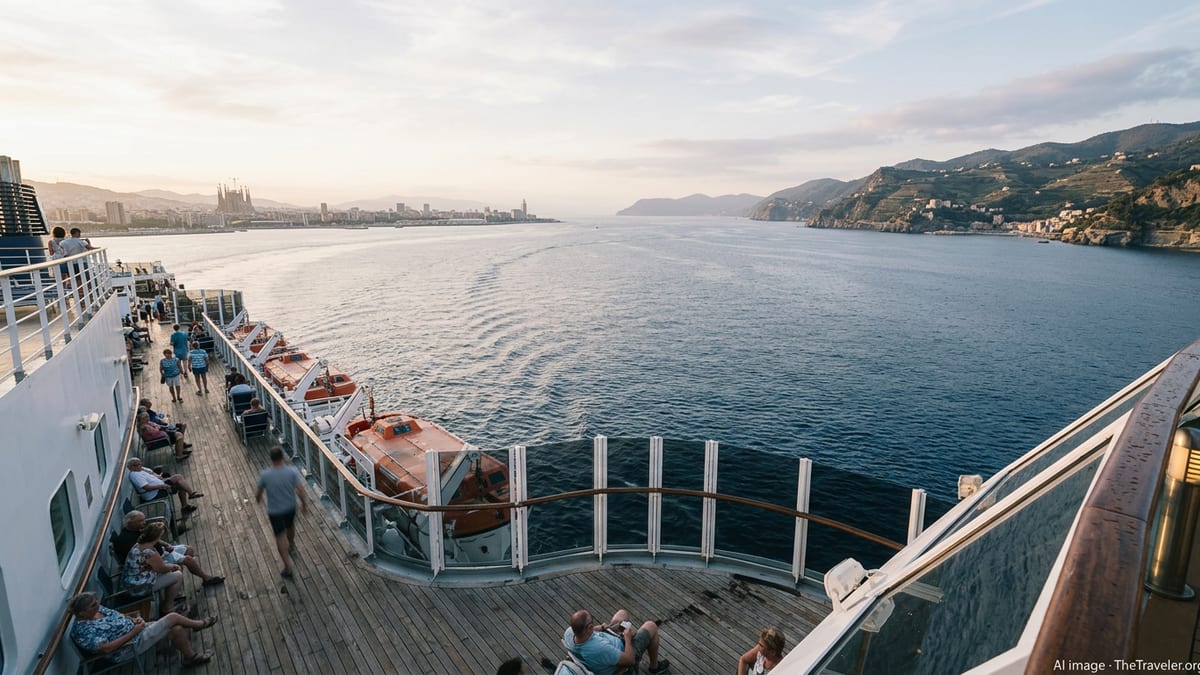
Strengthening demand from the United Kingdom and other major European markets is helping Barcelona consolidate its role as one of the Mediterranean’s most dynamic cruise and ferry hubs in 2026, according to newly released tourism and port data.
Get the latest news straight to your inbox!
Record Passenger Volumes Cement Barcelona’s Maritime Role
Recent figures from the Port of Barcelona’s 2024 annual reporting point to a historic peak of 5.4 million passenger movements across cruise and ferry operations, underlining the city’s strategic role in Mediterranean travel. Cruise traffic alone reached about 3.66 million passengers in 2024, confirming Barcelona among the busiest cruise ports in Europe and globally. Publicly available summaries of MedCruise rankings and port statistics place the Catalan capital at or near the top of the Mediterranean league table for cruise passenger numbers.
Port officials’ public data show that cruise activity in 2024 generated record levels of economic impact across Catalonia, while also delivering a rebound in passenger numbers beyond pre‑pandemic benchmarks. Complementary tourism observatory data for Destination Barcelona suggest that international visitors accounted for more than four out of every five arrivals in 2024, a shift that is increasingly reflected in the profile of cruise and ferry passengers using the city as a gateway.
The 2024 traffic base provides the platform for further expansion in 2025 and 2026 as new itineraries are deployed and fleets grow. Industry statistics from cruise trade bodies describe the United Kingdom and Ireland as the second‑largest cruise source market in Europe, with more than 2 million residents taking ocean cruises annually, and with 2024 bringing further growth in cruise participation. Barcelona’s prominence in Western Mediterranean routes leaves it well positioned to capture a significant share of that demand.
While final 2026 counts are still in the future, forward schedules published by cruise lines and booking platforms show a dense program of departures from Barcelona aimed at Northern and Western European travelers. The combination of strong source markets and existing infrastructure is expected to keep passenger totals near record territory, even as the port pursues stricter environmental and congestion controls.
United Kingdom Emerges as a Strategic Source Market
Government data on tourism spending in Spain indicate that the United Kingdom remains the country’s leading foreign market by expenditure, with British travelers spending more than 22 billion euros nationwide in 2024 and registering double‑digit growth over the previous year. Although that figure covers all Spanish destinations, Barcelona’s status as a flagship urban and cruise gateway makes it a prominent beneficiary of this outbound flow.
Reports from the Barcelona tourism observatory show the United Kingdom consistently ranking among the top five international source markets for Destination Barcelona in 2024, alongside France, Italy, Germany and the United States. Year‑on‑year growth in British arrivals was among the strongest within that group, reinforcing a pattern in which UK visitors combine city stays with wider coastal or island itineraries, often entering or exiting the country through Barcelona’s port and airport.
Industry assessments of the UK and Ireland cruise market describe a customer base that is both mature and increasingly adventurous, with high participation in Mediterranean routes. In this context, Barcelona functions both as a homeport, where cruises begin or end, and as a turnaround point on longer itineraries linking the Western Mediterranean with the Atlantic, Northern Europe and the Canary Islands. Travel trade publications note that several UK‑focused brands continue to base ships seasonally in Barcelona, targeting British holidaymakers seeking short‑haul sunshine and cultural city breaks.
Ferry services also tap into UK demand, albeit more indirectly. While there is no direct UK–Barcelona ferry line, British travelers regularly appear among passengers on services connecting Barcelona with the Balearic Islands and Italy, using low‑cost flights into the city and then transferring to overnight ferries. This multi‑modal pattern is cited in tourism research as a contributor to Barcelona’s broader role as a distribution hub for coastal and island destinations popular with UK visitors.
Ferry Links to Islands and Italy Broaden Reach
Barcelona’s passenger growth in 2024 did not rely solely on cruises. Data published by the Port of Barcelona highlight the role of regular ferry lines serving the Balearic Islands, mainland Spain and Italy in the overall total of 5.4 million passenger movements. These routes provide a year‑round backbone of maritime connectivity that complements the seasonality of the cruise sector.
Services to Mallorca, Menorca and Ibiza remain particularly important. Public timetables and operator announcements show multiple daily and overnight sailings from Barcelona to Palma and other Balearic ports, operated by several major ferry companies. These links are heavily used by Spanish residents but also attract visitors from the United Kingdom, France, Germany and Scandinavia, who frequently combine short city stays in Barcelona with onward island travel.
Connections to Italy, including Genoa, Civitavecchia and other ports, extend Barcelona’s reach further into the Central Mediterranean. Passenger traffic on these routes includes a mix of leisure travelers, vehicle traffic and passengers connecting onward to other European countries. Travel industry analysis notes that this web of ferry services strengthens Barcelona’s function as a multimodal node, integrating maritime links with high‑speed rail and a growing network of long‑haul and European air routes.
As cruise lines continue to refine itineraries for 2026, observers point out that ferry connectivity helps sustain hotel occupancy and visitor spending beyond peak embarkation days. Travelers arriving by sea for onward connections frequently schedule overnight stays, which, according to municipal tourism data, contributes to higher average spending and supports a broader array of local businesses in neighborhoods adjacent to the port and city center.
European Source Markets Diversify Barcelona’s Visitor Base
Alongside the United Kingdom, other leading European markets are playing a growing role in Barcelona’s global travel appeal. Tourism observatory reports on Destination Barcelona for 2024 and early 2025 show France, Italy, Germany and the Netherlands among the main international source markets, with the United States gaining ground as a long‑haul contributor. Many of these visitors are reached through a combination of cruise itineraries, short‑haul flights and ferry links that converge on Barcelona.
For France and Italy in particular, Barcelona’s geographic proximity and transport connections support a blend of repeat visits and short stays. High‑speed rail corridors from southern France, extensive low‑cost airline networks and road links are supplemented by cruise itineraries that include Barcelona as both a cultural highlight and a logistical gateway. Italian demand is further reinforced by ferry lines between Barcelona and major Italian ports, which serve both residents and international travelers combining several Mediterranean countries in one trip.
German and Dutch travelers, traditionally strong segments in Spanish tourism statistics, also feature prominently in cruise deployments touching Barcelona. Industry capacity data show that large‑ship brands popular in Central and Northern Europe are assigning tonnage to Western Mediterranean circuits for the 2025 and 2026 seasons, many of which either start, end or call at Barcelona. These deployments are aligned with forecasts from academic tourism research suggesting that European source markets will remain dominant in Mediterranean cruise demand over the medium term.
The net result is a more diversified visitor base for Barcelona, in which no single nationality accounts for an overwhelming majority of arrivals. Tourism authorities’ published strategies for 2024–2027 highlight this diversification as a way to improve resilience to market shocks, with cruise and ferry travel forming one of several pillars alongside city breaks, cultural tourism and major events.
Sustainability Pressures Shape Future Cruise and Ferry Growth
Despite the economic benefits associated with record passenger numbers, Barcelona’s cruise and ferry expansion is unfolding under increasing environmental and social scrutiny. Municipal documents on tourism management for 2024–2027 point to concerns about congestion, air quality and housing affordability, particularly in central districts and waterfront neighborhoods close to the port. Local commentary in national and international media frequently cites cruise ships as a visible symbol of wider overtourism pressures.
In response, port and city planning documents describe a series of measures designed to concentrate cruise operations at dedicated terminals on the Adossat wharf, away from the historic center, while phasing out older facilities closer to the city. Public information on these plans also refers to investments in shore‑power infrastructure, improvements in passenger flow management and collaborative efforts with cruise lines to optimize arrival times and reduce simultaneous calls by the largest vessels.
Ferry operators are likewise adapting to new regulatory and market conditions. European Union climate policies and Spanish environmental regulations are encouraging the deployment of more efficient ships, alternative fuels and upgraded port operations. Industry communications indicate that several vessels serving Barcelona are being retrofitted or replaced over the current planning period, with the goal of reducing emissions in port and at sea while maintaining reliable connectivity to island and international destinations.
Observers note that the balance between growth and sustainability will define Barcelona’s maritime tourism narrative through 2026 and beyond. The combination of strong demand from the United Kingdom and other leading European markets, record‑setting passenger volumes and tighter environmental standards is expected to guide investment decisions in port infrastructure, fleet renewal and urban management. How effectively these strands are aligned will be closely watched by other Mediterranean destinations facing similar pressures.