


More news on this day
Rising cruise demand from the United Kingdom and other major European source markets, together with expanded ferry links to Spain’s northern coast, is helping Barcelona consolidate its position as one of the Mediterranean’s leading travel gateways in 2026.
Get the latest news straight to your inbox!
Barcelona’s cruise recovery outpaces pre‑pandemic benchmarks
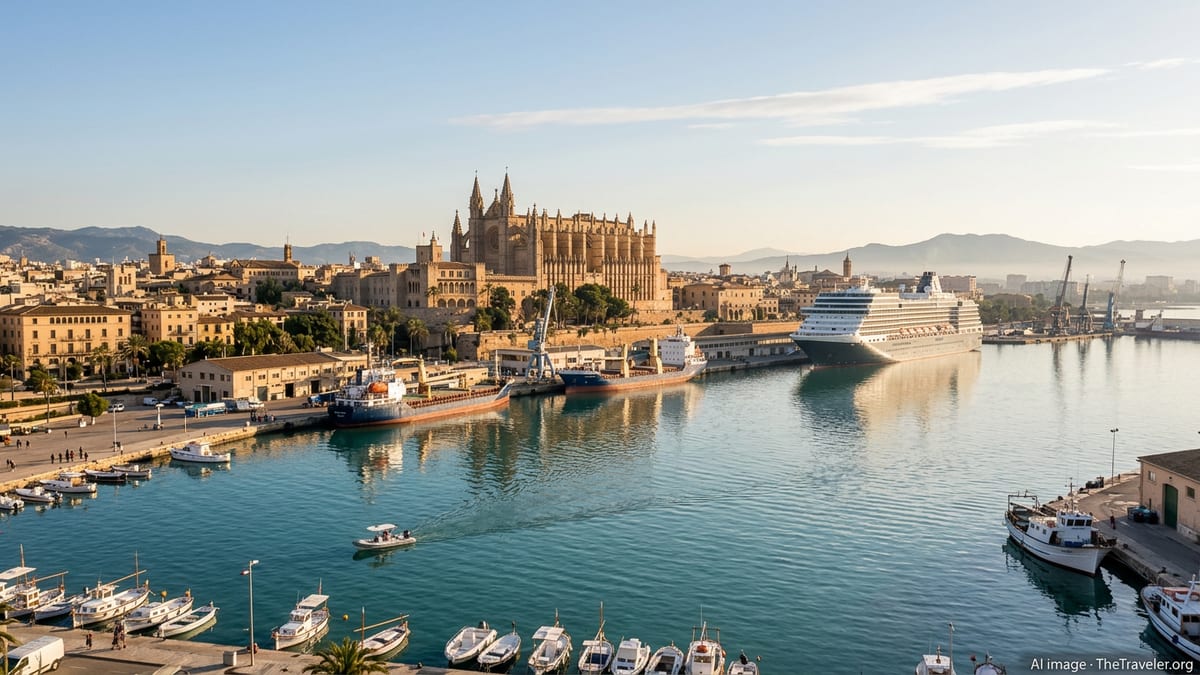
Barcelona’s port has emerged from the global travel downturn with passenger volumes that exceed pre‑pandemic benchmarks and confirm its status among the world’s busiest cruise hubs. The Port of Barcelona’s latest annual reporting for 2024 indicates around 3.6 million cruise passengers, surpassing 2019 levels and placing the Catalan capital among the top Mediterranean turnaround and transit ports by traffic.
Public data compiled in international cruise rankings shows Barcelona among the leading global cruise ports by passenger movements, with 3.65 million passengers recorded in 2024. Industry observers note that this puts the city in a small group of ports capable of handling both large‑ship deployments from major brands and a growing mix of premium and expedition vessels using Barcelona as a starting or ending point for Western Mediterranean itineraries.
Authorities at the port have been pursuing a strategy that concentrates cruise operations on the Adossat wharf and gradually relocates ships away from terminals closer to the historic city centre. Reports on the 2024 and 2025 seasons highlight high berth occupancy rates alongside an effort to balance traffic growth with stricter environmental and urban‑planning objectives.
While international debate continues over the sustainability of large‑scale cruise tourism, the latest figures underline that Barcelona remains a critical embarkation point for Mediterranean voyages linking Spain with Italy, France and wider European and transatlantic routes.
United Kingdom emerges as a key source market
Industry data released in 2026 by Cruise Lines International Association points to the United Kingdom and Ireland as one of the world’s largest cruise source markets, with about 2.5 million passengers in 2025 and year‑on‑year growth of nearly 6 percent. Analysts view this as an important underpinning for destinations such as Barcelona that feature strongly on Western Mediterranean and repositioning itineraries marketed to British travelers.
Barcelona’s own tourism statistics for 2025, compiled by the local tourism observatory, show that the destination welcomed more than 26 million visitors across the wider metropolitan area, with close to 32.4 million registered overnight stays. The reports highlight continued strength from European markets, including the UK, which remains among the city’s top international feeders alongside France, Italy, Germany and the United States.
Travel trade coverage suggests that British passengers are increasingly splitting their Mediterranean trips between fly‑cruise packages using Barcelona’s El Prat airport and surface‑based combinations that bring visitors into Spain via ferry before continuing by road or rail to Catalonia. This blended pattern of air, sea and land access is cited as a factor that diversifies the city’s inbound flows and helps smooth seasonality across the spring and autumn shoulder periods.
Operators note that the UK’s strong cruise culture, allied with persistent demand for Mediterranean sun‑and‑city breaks, positions Barcelona as a natural beneficiary when British travelers look for alternatives to long‑haul trips or higher‑priced destinations.
Ferry corridors from the UK to northern Spain feed overland demand
Although Barcelona itself is not directly linked to the United Kingdom by ferry, an expanding network of routes between southern England and Spain’s northern Atlantic coast is strengthening its wider catchment area. Brittany Ferries’ published timetables confirm up to 110 weekly sailings in 2025 on its UK–France–Spain network, including links from Portsmouth and Plymouth to Santander and Bilbao, with schedules now extended through November 2026.
The company promotes these crossings as an alternative to flying for British holidaymakers, with marketing materials highlighting the ability to drive onward from Santander and Bilbao to key Spanish regions. Journey‑time guidance points to a same‑day road link from the Cantabrian ports to Barcelona via the country’s high‑capacity motorway network, making the city reachable within a day’s drive for motorists arriving on overnight ferries.
Independent travel planners and mapping resources in the UK underline these links by positioning northern Spain as a primary landing point for road trips that continue toward Catalonia and the Mediterranean coast. This model allows travelers to combine a cruise‑style overnight sea journey with a self‑drive itinerary that can include Barcelona, the Costa Brava or connecting ferries to the Balearic Islands.
The growth of such ferry corridors is seen by tourism analysts as complementary to Barcelona’s cruise operations rather than competitive, broadening the spectrum of visitors who choose to arrive in Spain by sea before dispersing across the peninsula.
European source markets diversify Barcelona’s visitor base
Beyond the UK, a cluster of established European outbound markets continues to underpin Barcelona’s cruise and city‑break appeal. CLIA’s most recent European market overview identifies Germany and Italy among the continent’s largest cruise source markets, each generating well over 2 million passengers annually, while Spain itself contributes more than 600,000 cruise travelers.
These outbound flows are reflected in Barcelona’s annual tourism dashboards, which list Germany, Italy, France and the Benelux countries among the metropolitan area’s top international visitor origins. The combination of short‑haul flight connectivity, high‑speed rail links and established tour‑operator programs means that many European travelers can choose between city stays, cruises or multi‑centre trips that use Barcelona as one of several stops.
Cruise itineraries across the Western Mediterranean increasingly pair Barcelona with ports such as Civitavecchia for Rome, Marseille, Savona and Palma de Mallorca. This multi‑port offering encourages repeat visits as travelers return to Barcelona on different routes or extend their stays pre‑ or post‑cruise to explore neighborhoods beyond the core Gaudí attractions.
Observers note that this diversified market mix helps shield the city from demand shocks in any single country, while also widening the pool of potential visitors drawn by themed cruises focused on gastronomy, culture or sporting events.
Managing growth while reinforcing global appeal in 2026
Barcelona’s challenge for 2026 lies in accommodating robust cruise and ferry‑linked demand while responding to local concerns about congestion and environmental impact. The port’s 2024 annual report references efforts to consolidate cruise activity at dedicated terminals farther from the historic centre, alongside initiatives aimed at reducing emissions from ships at berth and encouraging shore‑power adoption.
City tourism strategies presented for the 2025 season and beyond place emphasis on spreading visitor flows across the metropolitan region and promoting longer stays with higher average spending. This includes incentives for travelers to explore cultural districts and nearby coastal or inland destinations, rather than concentrating exclusively on the most visited central landmarks.
At the same time, continued investment in airport capacity, rail connectivity and port infrastructure is intended to keep Barcelona competitive against other major Mediterranean gateways such as Civitavecchia, Piraeus and Marseille. Analysts argue that the combination of strong UK cruise demand, solid European source markets and resilient domestic travel gives the city a broad base of support as it fine‑tunes its tourism model.
With British travelers increasingly willing to reach Spain by sea, whether via direct ferries to the Atlantic coast or cruises that begin or end in Catalonia, industry forecasts suggest that Barcelona’s role as a focal point for Mediterranean travel will remain strong through the 2026 season.