


More news on this day
Barcelona is entering the 2026 summer season with renewed momentum as a global cruise gateway, with UK travelers and expanded ferry links across northern Spain helping to consolidate the Catalan capital’s position at the heart of Mediterranean itineraries.
Get the latest news straight to your inbox!
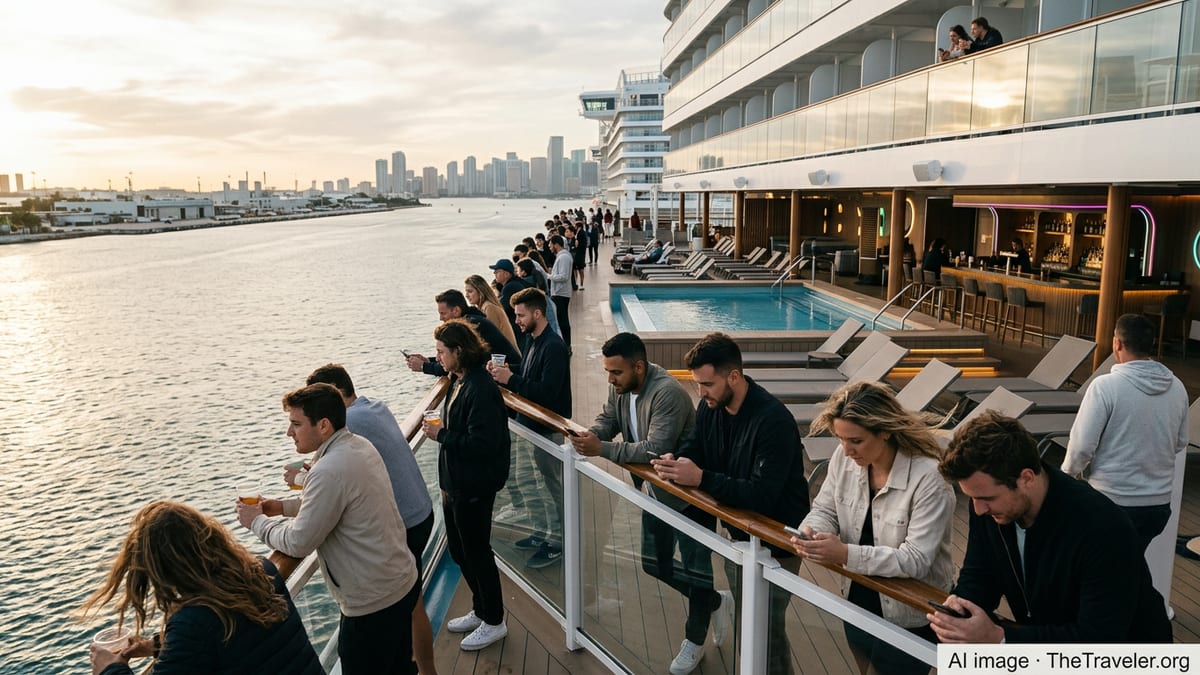
Barcelona Retains Lead as Mediterranean Homeport
Recent traffic data show Barcelona maintaining its status as one of the world’s busiest cruise homeports, underlining the city’s central role in European deployment plans for major cruise brands. MedCruise’s latest statistics report for 2024 identified Barcelona as the top Mediterranean homeport by home-in and home-out passengers, with more than two million embarkations and disembarkations recorded and a strong pipeline of bookings leading into 2025 and 2026. Industry coverage indicates that this leadership position has continued, supported by year-round sailings and longer summer seasons.
Figures published by the Port of Barcelona for 2024 and the early months of 2025 point to a solid rebound in cruise activity compared with the immediate post‑pandemic years. The port’s traffic bulletins highlight continued growth in passenger movements and emphasize the importance of turnaround operations, where travelers begin or end their voyages in the city rather than simply visiting for the day. This dynamic supports a broad ecosystem of hotels, restaurants and transport providers that benefit from pre‑ and post‑cruise stays.
Industry observers note that Barcelona’s appeal as a starting point is reinforced by its connectivity to a wide range of Western Mediterranean and Atlantic itineraries. Routes that link the city to destinations such as Marseille, Civitavecchia, the Balearic Islands and Atlantic hubs like Southampton allow cruise lines to attract a mix of European and long‑haul markets, with the UK consistently featuring among the most important source countries for passengers.
Forward booking patterns reported by cruise operators suggest that 2026 will bring further diversification of itineraries using Barcelona as a base, as brands balance traditional seven‑night loops with shorter taster cruises and longer repositioning voyages. This mix is expected to keep the port firmly in focus for British passengers, especially those combining sea journeys with rail or air travel.
UK Travelers Drive Demand Across Iberian Gateways
Publicly available tourism studies consistently rank the United Kingdom among Spain’s largest inbound markets, with Barcelona and the surrounding Catalan coast regularly cited as key beneficiaries. While low‑cost and legacy air services remain dominant, reports also highlight the growing role of cruise and ferry travel in dispersing UK demand along Spain’s northern and eastern seaboards before many travelers continue on to Barcelona by road or rail.
Data from ports on Spain’s Atlantic façade, particularly Bilbao and Santander, show steady volumes of UK passengers arriving on long‑haul cruise ferries. The Port of Bilbao reports that around two‑thirds of its tourist traffic is handled by a single carrier on its regular sailings to Portsmouth, underscoring the strength of the UK market on these sea routes. The port also notes thousands of travelers using shuttle connections between the ferry terminal and the city, illustrating how maritime links are integrated into wider visitor flows across the Iberian Peninsula.
Travel industry coverage indicates that many of these passengers continue their journeys onward to other Spanish cities, including Barcelona, using a combination of motorway networks and high‑speed rail. Online forums and trade publications describe routings in which holidaymakers disembark ferries in northern Spain before driving across the country to the Mediterranean coast, effectively turning a cross‑Bay of Biscay crossing into the first stage of a wider Spanish itinerary anchored by Barcelona.
Analysts suggest that this pattern positions UK‑to‑Spain ferries as complementary to the cruise sector based in Barcelona. Instead of competing directly with Mediterranean cruises, the long‑distance ferry services act as feeders, bringing self‑drive tourists, touring caravans and small groups into Spain who may then join coastal cruises, book coastal mini‑cruises or spend extended time in Catalonia’s urban and beach destinations.
Expanded UK–Spain Ferry Capacity Supports 2026 Season
The network of ferries linking the UK and northern Spain is expected to play a larger role in shaping visitor flows into Iberia during 2026. Route information compiled by port authorities and ferry aggregators shows that there are currently three direct UK‑to‑Spain routes, all operated by Brittany Ferries, connecting Portsmouth and Plymouth with the ports of Santander and Bilbao. For much of the year, timetables point to multiple weekly departures in each direction, effectively offering a near‑continuous maritime bridge across the Bay of Biscay.
In previous seasons, the operator has highlighted an expanded schedule of trans‑Biscay sailings, with up to 16 weekly crossings during peak periods linking the UK and Ireland to Bilbao and Santander. More recent timetable releases for travel through late 2025 and into 2026 indicate that this high‑frequency pattern is being maintained, with overnight and daytime services designed to suit both holidaymakers and freight customers. Industry commentary characterizes these ships as cruise‑style ferries, with onboard cabins, dining and entertainment facilities that appeal to travelers seeking an alternative to flying.
Portsmouth International Port describes itself as the UK harbor with one of the broadest selections of routes to continental Europe, including regular services to Spain. Operational updates and local council documents highlight the strategic value of these crossings in supporting the regional visitor economy, as passengers from across Britain use Portsmouth as a gateway to Iberia. In the opposite direction, Spanish residents and other European travelers can sail into southern England and connect onwards to cruises embarking in UK ports that include Barcelona in their itineraries.
Travel platforms promoting ferry travel to Spain emphasize the opportunity to arrive directly into the northern regions and then continue overland to Barcelona and the Mediterranean. By reducing reliance on air travel and offering flexible options for those traveling with vehicles, the UK–Spain ferry network is seen by commentators as broadening the pool of potential visitors for Spanish coastal cities and cruise hubs.
Cruise Lines Align UK and Barcelona Itineraries
Barcelona’s profile among UK travelers is further amplified by the way cruise lines align British departure ports with Mediterranean homeports. Schedules published for 2025 and 2026 feature itineraries that begin in UK ports such as Southampton and conclude in Barcelona, or operate in the reverse direction. These voyages typically combine Atlantic and Western Mediterranean calls, positioning the Catalan capital as either the marquee finale or the starting point for British passengers.
Reports in specialist cruise media describe a noticeable recovery in UK outbound cruise demand, with particular interest in itineraries that reduce the need for long‑haul flights. One outcome has been a focus on sailings that originate close to home for British travelers, cross the Bay of Biscay and Iberian Atlantic coast, and then use Barcelona as a turnaround or transit port. This type of routing integrates the city into a broader corridor that also benefits northern Spanish and French ports.
The combination of UK‑origin cruises and ferry arrivals into northern Spain creates a multilayered flow of visitors who may encounter Barcelona at different stages of their journey. Some passengers board large ocean ships in Barcelona and disembark in a UK port weeks later, while others complete a ferry journey from Britain, travel overland through Spain and then join shorter regional cruises from the Catalan capital. Industry analysts note that this variety of pathways increases the city’s resilience to fluctuations in any single market segment.
Cruise and ferry operators have also been expanding shoulder‑season and winter offerings, which is expected to benefit Barcelona’s year‑round tourism ambitions. With UK travelers traditionally looking to extend their holiday periods beyond the peak summer months, the ability to combine sea crossings, city stays and multi‑port cruises offers a flexible framework that supports more evenly distributed demand.
Sustainability and Capacity Management Shape Future Growth
As Barcelona’s cruise and ferry‑linked visitor numbers grow, local authorities and port managers have been emphasizing sustainability and capacity management. Official statistics and policy papers from the Port of Barcelona highlight efforts to balance economic benefits with environmental and community concerns, including incentives for cleaner ships and the development of shore‑power infrastructure designed to cut emissions while vessels are docked.
Industry observers point out that similar environmental themes are emerging along the UK–Spain ferry corridor. Company sustainability reports describe investments in newer, more efficient vessels and the gradual adoption of alternative fuels, with the goal of reducing greenhouse gas emissions on long‑distance routes between the British Isles and northern Spain. These developments align with European climate objectives and are increasingly noted by travelers choosing between different modes of transport.
Destination planners suggest that continued coordination between ports, cruise lines and ferry operators will be critical in the years ahead. By managing ship calls, passenger flows and shore‑side services in a more integrated way, stakeholders aim to ensure that Barcelona’s growth as a global travel hub remains compatible with quality of life for residents and with wider sustainability goals across the Western Mediterranean and Atlantic corridors.
With UK demand showing resilience, ferry capacity between Britain and Spain on an upward trajectory, and cruise lines continuing to anchor flagship itineraries in the Catalan capital, Barcelona appears positioned to strengthen its global travel appeal through 2026 and beyond.