


Nice is compact enough that you can walk almost everywhere, yet its central neighborhoods have very different personalities. Two of the most popular areas for visitors are the elegant Quartier des Musiciens and the glamorous Carré d’Or by the sea. They sit side by side in the heart of the city, but they deliver distinct experiences in terms of atmosphere, budget, and day-to-day convenience. Choosing between them can shape your entire Riviera stay.
Get the latest updates straight to your inbox!
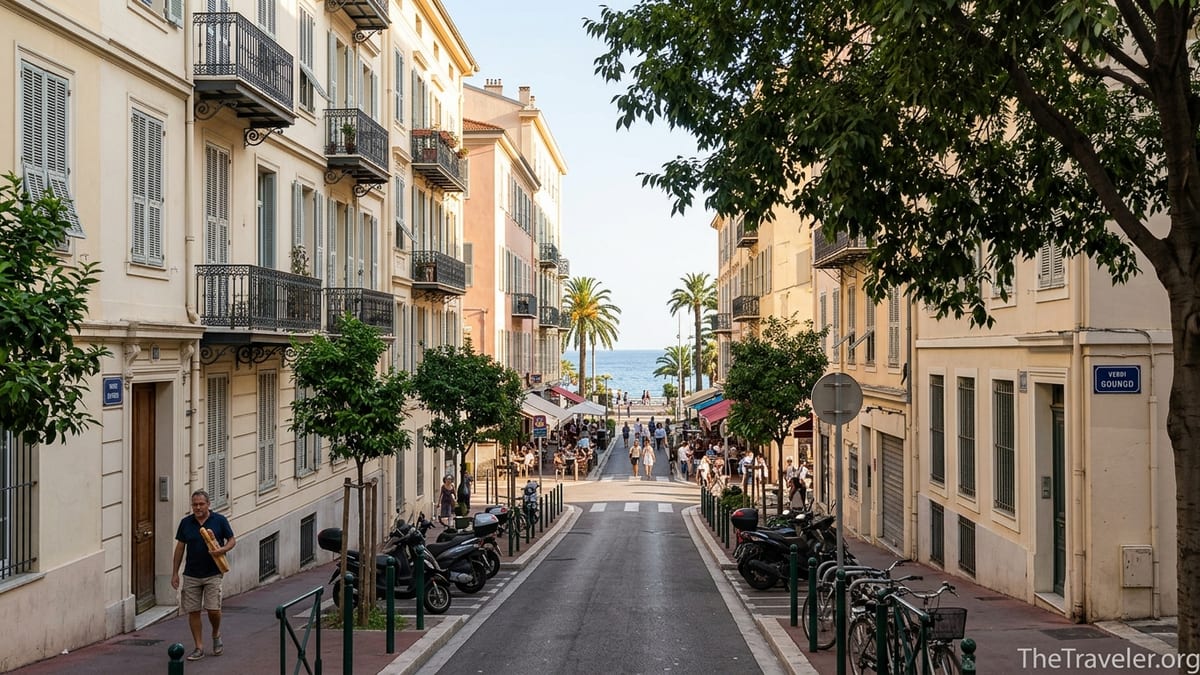
Getting Oriented: Where Musiciens and Carré d’Or Sit in Nice
Musiciens and Carré d’Or form the refined heart of central Nice, just west of Place Masséna and a short stroll from the Promenade des Anglais. Carré d’Or is the “Golden Square” that stretches roughly between the sea and boulevard Victor Hugo, from around Rue Maccarani over toward Boulevard Gambetta. It is the classic postcard zone of Belle Époque facades, luxury boutiques and big-name hotels close to the beach. Musiciens lies just behind it, inland of boulevard Victor Hugo and edging toward the main train station around Avenue Thiers.
The border between the two districts is more emotional than administrative. As you walk inland from the Promenade, you pass from the buzz of Carré d’Or’s pedestrian streets like Rue Masséna and Rue de France into calmer, leafier avenues named after composers: Rue Verdi, Rue Rossini, Rue Gounod. Here in Musiciens the traffic slows, balconies are filled with plants, and the mood feels more residential. Both areas are within a 10 to 15 minute walk of the Old Town and tram lines, so this decision is less about practicality and more about the style of stay you want.
For most visitors, Carré d’Or means being a couple of minutes from the sea and nightlife, while Musiciens means slightly longer walks to the water but more of a “live like a local” feeling. If you imagine your ideal day in Nice and work backward from that picture, it quickly becomes clear which map you should be looking at when you book.
Atmosphere & Vibe: Glamour vs Quiet Elegance
If Carré d’Or were a person, it would be dressed in linen with designer sunglasses, strolling from a late breakfast on Rue Masséna to a sun lounger on the Promenade des Anglais. The area buzzes from late morning through the evening. Pedestrian streets are lined with cafés, gelaterias, and brasseries catering to shoppers, beachgoers, and cruise visitors. In peak season you can expect street musicians, outdoor terraces packed until late, and a steady murmur beneath your balcony if you stay directly above the pedestrian zone.
Musiciens, by contrast, feels like the genteel neighbor who prefers a good book on the balcony. The streets are broader, with more trees and less commercial ground-floor activity. You’ll still find bakeries, corner supermarkets and a few relaxed bistros, but much of the neighborhood is residential. On Rue Verdi or Rue Gounod, you are more likely to hear the clink of plates from family dinners than bar noise. Visitors who stay here often mention sleeping better and feeling less “in a tourist bubble,” especially outside high summer.
That said, Musiciens is not suburban. You are only a few minutes’ walk from busier arteries like Avenue Jean Médecin for shopping or boulevard Victor Hugo for trams and pocket parks. Many travelers use Musiciens as a base to enjoy quiet mornings and nights while heading into Carré d’Or or Old Town for the action. If your idea of a perfect evening is a glass of rosé on a calm balcony rather than live music under your window, Musiciens will likely fit your style better.
The choice comes down to your tolerance for noise and your appetite for energy. Night owls and people who draw energy from crowds tend to feel at home around Carré d’Or’s pedestrian streets. Early sleepers, families with young kids, and long-stay visitors usually lean toward Musiciens.
Architecture & Streetscape: Belle Époque Showcase or Seaside Glamour
Both neighborhoods are showcases for Nice’s late 19th and early 20th century architecture, but they highlight different facets. Musiciens is often cited locally as one of the city’s most emblematic Belle Époque districts, with ornate facades, wrought-iron balconies, carved stone details and grand entrance halls. Many buildings were originally constructed for wintering European elites and still have generous ceiling heights, decorative staircases, and inner courtyards. A simple walk along Rue Berlioz or Rue Gounod can feel like an open-air architecture museum.
Carré d’Or mixes these bourgeois apartment buildings with grand hotels and more recent luxury residences that face the sea. Close to the Promenade des Anglais you see landmark facades housing well-known hotels, private beach clubs and upscale boutiques. A typical stroll might take you from the gardens around the Musée Masséna, past palm trees and Belle Époque villas, to contemporary glass-fronted buildings with premium terraces overlooking the Mediterranean. The architecture here tells the story of tourism and glamour more than everyday city life.
In practical terms, this influences how it feels to walk around. In Musiciens, side streets are quieter and shadier, appealing if you like explorative walks and photography of balconies, doorways and old-fashioned street lamps. In Carré d’Or, the focus is more on wide seafront views, outdoor terraces spilling onto pavements, and window-shopping. If you want to step outside and immediately feel the “Riviera postcard” view, Carré d’Or delivers that more directly.
For many travelers a compromise works well: stay just inside Musiciens near boulevard Victor Hugo or Jardin Alsace-Lorraine, so you have quick access to Carré d’Or’s sea views after a five to ten minute walk, but your immediate surroundings are quieter and more local in feel.
Location, Transport & Everyday Convenience
On a map, Carré d’Or appears closer to the sea while Musiciens hugs the rail and tram spine of the city. That difference matters if you plan a lot of day trips along the Riviera. Musiciens sits closer to Nice-Ville train station and tram stops like Thiers or Jean Médecin, which connect you easily to Cannes, Antibes, Menton, Monaco and the airport. For example, from a typical apartment on Rue Verdi you might walk 8 to 10 minutes to catch a morning train to Monaco, and about the same to reach the sea.
Carré d’Or prioritizes the beach and pedestrian experience. Many streets are only two or three minutes’ walk from the Promenade des Anglais and its private and public beaches. If you picture daily swims before breakfast, or sunset walks by the water every evening, the convenience of carrying only a towel and sandals down Rue de France is hard to beat. Public transport is still accessible via tram stops at Masséna or Alsace-Lorraine, but you will generally walk a bit farther to the train station than from Musiciens, often 15 to 20 minutes depending on your exact address.
Everyday errands are straightforward in both neighborhoods. You will find small supermarkets, bakeries, pharmacies and cafés scattered throughout. Musiciens adds a few more practical amenities thanks to its partly professional character, such as medical practices and offices, while Carré d’Or leans more toward retail, restaurants, and services tied to tourism like bike rentals or beauty salons. For a one-week stay this difference is minor, but for a month-long visit you may appreciate the more “normal city” mix in Musiciens.
If you are arriving late by train or taking very early departures, Musiciens’ proximity to Nice-Ville can be reassuring. If your itinerary is beach-heavy and you only plan one or two regional trips, the extra closeness of Carré d’Or to the seafront is likely more valuable than shaving a few minutes off your walk to the station.
Budget & Accommodation: What You Get for Your Money
Prices in Nice fluctuate widely by season, especially in July, August, during Carnival in February, and around major events in Monaco or Cannes. As a broad pattern, Carré d’Or commands a premium for its address and sea proximity, while Musiciens usually offers a bit more space for slightly less money at the same standard. For instance, a mid-range hotel near Place Masséna or the Promenade might start around the upper double-digits to low triple-digits per night in shoulder seasons, and climb significantly in August. A similar-quality property in Musiciens might undercut that by a noticeable margin or offer a larger room or balcony for a comparable price.
In the vacation rental market, Musiciens tends to shine. Because many buildings are residential, you find one- and two-bedroom apartments with separate kitchens, balconies and washing machines that suit longer stays. A couple staying for two weeks in September might find a stylish 40 to 50 square meter apartment along Rue Rossini or Rue Gounod for a moderate nightly rate, sometimes less than a smaller studio closer to the sea. Carré d’Or also has many rentals, particularly near Rue de France and the pedestrian zone, but you pay more for direct proximity to the Promenade or partial sea views.
Another practical detail is building style. Many Musiciens properties are classic apartments without reception desks, so self-check-in and key-safe systems are common. In Carré d’Or you have more traditional hotels with 24-hour reception, luggage storage and concierge services alongside rentals. If you value on-site staff, Carré d’Or gives you more of those options. If you value a residential vibe and are comfortable managing your own arrival, Musiciens offers rich pickings.
Whichever you choose, book early for peak dates and pay attention to whether a place faces a pedestrian street, a busy avenue, or a courtyard. In Carré d’Or, streets like Rue Masséna and Rue de France can be noisy until late; in Musiciens, stretches closer to Avenue Thiers or Boulevard Gambetta have more traffic. Reviews that specifically mention noise or quiet are especially useful when comparing similar-priced options.
Food, Nightlife & Daily Rhythms
Carré d’Or is the more obvious choice if you want restaurants and bars at your doorstep. The pedestrian zone west of Place Masséna is lined with brasseries offering fixed-price menus, Italian trattorias, cocktail bars and ice cream parlors. It is easy to decide on dinner by simply walking down Rue Masséna or Rue de France and reading menus. You will also find quick options like crêperies, pizza-by-the-slice counters, and takeout sushi, which are handy for beach picnics or low-effort evenings.
Nightlife in Carré d’Or is active but not as club-heavy as some Mediterranean resorts. Expect wine bars, piano bars, and a few livelier spots where music continues until late, especially in summer. If you stay directly above or near these streets, the combination of terrace chatter and occasional live music might keep light sleepers awake. For many visitors, that atmosphere is part of the appeal: you can step out of your building and instantly be in the middle of the scene without worrying about late-night transport.
In Musiciens, food and drink are more woven into everyday life. You might have a favorite boulangerie for morning croissants, a café on a corner where locals read the newspaper, and a couple of low-key neighborhood bistros that fill up with residents rather than tour groups. For more choice, you will likely walk 5 to 10 minutes toward Carré d’Or or Old Town, where the dining scene is denser. Many Musiciens-based travelers settle into a rhythm of cooking simple meals at home using produce from markets or supermarkets, then going out a few evenings a week.
If you love going out every night without planning ahead, Carré d’Or gives you that spontaneity. If you prefer quieter dinners and are happy to walk a bit for more variety now and then, Musiciens can feel more sustainable over a longer stay, especially outside peak season when some seasonal places closer to the sea may shorten hours.
Who Each Neighborhood Suits Best
Musiciens tends to appeal to travelers who want space, calm and a neighborhood feeling. Remote workers and long-stay visitors often choose it as a base, valuing the quick access to the train station, tram lines and local services. Families with small children appreciate quieter evenings and the ability to find larger apartments with separate bedrooms and kitchens. Older travelers or those sensitive to noise also often report that Musiciens strikes a comfortable balance between central location and restful ambience.
Carré d’Or is ideal for first-time visitors who want to be near the beach and feel in the middle of everything. If your stay is short and you want to maximize seafront time, quick access to cafés and restaurants, and easy walks to Old Town, Carré d’Or makes logistics simple. Couples on a romantic break often enjoy the convenience of strolling straight from dinner to the Promenade for a nighttime walk, then back to a nearby hotel. Solo travelers who like to be where streets stay lively into the evening also tend to gravitate here.
Budget also plays a role. If you are traveling in high season and find that central hotels near the sea are stretching your budget, widening your search one or two streets inland into Musiciens can unlock better value without sacrificing safety or convenience. Conversely, if this is a once-in-a-decade Riviera trip and you are comfortable paying more to wake up steps from the Mediterranean, then Carré d’Or is where you will likely focus your search.
A useful mental exercise is to imagine your typical day: where you wake up, what you see first out the window, where you get your coffee, how far you walk to the sea, and what your evenings look like. Then compare that picture to the reality of each neighborhood’s strengths. Usually, your ideal day aligns clearly with one side of boulevard Victor Hugo or the other.
The Takeaway
Choosing between Musiciens and Carré d’Or in Nice is not a question of right or wrong, but of fine-tuning the feel of your trip. The two neighborhoods sit shoulder to shoulder in the city center, yet they frame the Riviera differently. Carré d’Or brings the sea, the boutiques and the buzz of café terraces to your doorstep. Musiciens offers the elegance of Belle Époque streets, residential calm and a slightly deeper sense of living in the city rather than visiting it.
If you crave sea views, spontaneous restaurant choices and a constant holiday hum, Carré d’Or will probably feel like the classic Riviera base you imagined. If you value quieter evenings, larger living spaces and quick access to trains and trams for exploring the coast, Musiciens may suit you better. Either way, Nice’s compact size means you can easily enjoy the best of both: mornings on a Musiciens balcony and afternoons on a Carré d’Or beach, or vice versa.
In the end, let your own rhythms decide. Are you most alive among nighttime lights and terrace chatter, or on a shaded balcony with only the sound of distant traffic and clinking tableware? Your answer will tell you whether to mark your accommodation search on the seaside grid of Carré d’Or or the music-filled streets just behind it in the Quartier des Musiciens.
FAQ
Q1. Is Musiciens or Carré d’Or better for a first visit to Nice?
For a short first visit focused on beaches and easy sightseeing, Carré d’Or generally works better because you are extremely close to the Promenade des Anglais and the pedestrian center, with many restaurants and cafés at your doorstep. If you are staying longer than a week or prefer quieter, more residential surroundings, Musiciens can be a more comfortable introduction to the city.
Q2. Which neighborhood is quieter at night?
Musiciens is usually quieter, especially on streets set back from main avenues. Carré d’Or remains livelier into the evening, particularly around Rue Masséna, Rue de France and the pedestrian zone, where terraces and bars stay busy in high season. If you are a light sleeper, look for Musiciens addresses on side streets or Carré d’Or accommodations facing inner courtyards rather than main pedestrian streets.
Q3. Where is it easier to reach the train station and tram?
Musiciens offers slightly easier access to Nice-Ville train station and central tram stops such as Thiers and Jean Médecin, making it practical if you plan frequent day trips to places like Cannes, Antibes or Monaco. From many Musiciens streets you can walk to the station in around 10 minutes. From Carré d’Or, you will often walk a bit farther to the station, although tram stops for airport access and local travel remain within reasonable walking distance.
Q4. Which area is better if I want to spend most of my time at the beach?
Carré d’Or is better if the beach is your main focus. Many streets run directly down to the Promenade des Anglais, so you can reach the water in just a few minutes on foot, often carrying only a towel and bag. From Musiciens, the walk to the sea is typically 10 to 15 minutes depending on your exact address, which is still manageable but slightly less convenient for multiple swims per day.
Q5. Are both neighborhoods safe for walking at night?
Both Musiciens and Carré d’Or are generally considered safe, and many residents walk home after dinner or evening strolls. As in any city, basic precautions apply, such as keeping an eye on your belongings and avoiding very quiet corners late at night. Streets with more activity, like those in Carré d’Or, can feel reassuringly busy, while Musiciens offers calmer routes where you will mostly encounter local residents returning home.
Q6. How do prices compare between Musiciens and Carré d’Or?
Carré d’Or typically commands higher prices for hotels and rentals because of its proximity to the sea and main pedestrian areas. Musiciens often offers slightly better value for similar-quality apartments and can be especially attractive for longer stays or larger properties. Exact prices vary with season and demand, so it is worth comparing both neighborhoods on your dates to see where your budget stretches further.
Q7. Which neighborhood is better for families with children?
Many families prefer Musiciens because of its quieter streets, residential atmosphere and the availability of larger apartments with separate bedrooms and kitchens. It is still close enough to walk to the beach and main sights, but evenings tend to be calmer. Carré d’Or can also work well for families, particularly if you choose a hotel on a quieter side street and value the convenience of being very close to the Promenade and central attractions.
Q8. Will I miss out on the “local” side of Nice if I stay in Carré d’Or?
Not necessarily. While Carré d’Or is more tourist-focused, you can still find local cafés, small shops and everyday life on side streets, especially away from the busiest pedestrian stretches. However, Musiciens does offer a more purely residential feeling, with fewer souvenir shops and more everyday services. If “living like a local” is a top priority and you enjoy shopping in neighborhood bakeries or supermarkets, Musiciens might align more closely with that wish.
Q9. Is one neighborhood better for remote work or long stays?
Musiciens is often preferred for longer stays and remote work because of its quieter environment and the abundance of well-equipped apartments. Having more space, a proper dining table or desk, and less evening noise can make it easier to keep a routine. Carré d’Or can still be suitable if you choose an apartment or hotel on a calmer street and enjoy stepping out to cafés for working sessions, but some people find the constant buzz less conducive to focused work.
Q10. If I stay in one area, will I still easily enjoy the other?
Yes. Nice is compact, and Musiciens and Carré d’Or sit directly beside each other. From most Musiciens addresses you can walk to the heart of Carré d’Or in about 10 minutes, and from Carré d’Or you can reach Musiciens just by crossing boulevard Victor Hugo or heading a few blocks inland. You can comfortably explore both on foot, so your choice of base shapes your daily routines more than it limits what you can experience.