


More news on this day
Namibia’s secondary airports are under mounting financial pressure as the state-owned Namibia Airports Company faces rising maintenance costs, unprofitable regional routes and the urgent need to capture a fast-recovering tourism market.
Get the latest news straight to your inbox!
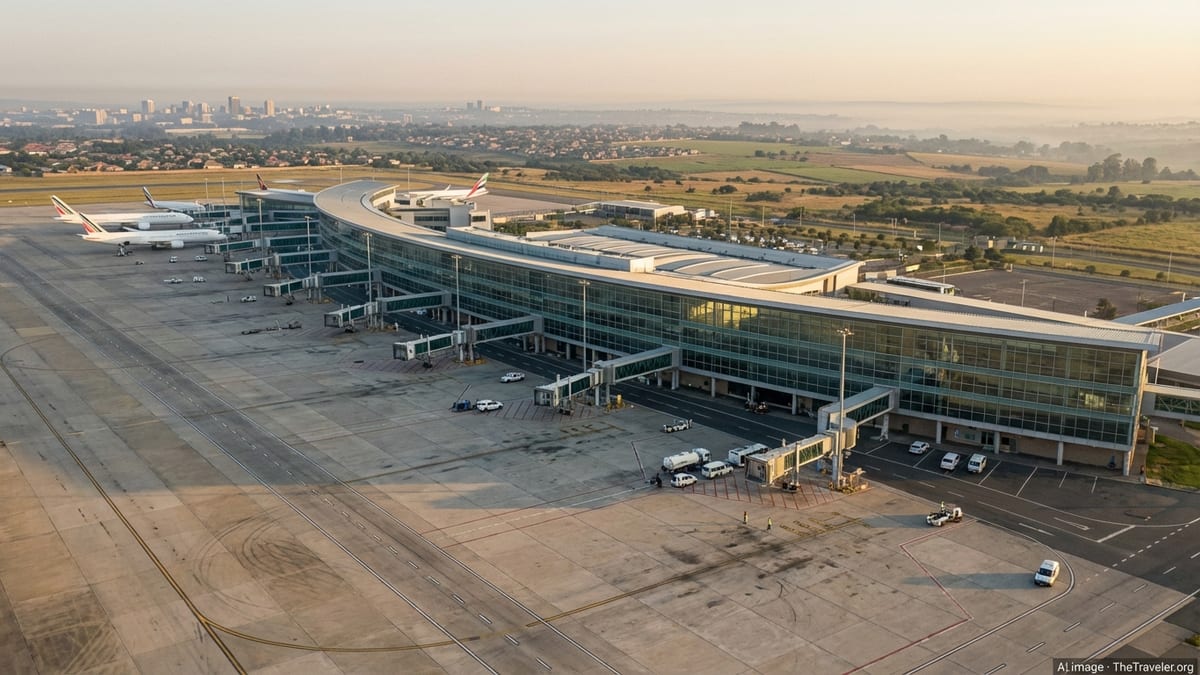
Regional Airports Run at a Loss as Costs Climb
Recent local reporting indicates that most of Namibia’s regional airports continue to operate at a loss despite growing passenger numbers and sustained investment in airport infrastructure. Publicly available information shows that Hosea Kutako International Airport outside Windhoek is currently the only profitable airport in the country, with Walvis Bay International Airport described as being closest to breaking even. Smaller facilities such as Lüderitz, Ondangwa and Rundu rely heavily on state support and cross-subsidisation from the main gateway.
According to coverage of the Namibia Airports Company’s latest spending plans, the operator allocated roughly N$13.2 million to maintenance in the 2024/25 financial year and has increased this to around N$20 million for 2025/26. The higher allocation reflects both rising input costs and the need to keep runways, terminals and safety systems up to international standards, even where traffic volumes remain modest.
These pressures have sharpened the debate over the role of regional airports in Namibia’s wider economic strategy. Tourism, logistics and resource projects all depend on reliable air links across a vast and sparsely populated territory, yet low passenger throughput makes commercial viability difficult. Analysts following the sector note that this tension is not unique to Namibia, but it is particularly acute given the size of the country and the importance of long-haul visitors.
For now, industry commentary suggests that Namibia Airports Company is expected to shoulder short-term losses at secondary airports in exchange for longer-term gains in tourism revenue, local employment and regional development. How quickly those gains can materialise will depend on the pace of route expansion and the success of current efforts to deepen connectivity with key source markets.
Tourism Rebound Adds Urgency to Connectivity Plans
Namibia’s tourism recovery is gathering pace, heightening expectations that aviation infrastructure can help unlock a new growth cycle. Government statistical reports and independent economic analyses indicate that international tourist arrivals surged in both 2023 and 2024, with some estimates placing last year’s figure above one million visitors and close to four-fifths of pre-pandemic levels. Leisure travel remains the dominant purpose of visit, reinforcing Namibia’s position as a long-haul safari and self-drive destination.
Passenger data cited in local business media shows a double-digit year-on-year increase in arrivals at Namibia’s airports in early 2024, with Hosea Kutako International Airport retaining its status as the primary gateway for inbound tourists. At the same time, statistics highlight the role that smaller airports play in dispersing travellers into regions such as the coast, the far north and the south, where signature attractions include Etosha National Park, the Skeleton Coast and the Namib Desert.
Tourism-focused publications in Namibia have stressed that maintaining this momentum will require more direct air access from Europe, the Middle East and key African hubs. Before the pandemic, the country benefited from a growing long-haul network that linked Hosea Kutako to Frankfurt, Doha, Addis Ababa and major South African cities. While several of these connections have returned, capacity remains below 2019 peaks, and new routes into secondary airports are limited.
The result is a clear mismatch: tourist numbers are climbing back, but the aviation system feeding regional destinations is still thin. This gap is driving the current conversation around whether enhanced connectivity, particularly into Walvis Bay, Lüderitz and northern gateways, can shift regional airports closer to break-even while easing pressure on the main international hub.
NAC Bets on New Routes, Cargo and Partnerships
In response to these trends, Namibia Airports Company is rolling out a multi-pronged strategy aimed at boosting traffic and diversifying revenue. According to recent business coverage, the company has been actively engaging airlines on potential regional routes within southern Africa, following route suspensions that affected direct links with some neighbouring countries. Reports indicate that the operator views renewed services between Namibia and Botswana, as well as wider intra-African connectivity, as crucial for both tourism and business travel.
One of the flagship initiatives is the Air Connect Namibia project, announced in 2024. Public information on the programme describes it as an effort to increase direct air access to Namibia by coordinating marketing efforts, sharing data with airlines and aligning aviation planning with tourism promotion. Initial attention is focused on Hosea Kutako International Airport, but the broader aim is to create network effects that can benefit regional airports as feeder nodes.
At the same time, Namibia Airports Company is seeking to expand air cargo operations. Business press reports highlight plans for new warehousing and logistics facilities at Hosea Kutako, Walvis Bay and Lüderitz airports to support both imports and exports. The company has pointed to the value of airfreight handled through its airports in the last financial year as evidence that cargo can become a more meaningful contributor to revenues, particularly for coastal and resource-linked regions.
There is also discussion in regional media about potential collaboration on a joint airline venture with Botswana, an idea that reappears periodically in aviation and economic forums. While no binding commitments have been publicly confirmed, observers suggest that a shared carrier or closer coordination between national airlines could improve route viability on thin regional sectors, feeding passengers into Namibia’s tourism hotspots via underserved airports.
Can Greater Connectivity Turn Loss-Making Airports Around?
The central question now facing Namibia’s aviation planners is whether better connectivity can realistically transform chronically loss-making airports into sustainable assets. Industry analysts note that the answer is likely to vary by location. Walvis Bay, with its port, tourism appeal and emerging role as a logistics hub, is often cited as the regional airport with the clearest path to profitability through a mix of passenger traffic and cargo.
Other facilities may continue to require long-term subsidy but still deliver strong indirect benefits. Airports serving northern and southern regions act as gateways to community conservancies, national parks and cross-border trade corridors, where tourism revenue supports conservation and local livelihoods. Economic studies on tourism multipliers in Namibia suggest that every international visitor can generate significant spending on accommodation, guided activities and car rentals, much of which accrues outside the capital.
For Namibia Airports Company, the challenge is to demonstrate these wider gains while keeping its own finances in check. Commentators in the local press have argued that clearer performance targets, route development incentives and partnerships with the private sector could help bridge the gap. Ideas under discussion include seasonal charters into gateway towns, coordinated marketing between airports and tourism boards, and tailored fee structures for airlines willing to experiment on new regional routes.
In the medium term, success will likely be measured by whether secondary airports can increase load factors, attract more scheduled services and capture a larger share of tourist arrivals that currently route entirely by road from neighbouring countries. If that happens, the increased throughput could gradually narrow operating deficits, justifying the current wave of maintenance spending and positioning these airports as pillars of Namibia’s next travel boom.
A Pivotal Moment for Namibia’s Air Network
With tourism on a firm recovery path and new investments flowing into logistics, energy and mining, Namibia’s air transport network is entering a pivotal phase. Decisions made over the next few years on airport funding, route incentives and cross-border cooperation are likely to shape how evenly the benefits of growth are felt across the country.
Observers point out that regional airports are not just transport assets but also symbols of state presence and enablers of social connectivity in remote areas. Maintaining them purely on commercial terms may be unrealistic, but neglecting them could constrain tourism diversification and leave smaller communities on the margins of the recovery.
For now, Namibia Airports Company appears intent on using targeted connectivity, cargo expansion and collaborative projects to leverage a growing tourism base. If these efforts succeed, the country’s next travel boom may not only fill flights into Windhoek, but also bring more visitors directly into the coastal towns, desert outposts and wildlife-rich regions that underpin Namibia’s allure.