


More news on this day
Around 200 passengers on a yearslong residential cruise, including at least one traveler from Naples, have been left stranded in Cambodia after their ship’s operator abruptly suspended operations, citing soaring fuel costs and financial shortfalls.
Get the latest news straight to your inbox!
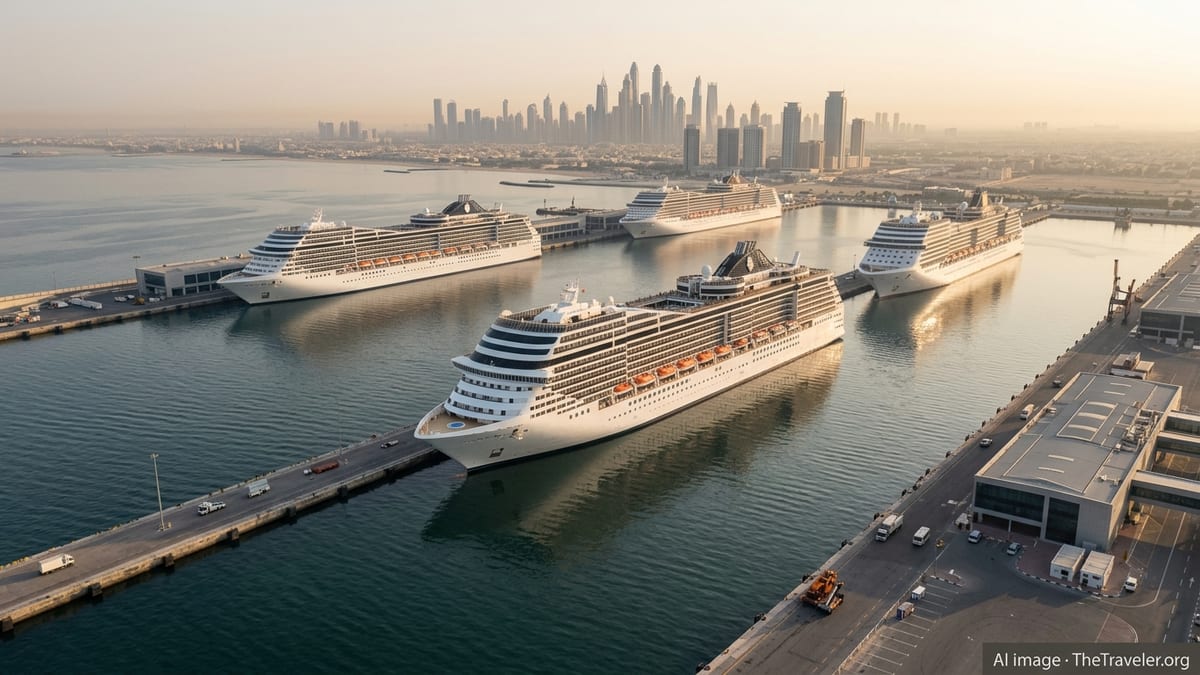
Residential “cruise for life” voyage cut short in Sihanoukville
Publicly available information identifies the vessel as the Villa Vie Odyssey, a Bahamas-flagged residential cruise ship that had been marketed as a long-term or even “endless” world voyage. The ship arrived at the Cambodian port of Sihanoukville on October 23 with 203 passengers and 156 crew on board, following a call in Thailand and with Vietnam listed as its next scheduled stop.
Reports from international news outlets indicate that passengers, many of whom had sold homes or downsized in order to finance life at sea, were informed this week that the operator was suspending the voyage. The decision was linked to a sharp rise in fuel costs associated with regional instability, along with what passenger accounts describe as ongoing financial strain on the company.
Passengers were reportedly given only a few hours’ notice to disembark in Sihanoukville, turning what had been promoted as a turnkey global lifestyle into an urgent scramble for flights, hotels and visas. Among them, a woman from Naples is understood to be one of several Italian and European residents now trying to piece together journeys back to their home cities from Cambodia’s southern coast.
Local statements cited in regional coverage suggest that Cambodian port officials had initially expected a five-day visit before the ship continued its itinerary into Vietnam. Instead, Sihanoukville has become an unexpected terminus, with the 200-metre vessel now lying idle at the quay while passengers disperse across the region.
Stranded travelers face complex route home from Cambodia
For stranded travelers, including the Naples passenger, the immediate challenge has been securing a way home from Sihanoukville, a port city on the Gulf of Thailand that does not have the same breadth of long-haul connections as major Asian hubs. Current schedules show that most international travelers must first connect through Phnom Penh or Siem Reap, and then onward via regional gateways such as Bangkok, Singapore or Kuala Lumpur to reach Europe or North America.
Published coverage notes that, in the hours after the disembarkation order, passengers began booking commercial flights at their own expense, often at short notice and at higher-than-usual fares. Some headed for Phnom Penh by road to access a wider choice of departures, while others chose to remain temporarily in Sihanoukville hotels as they weighed insurance options and awaited clearer information from the operator.
Travellers based in southern Italy face particularly long routings. Typical one-way journeys from Cambodia to Naples currently involve at least two or three connections, such as Phnom Penh to Bangkok, onward to a European hub like Rome, Paris or Frankfurt, and then a final leg into Naples. With peak-season demand in parts of Asia and Europe, many of the most convenient connections have limited availability at short notice.
Reports indicate that some passengers are seeking assistance from their home-country embassies or consulates in Cambodia and neighboring states. However, publicly available information so far suggests that most are relying primarily on personal funds, travel agencies and insurers to rebook travel and accommodation after the cruise shutdown.
Operator cites fuel prices and finances as long-voyage risks emerge
The Villa Vie Odyssey had been promoted as a rare opportunity to live aboard a ship on a multi-year global circuit, visiting dozens of countries while maintaining a single floating residence. According to previous marketing materials referenced in news reports, passengers could either purchase or long-term lease cabins, paying ongoing monthly fees in exchange for accommodation, meals and the voyage itself.
Coverage from multiple outlets states that the company suspended operations in late October, pointing to soaring fuel costs as the primary reason. The timing coincides with wider reports of oil market volatility linked to geopolitical tensions, creating a challenging environment for fuel-intensive operations such as long-distance cruising.
Passenger blogs and social media posts cited in reporting describe what they call a “cascade of problems” in the months leading up to the shutdown, including repeated requests for additional funds and changes to the planned itinerary. Several accounts mention that the ship sailed well below its 650-passenger capacity, which may have further strained finances by reducing income from onboard residences.
The sudden halt in Sihanoukville has highlighted the financial vulnerability of extended, residential-style voyages compared with conventional cruises of one or two weeks. With higher ongoing fuel, crew and maintenance costs spread across a relatively small number of long-stay residents, operators appear particularly exposed when global energy prices rise or when demand falls short of expectations.
Cambodia’s Sihanoukville finds itself in an unexpected spotlight
This is not the first time Cambodia’s coast has found itself at the center of a cruise-related disruption. Travel industry observers point out that during the early phase of the COVID-19 pandemic, the port of Sihanoukville gained attention when the Westerdam cruise ship was allowed to dock there after being turned away elsewhere in Asia. That earlier case involved health concerns, while the Villa Vie Odyssey episode is rooted in financial and fuel-cost issues, but both have placed the city unexpectedly in international headlines.
Sihanoukville, once a quiet coastal town, has grown rapidly as a deep-water port and as a beach destination. The latest incident underscores how secondary ports are increasingly hosting complex, long-haul voyages, and how disruptions in global travel or energy markets can reverberate in places that are still developing their tourism infrastructure.
For local hotels and transport providers, the sudden arrival of around 200 cruise residents seeking rooms and onward travel has generated a short-term spike in demand. However, the longer-term effect on Cambodia’s cruise reputation remains uncertain. Some analysts quoted in regional reports suggest that the country’s willingness to accept diverted or stranded ships may be viewed positively as a form of hospitality, while others note that repeated emergency dockings could raise questions among cautious travelers.
For passengers such as the Naples traveler, the immediate focus is not on cruise policy but on navigating Cambodia’s visa conditions, arranging safe overland transfers and securing flights from regional hubs. The disruption has also left many reassessing their appetite for experimental “live at sea” concepts that rely heavily on a single operator’s financial resilience.
What the Cambodia shutdown means for future residential cruises
The Villa Vie Odyssey case is likely to shape discussions around the future of residential cruising, an emerging niche that has attracted retirees, digital nomads and frequent travelers looking for an alternative to land-based living. The experience of these 200 passengers, including Europeans and North Americans like the Naples resident, highlights both the appeal and the vulnerability of such projects.
Travel analysts following the sector note that, unlike traditional cruise bookings, residential packages often involve large upfront payments or property-style contracts. When a voyage is curtailed midway, questions arise about refunds, resale values and legal protections. Public statements and coverage to date suggest that affected passengers are still waiting for clear guidance on compensation and next steps from the operator.
Insurance is another emerging issue. Standard travel insurance policies typically focus on discrete trips with defined start and end dates, whereas multi-year residential cruises blur those lines. Without robust coverage tailored to long-term voyages, residents may find that policy limits or exclusions leave them exposed when an operator suspends operations or alters an itinerary for financial reasons.
For now, the sight of a partially occupied residential ship lying idle in Sihanoukville serves as a cautionary image for would-be “cruise for life” residents. As travelers from cities such as Naples, London, New York and Sydney make their way home, the episode is prompting wider questions about how these ambitious floating communities are structured, what safeguards are in place, and how much risk passengers are prepared to accept in exchange for a life at sea.