

More news on this day
Hundreds of travelers at Nashville International Airport faced significant disruption as at least 15 flights were canceled and 124 delayed, snarling connections across multiple U.S. hubs and affecting regional operators such as Endeavor Air, Republic Airways and PSA Airlines alongside larger carriers including JetBlue.
Get the latest news straight to your inbox!
Ripple Effects Across Regional and Major Carriers
Publicly available flight-tracking data for Nashville International Airport shows an unusual concentration of schedule changes, with a relatively small number of outright cancellations but a much larger wave of delays building through the day. The pattern reflects a growing trend at busy U.S. airports where operational pressures are more likely to push departures back than remove them from the board entirely.
Among the airlines most exposed are regional operators that fly under the brands of major carriers. Endeavor Air, which operates Delta Connection services, Republic Airways, which flies for both American Airlines and Delta, and PSA Airlines, an American Eagle affiliate, all appear in current schedules at Nashville, linking the city to hubs such as Atlanta, Detroit, Chicago and Washington. These regional flights form the backbone of many passengers’ onward connections, meaning a delay of even an hour can cascade into missed links later in the journey.
JetBlue services to and from Nashville have also seen disruption in recent weeks, with flight history records showing at least one New York service canceled outright and others arriving significantly behind schedule. For travelers, the distinction between a delayed regional feeder and a delayed mainline or low cost flight often matters less than the overall impact on their itineraries, especially when overnight stays or rebookings are required.
Data compiled by independent monitoring tools suggests that on a typical disrupted day at Nashville, departure punctuality can sink close to the national average for stressed airports, with on time performance slipping for regional affiliates and larger carriers alike once weather or routing constraints start to bite.
Weather, Airspace Congestion and Crew Positioning Issues
Reports indicate that recent disruption at Nashville has tracked closely with unsettled summer weather patterns across Tennessee and neighboring states. Thunderstorms and periods of reduced visibility can force air traffic managers to slow the rate of arrivals and departures, which in turn creates holding stacks in the air and queues on the ground. When that happens, even flights that eventually depart may do so far behind schedule.
Because Nashville is heavily connected to major hubs, delays in other cities are quickly imported into its schedule. If aircraft and crews are held up in Atlanta, Chicago, New York or Dallas, they often arrive late into Nashville, compressing ground times and forcing airlines to push back subsequent departures. Public dashboards that analyze delay performance at Nashville note that once departure congestion sets in, average waits can climb well beyond a typical hour for the most affected flights.
Regional carriers such as Endeavor Air, Republic Airways and PSA Airlines are especially vulnerable to these patterns because they operate tightly timed rotations with limited spare aircraft. A single delayed inbound service can knock an entire day’s pattern out of alignment, creating rolling disruptions that are difficult to recover without cancellations or significant schedule reshuffling.
For JetBlue and other point to point operators, the risks are similar but often concentrated on specific city pairs rather than across an entire hub network. When an evening departure out of Nashville is canceled or heavily delayed, the impact may be most severe for travelers expecting same day arrivals on the East Coast or in connecting international gateways.
Passenger Experience: Long Lines and Missed Connections
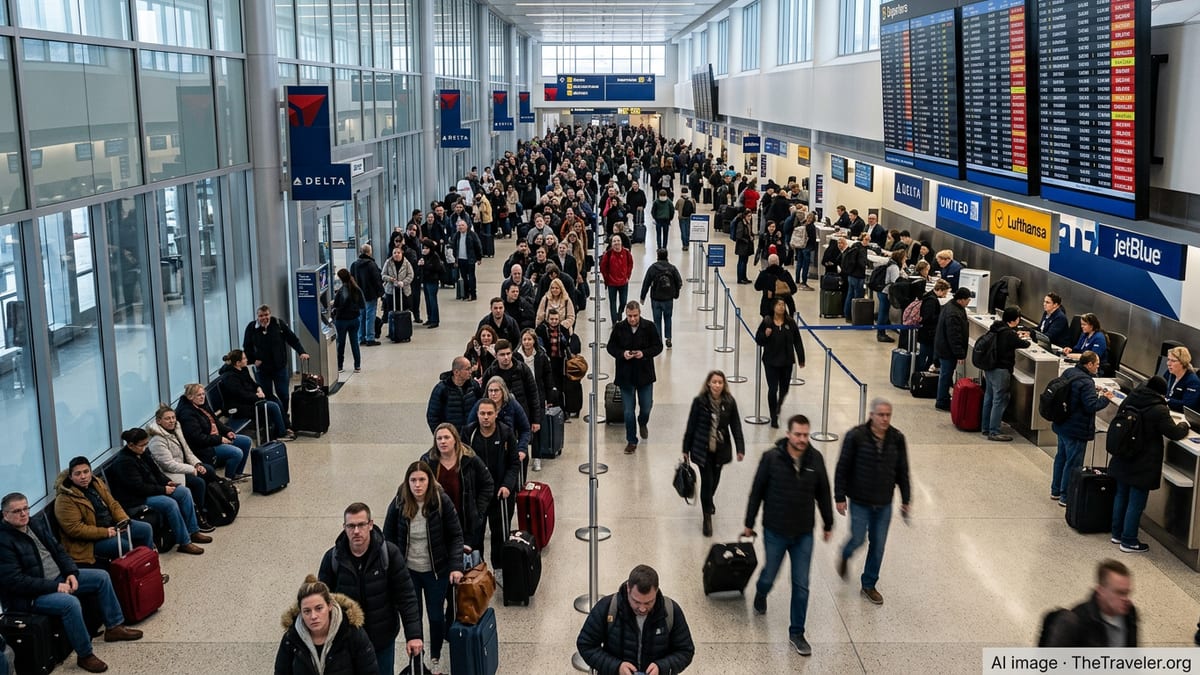
For travelers inside the terminal, the numbers on a departure board translate into long lines at customer service desks, crowded gate areas and mounting uncertainty over when they will reach their final destinations. Reports from recent days at Nashville describe passengers queuing to secure rebooked seats, hotel vouchers or meal support as delays stacked up through the afternoon and evening bank of departures.
When a relatively small number of flights are canceled but more than a hundred are delayed, the result can be a confusing mix of rolling departure times that change repeatedly. Passengers may see their flight listed as on time, then delayed, then estimated earlier or later as airlines and ground handlers respond to shifting crew duty limits, aircraft availability and air traffic flow restrictions.
Connections are particularly vulnerable in this environment. Travelers booked on regional feeders operated by Endeavor Air, Republic Airways or PSA Airlines into major hubs risk missing onward flights on Delta, American or United if their first segment leaves late from Nashville. Even when airlines are able to protect itineraries with automatic rebooking, overnight stays or significantly later arrivals are common outcomes for those with tight original schedules.
Experiences can differ sharply depending on the carrier and time of day. Early morning flights sometimes depart closer to schedule before weather and airspace constraints build, while afternoon and evening services are more exposed to knock on effects from earlier disruptions. For many travelers, this dynamic encourages shifting to earlier departures when possible, even if that means longer layovers at connecting airports.
Operational Strain at a Growing Southern Hub
The current bout of cancellations and delays comes as Nashville International Airport continues to grow as a regional hub and destination. Traffic has been rising steadily, supported by an expanding list of airlines and routes connecting the city to major domestic and limited international markets. Official airport planning documents show a broad mix of legacy carriers, low cost airlines and regional affiliates now operating from the terminal complex.
That growth has pushed operators to make better use of runway and gate capacity, increasing the intensity of daily traffic peaks. During those peaks, small disturbances can have outsized effects, especially if gate changes or towing operations are required to keep aircraft moving. Published analyses of Nashville’s performance note that, on days with severe disruption, hundreds of flights can experience some form of irregular operation.
For regional partners such as Endeavor Air, Republic Airways and PSA Airlines, the combination of higher demand and constrained infrastructure can mean tighter turnarounds and fewer opportunities to absorb delays. When flights are running at or near full capacity, there is also less spare seating on later services to accommodate rebooked passengers, making it more likely that travelers will wait many hours or even until the next day for an available seat.
JetBlue’s Nashville services sit within this broader context, operating into the same runway and airspace environment and competing for slots during busy periods. While performance statistics for individual carriers vary from week to week, the shared operating conditions at the airport help explain why disruption often affects a wide range of airlines at the same time.
What Travelers Can Do Ahead of Peak Summer Weekends
With summer travel demand still strong and thunderstorm season continuing across much of the United States, further episodes of large scale delays and pockets of cancellations at Nashville remain possible. Consumer travel advocates recommend that passengers build additional time into itineraries involving connections, particularly when flying on regional affiliates that feed larger hubs.
Monitoring flight status through airline channels and independent tracking tools before leaving for the airport can help travelers react more quickly to schedule changes. If a cancellation or major delay appears early, passengers may be able to secure alternative routings while inventory is still available, rather than waiting until congestion builds at airport service counters.
Travelers are also encouraged to understand their ticket conditions and, where applicable, their rights to rebooking, vouchers or refunds when flights are significantly disrupted. While the specific causes of the latest wave of cancellations and delays at Nashville range from weather to operational constraints, publicly available guidance from regulators and consumer organizations stresses that airlines are generally expected to assist passengers with new travel arrangements when schedules collapse.
For now, the combination of 15 canceled flights and more than a hundred delays at Nashville offers a snapshot of how quickly a busy airport can be thrown off balance. As summer continues, the experience serves as a reminder for travelers to plan with flexibility in mind when passing through one of the South’s fastest growing air gateways.