

More news on this day
Travelers flying out of Virginia are facing fresh disruption after a cluster of at least five flight cancellations affected key connections to Charlotte, Minneapolis, Indianapolis, and other major hubs, according to multiple live flight tracking services and airport status boards on July 7, 2026.
Get the latest news straight to your inbox!
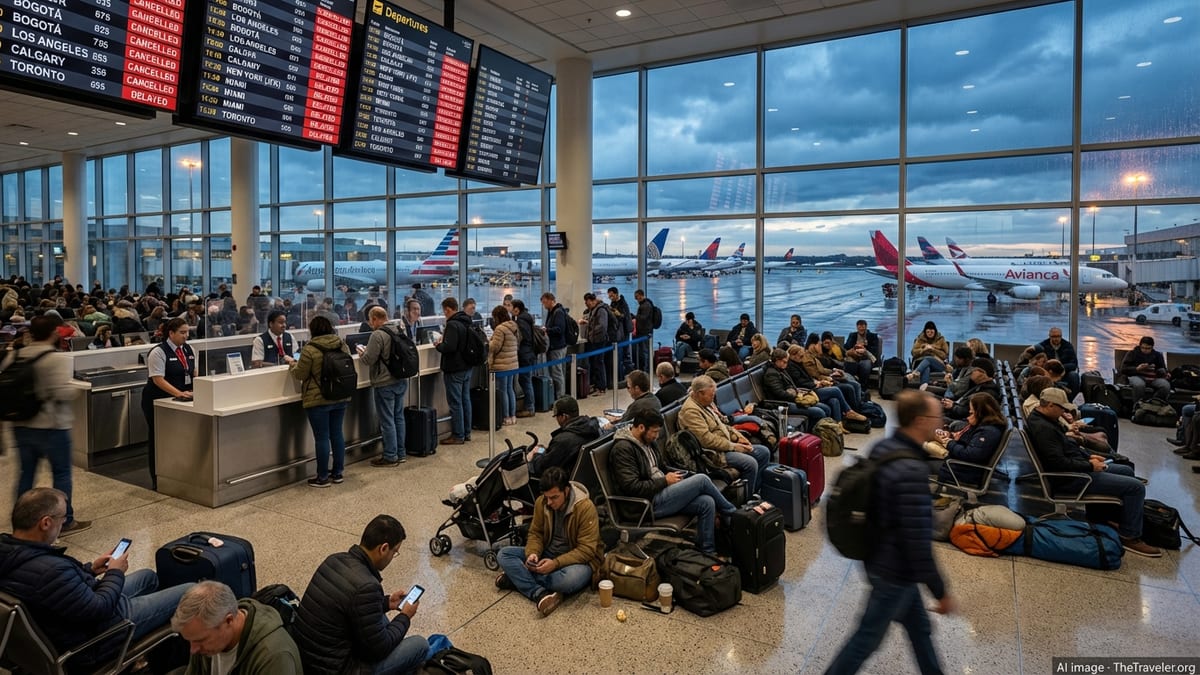
What Is Known About the Latest Cancellations
Publicly available flight tracking data and airport status boards for July 7 indicate that a Virginia airport has seen a series of cancellations concentrated on regional and hub-bound services. The affected flights include departures scheduled to connect passengers to Charlotte Douglas International Airport, Minneapolis–Saint Paul International Airport, Indianapolis International Airport, and at least one additional Midwestern destination.
The five canceled flights appear within a relatively tight operating window, amplifying disruption for travelers using Virginia as a starting point for mid-journey connections. While schedules still show a large number of departures operating normally, the removal of several key services to major hubs reduces same-day rebooking options for many passengers already en route to their final destinations.
Regular schedules published in advance for the summer period show a consistent pattern of daily services from Virginia to Charlotte and beyond, underscoring that these cancellations are not part of a planned reduction in service but rather short-notice operational changes. For travelers, this distinction matters because last-minute cancellations typically carry a higher risk of missed connections and overnight delays.
Flight status tools also show that most other departures to large hubs from Virginia are operating, but with varying degrees of delay. This combination of targeted cancellations and scattered delays means travelers may still reach their destinations, but often after significant schedule changes.
Routes to Charlotte, Minneapolis, and Indianapolis Most Affected
Charlotte is one of the most important connecting points in the eastern United States, and disruptions on Virginia to Charlotte routes can ripple across a wide swath of domestic and international itineraries. Published timetables for July list multiple daily services linking Virginia with Charlotte, providing onward access to dozens of cities in the Southeast, Midwest, and West. The cancellation of even one or two flights on this corridor in the middle of the day can leave travelers with fewer alternatives and tighter connection windows.
Connections to Minneapolis–Saint Paul and Indianapolis are also critical for business and leisure travelers, particularly those heading to the Upper Midwest. Flight schedule data show that Virginia passengers often reach these cities either via direct or one-stop connections through major hubs. When a Virginia departure to a key hub is canceled, it can sever the main link in a chain of connections, forcing complete itinerary redesigns rather than simple time adjustments.
At least one canceled flight involves a Virginia origin tied to a Midwest-bound itinerary that would typically feed into Minneapolis–Saint Paul. Another canceled service affects a route that commonly connects onward to Indianapolis. Even where alternative routings remain available, they may require travelers to shift to later departures or different connecting cities, sometimes turning a same-day trip into an overnight journey.
Travelers holding nonrefundable or basic economy tickets may face more limited rebooking choices, as some lower-fare products restrict same-day changes. However, when an airline cancels a flight, most major carriers provide options to rebook without additional fare difference on the nearest available service, subject to seat availability.
Likely Causes and Wider Operational Context
While no single cause is apparent from publicly available information, the pattern of cancellations in Virginia aligns with several ongoing pressures on U.S. aviation. Summer schedules in 2026 show dense flying on many routes, leaving limited slack in aircraft and crew availability. Any local issue such as a mechanical problem, crew time limitation, or weather-related flow control can cascade quickly into cancellations when spare capacity is already tight.
National airspace management updates indicate that several major hubs, including Charlotte and other East Coast airports, have periodically been subject to traffic management initiatives during busy weather systems this season. When arrival or departure rates at a hub are temporarily reduced, regional flights from smaller origin airports in states like Virginia are sometimes the first to be trimmed to maintain overall system stability.
Industry reports over recent months also highlight a continued focus on safety and crew scheduling rules, which can trigger cancellations when crews approach duty time limits. In those circumstances, airlines may cancel a smaller set of regional flights rather than delay a wider portfolio of services, concentrating disruption on a limited number of departures but with intensive local impact.
Because this latest episode affects multiple destinations from a single state, it may reflect a combination of factors, from local weather and air traffic constraints to fleet and staffing patterns specific to the operating carriers. Without official statements, the precise breakdown remains uncertain, but the operational backdrop suggests that Virginia travelers are encountering another instance of the broader strains facing the U.S. air travel network this summer.
What Affected Passengers Should Do Right Now
Travelers scheduled to depart from Virginia on July 7 and over the following days are advised, based on patterns in published disruptions, to treat their itineraries as fluid rather than fixed. Frequent checks of airline apps and airport status boards can help identify cancellations or significant delays early, especially for those on routes feeding into Charlotte, Minneapolis–Saint Paul, Indianapolis, and other large hubs.
For passengers whose flights have already been canceled, airlines typically offer rebooking onto the next available departure on the same route or, where feasible, rerouting through an alternative hub. In some cases, this may mean connecting through a different city than originally planned, or departing earlier or later in the day. Travelers facing tight onward connections may find it prudent to request itineraries with longer layovers to reduce the risk of additional missed flights.
Those still planning new trips out of Virginia in the coming days may wish to build in extra time between connections, particularly when itineraries rely on regional services feeding into busy hubs. Allowing more generous layover windows, opting for morning departures when possible, and keeping checked baggage to a minimum can all reduce the impact of further schedule changes.
Passengers with time-sensitive travel, such as same-day business meetings or events, may also consider backup options such as alternate airports within driving distance or mixed-mode itineraries that combine rail or road segments with air travel. While such measures add complexity, they can provide valuable insurance when regional flights into major hubs are under pressure.
Outlook for Virginia Travelers in the Coming Days
Published timetables for the remainder of July still show a robust schedule of flights linking Virginia with major hubs including Charlotte, Minneapolis–Saint Paul, and Indianapolis. This suggests that the current wave of five cancellations is localized in time rather than a sign of widespread, long-term reductions in service from the state.
Nonetheless, recent experience across the U.S. network indicates that similar, short-notice disruptions may recur, particularly on busy travel days or during periods of unsettled weather. Travelers using Virginia airports as gateways to the broader domestic network may therefore continue to face a heightened risk of last-minute changes, even when schedules appear normal in advance.
For now, the primary impact is being felt by passengers whose itineraries depended on the specific canceled departures, many of whom have been pushed onto later flights or alternate routings. As operations stabilize through the day, the broader system is expected to absorb much of the disruption, though with lingering delays and tight connections for some travelers.
As the summer peak continues, Virginia travelers heading to or through Charlotte, Minneapolis–Saint Paul, Indianapolis, and other major hubs may benefit from adopting a more flexible mindset about timing and routing, recognizing that even a handful of cancellations can sharply reshape options from a single origin point.