

More news on this day
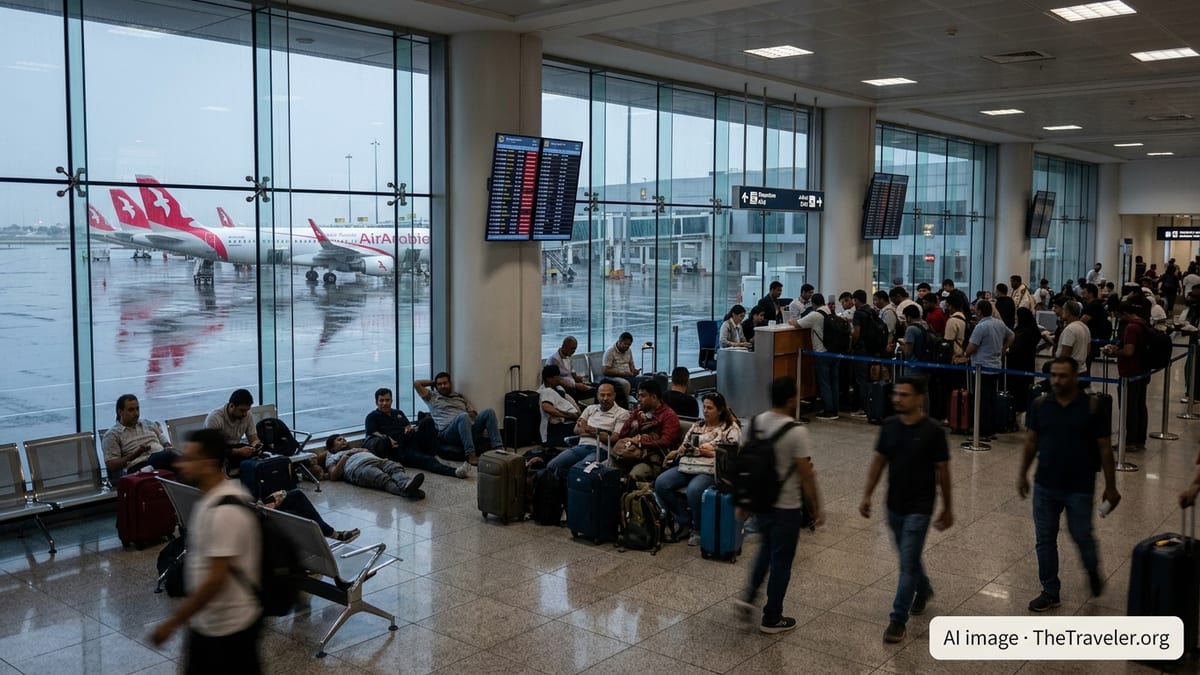
Passengers traveling through Sharjah International Airport have faced a fresh wave of disruption after a cluster of six flight cancellations and 28 delays affected operations at the busy UAE gateway, disrupting itineraries on Air Arabia and several other regional and international carriers.
Get the latest news straight to your inbox!
Fresh Disruptions at a Key UAE Hub
Sharjah International Airport has emerged as one of the focal points of the latest round of flight disruption in the United Arab Emirates, with recently compiled data showing six cancellations and 28 delayed services centered on the airport’s short and medium haul network. The pattern reflects wider operational strains across Gulf aviation in 2026, where weather, airspace constraints and knock-on scheduling issues have repeatedly forced airlines to adjust timetables at short notice.
According to publicly available flight-tracking information and sector coverage, the affected services at Sharjah span departures and arrivals to regional destinations as well as selected longer routes. While Air Arabia, the Sharjah based low cost carrier, appears to shoulder a substantial share of the schedule changes, the impact is not limited to a single airline, with partner and codeshare operations also experiencing delays.
The disruption comes during a period of strong demand for summer travel, particularly for passengers connecting between the Middle East, Europe, North Africa and South Asia. As a result, even a limited number of cancellations combined with a larger cluster of delays has been enough to create bottlenecks in terminal areas and pressure on rebooking channels.
Reports from aviation news outlets indicate that some of the delayed services experienced departure hold times of several hours, compressing turnaround schedules for subsequent rotations and amplifying the effect of the original disruption across multiple flights.
Air Arabia at the Center of Operational Strain
As the home carrier at Sharjah, Air Arabia has been particularly visible in the latest wave of disruption. Recent coverage focused on Sharjah operations highlights multiple Air Arabia services cancelled or heavily delayed on routes linking the UAE with cities such as Moscow, Cairo, Alexandria, Kuwait City and Bahrain, in some cases leaving passengers searching for last minute alternatives.
Industry analysis notes that Air Arabia has been rebuilding its network after a volatile first half of the year, which included earlier large scale suspensions linked to regional security concerns and temporary airspace restrictions. The airline has recently resumed or expanded several key routes, including new European and Levant connections, increasing aircraft utilization and tightening margins for absorbing irregular operations.
Against that backdrop, the six cancellations and 28 delays recorded at Sharjah add further strain to an already complex schedule recovery. While the absolute numbers are modest compared with total daily movements, the concentration of disruption during busy travel periods, and on routes that function as important connectors for budget conscious travelers, has amplified the effect for those directly affected.
Travel industry observers point out that low cost carriers typically rely on quick turnarounds and dense rotations across the day. When an early flight experiences a significant delay or cancellation, it can complicate aircraft and crew availability for subsequent services, forcing schedule revisions that ripple through the network.
Passenger Experience: Missed Connections and Long Waits
The immediate consequence for travelers has been a mix of missed onward connections, overnight stays and extended waits in departure lounges. Travel advisories and consumer facing coverage describe passengers at Sharjah rebooking onto later Air Arabia services where seats are available, seeking space on other airlines from Sharjah or Dubai, or rearranging itineraries entirely via alternative hubs.
Some travelers have reported difficulty securing prompt rebooking during peak travel hours, particularly on popular routes where alternative services were already close to full. Delays of several hours on select flights have also raised concerns among passengers with tight onward connections in Europe, North Africa or Asia, who may face additional costs or further schedule changes once they reach their next transit point.
Consumer reports over recent months suggest that passengers disrupted by cancellations at Sharjah have encountered a range of outcomes on reimbursement and compensation, depending on the origin of the journey and the jurisdiction governing passenger rights. Those starting their trip in the European Union, for example, may fall under EU rules with specific provisions on care and compensation, while travelers originating elsewhere often rely more heavily on individual airline policies.
Travel specialists have been advising passengers to retain all documentation associated with their disrupted journeys, including boarding passes, booking confirmations and receipts for out of pocket expenses, in case they wish to pursue claims with airlines or, where applicable, with regulators or alternative dispute channels.
Wider Regional Context of Flight Disruptions
The latest Sharjah figures form part of a broader pattern of disruption affecting airports across the Middle East in 2026. Earlier in the year, a combination of airspace management challenges and weather related visibility issues prompted more extensive cancellations and delays at hubs in the UAE, Qatar, Iran and Oman, with several Gulf carriers temporarily reducing frequencies or rerouting traffic.
Air travel analysts note that even as airlines restore routes and frequencies, residual constraints in certain air corridors and the need to adapt to evolving security assessments continue to limit operational flexibility. When adverse weather or technical issues occur at a major node such as Sharjah, the reduced room for maneuver can translate quickly into cancellations and rolling delays.
Sharjah’s role as an important low cost gateway for travelers in the wider region further magnifies the impact of any operational shock. The airport serves as a key link for migrant workers, budget leisure travelers and those connecting between secondary cities, many of whom have fewer alternative routing options if a flight is cancelled at short notice.
Published airline data and network announcements indicate that carriers are still pressing ahead with growth plans in and out of the UAE, suggesting that demand remains robust despite periodic disruptions. This growth trajectory, however, also means that airport infrastructure, ground handling capacity and airspace flows will remain under close scrutiny whenever clusters of delays or cancellations occur.
What Travelers Through Sharjah Can Do Now
For passengers with upcoming itineraries through Sharjah, publicly available guidance from airlines and airport channels emphasizes the importance of closely monitoring flight status in the hours leading up to departure. Checking airline apps, booking platforms and airport information boards on the day of travel can provide early warning of any emerging disruption.
Travel planners recommend building additional buffer time into itineraries that rely on tight connections, particularly when routing via Sharjah to long haul destinations. Selecting slightly longer layovers or avoiding the last flight of the day on critical sectors can sometimes reduce the risk of being stranded if earlier services are cancelled or heavily delayed.
Those who have already been affected by the latest round of cancellations and delays are being encouraged by consumer advocates to review the terms and conditions of their bookings, including any fare rules related to refunds, credits or rebooking. In some cases, passengers may be entitled to options that go beyond the initial offer presented during a busy disruption period.
As the situation evolves, Sharjah’s performance will remain a barometer for how quickly the wider regional network can absorb operational shocks. With six flights cancelled and 28 delayed in the current episode, travelers and industry watchers alike are paying close attention to how smoothly airlines and airport operators manage recovery over the coming days.