


More news on this day
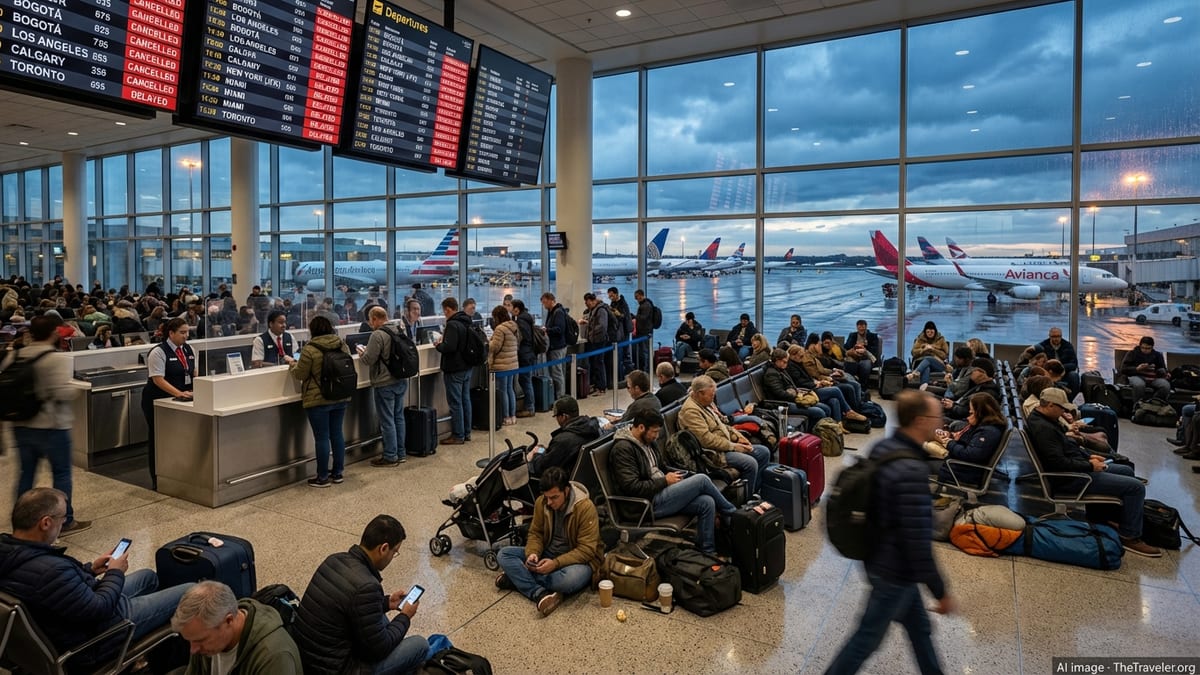
Thousands of airline passengers across the United States are facing hours-long waits and missed connections as more than 130 flights are cancelled and nearly 5,800 delayed at major hubs including Los Angeles, Chicago, San Francisco, Charlotte, Minneapolis and Boston, disrupting operations at carriers such as American, SkyWest, Air Canada, Frontier and Alaska.
Get the latest news straight to your inbox!
Major Hubs Struggle With Wave Of Disruptions
Air traffic data for Monday shows one of the most challenging operational days of the early summer period, with 132 cancellations and 5,789 delays recorded across the U.S. network by late afternoon. The disruptions are concentrated at some of the country’s busiest hubs, amplifying the effect on connecting passengers and downline schedules.
Los Angeles International, Chicago O’Hare, San Francisco International, Charlotte Douglas, Minneapolis–Saint Paul and Boston Logan rank among the most delay-prone airports in the country in typical years, and current patterns reflect that vulnerability. When irregular operations begin at these hubs, cascading hold-ups can quickly spread to secondary airports as aircraft and crews struggle to return to normal rotation.
Publicly available tracking boards indicate that delays are affecting departures and arrivals, leaving aircraft waiting for gates, passengers stranded in concourses and baggage systems working under heavy strain. At several hubs, late-arriving aircraft are contributing to rolling delays through the day as schedules compress.
The overall tally of disrupted flights represents only a fraction of total daily operations nationwide, but the concentration of issues at major hubs means a disproportionate number of travelers are affected. Missed connections, rebookings and overnight stays are mounting as evening banks of departures come under pressure.
American, SkyWest And Regional Partners Under Pressure
The disruption is hitting a broad mix of mainline and regional carriers, with American Airlines and its regional partners, including SkyWest, particularly exposed at their core hubs. American operates large connecting complexes at airports such as Charlotte, Chicago O’Hare and Los Angeles, which feature prominently in today’s delay statistics.
Regional operators like SkyWest play a central role in feeding passengers from smaller cities into those hubs. When weather, traffic-management programs or staffing issues constrain operations, these shorter flights are often the first to be delayed or cancelled, as airlines prioritize keeping long-haul and international services moving.
Operational data and historical performance reports show that regional carriers consistently face higher percentages of delays and cancellations than some mainline operators, partly because their fleets run tighter turn times and serve congested hubs in high frequency. This structural sensitivity makes days like today especially challenging for travelers connecting between smaller communities and major cities.
While the majority of flights are still operating, the accumulated effect of even modest disruptions is visible in lengthened queues at customer service desks, growing standby lists and fuller-than-usual later departures as airlines attempt to consolidate passengers.
Impact Felt At Frontier, Alaska And Air Canada
The current wave of delays and cancellations is also affecting point-to-point and cross-border networks, drawing in carriers such as Frontier Airlines, Alaska Airlines and Air Canada. These airlines rely heavily on aircraft utilization and tight scheduling, so disruptions at a few key airports can echo across their systems.
For Frontier, which concentrates much of its flying into large domestic markets and leisure destinations, delays at major hubs can compromise its ability to turn aircraft quickly and maintain low-cost operations. Flights into and out of West Coast and Mountain West gateways are experiencing knock-on effects as aircraft arrive late from congested hubs.
Alaska Airlines, with a strong presence on the West Coast and in key transcontinental markets, is also vulnerable when Los Angeles and San Francisco experience prolonged congestion. Even when its own on-time performance remains comparatively strong, shared runways, airspace constraints and air-traffic initiatives can hold Alaska aircraft in the same queues as other carriers.
Air Canada’s cross-border services link Canadian cities with U.S. hubs such as Boston, Chicago and San Francisco. When delays build at those airports, return flights can depart behind schedule, causing late-night arrivals north of the border and complicating crew scheduling and aircraft maintenance windows.
Weather, Congestion And Staffing Add To Summer Strain
Early-summer travel patterns are intensifying the disruption, as leisure and business demand lifts passenger volumes toward peak-season levels. Heavy traffic, in turn, leaves less margin in the system to absorb local weather or air-traffic issues without widespread consequences.
Recent storms around Chicago and the broader Midwest underscore how quickly conditions can deteriorate. Ground delays and temporary flow restrictions introduced to manage thunderstorms can create long queues of aircraft both on the ground and in the air, with ripple effects visible for hours afterward in departure and arrival boards across the country.
Industry analyses and government performance data highlight a mix of factors behind today’s numbers, including convective weather, airspace congestion and continuing staffing challenges in some parts of the air-traffic system. When combined with fuller flights and limited spare aircraft, even relatively short-lived disruptions can turn into multi-hour delays for individual travelers.
Airlines have invested in technology and schedule adjustments to improve resilience, but recovery remains uneven on days when several major hubs come under strain simultaneously. As the summer progresses, similar patterns are expected to recur whenever storms, smoke, or other operational constraints intersect with peak travel days.
What Travelers Are Facing At Airports Today
For stranded passengers, today’s statistics translate into long lines, crowded departure areas and a scramble for alternative routings. With many flights departing close to full, options for immediate rebooking are limited, particularly for travelers seeking multiple seats together or avoiding overnight connections.
Some travelers are being offered reroutes through less affected hubs or onto early-morning departures the following day, while others are opting for refunds or travel credits where policies allow. Same-day standby lists are growing longer at key hubs, and airline apps and websites are experiencing heavy traffic as passengers attempt to manage disruptions digitally rather than wait in physical queues.
Airport services including food outlets, airport hotels and ground transportation providers are also feeling the impact as passengers remain landside longer than planned. Late-night crowds are likely at several hubs if delays continue to stack into the evening, complicating staffing and security operations across the terminals.
Consumer advocates typically recommend that travelers facing widespread disruptions monitor flight status frequently, use airline mobile tools to request rebooking where possible and keep essential items in carry-on luggage in case checked bags are separated from revised itineraries. With early-summer demand already high, today’s events serve as a reminder of how quickly routine travel days can tip into widespread disruption across the national air network.