

More news on this day
A SkyWest Airlines Embraer 175 operating as Flight SKW5814 between Grand Junction and Aspen diverted back to Grand Junction Regional Airport after departure, according to live flight-tracking data and regional media reports, prompting delays for travelers headed into Colorado’s high country and fresh scrutiny of how airlines manage disruptions at mountain airports.
Get the latest news straight to your inbox!
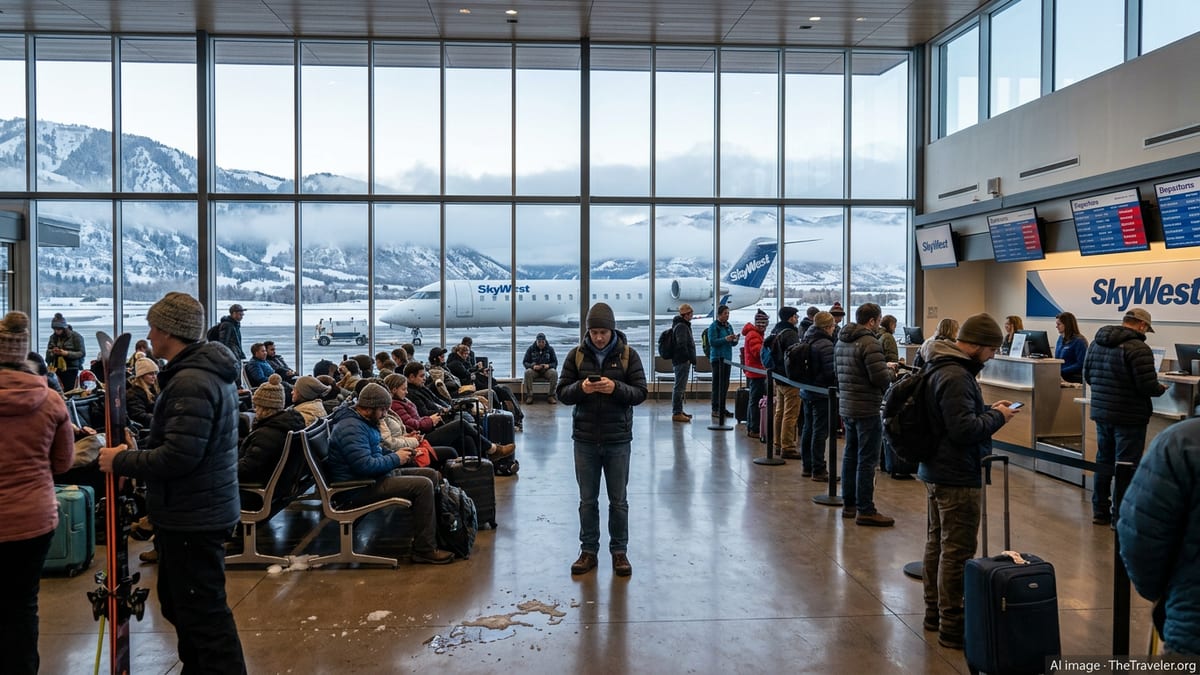
Turnback To Grand Junction After Departure
Publicly available flight-tracking information indicates that SkyWest Flight SKW5814 departed Grand Junction Regional Airport for Aspen before leveling off and reversing course instead of continuing into the Roaring Fork Valley. The aircraft, an Embraer 175 regional jet used widely on shorter routes in the United States, landed back at Grand Junction without reported injuries.
Data reviewed on multiple aviation-tracking platforms show the jet climbing out of Grand Junction on its planned route toward Aspen, then discontinuing its climb and turning back within a relatively short distance of the departure airport. The diversion unfolded over a brief time window that suggests a precautionary decision rather than a prolonged in-flight emergency.
As of the latest available updates, there have been no public indications of structural damage to the aircraft or severe onboard incident. The nature of the disruption has not been specified in official statements; however, the recorded track and normal landing profile point to a controlled return consistent with established airline procedures when crews identify a potential issue early in flight.
Passengers were expected to be re-accommodated either on later flights into Aspen or via ground transportation across the Rockies, a familiar pattern for travelers on this corridor during periods of operational or weather-related disruption.
Weather, Terrain And The Aspen Operating Environment
The route between Grand Junction and Aspen is short but operationally complex, threading through mountainous terrain and variable weather that can change rapidly, particularly in winter and shoulder seasons. Aviation guidance for the region underscores that mountain airports such as Aspen often face strict approach requirements, visibility minima and wind limitations that exceed those at many low-elevation fields.
Recent local discussions around Aspen’s airfield operations have highlighted how quickly conditions can force diversions or cancellations, with travelers sometimes rerouted to Grand Junction or Denver and completing the final leg by road. Reports from previous seasons show that strong winds, low ceilings and runway contamination have all contributed to last-minute changes on the Grand Junction–Aspen corridor.
While the specific trigger for Flight SKW5814’s diversion has not been made public, the decision to return to the departure airport is consistent with industry practice in constrained mountain environments. When crews encounter even minor technical anomalies, cockpit indications that require further checks, or rapidly evolving weather, a prompt return to a larger regional airport with more extensive facilities is often considered the most conservative option.
Grand Junction’s role as a primary diversion point for Aspen operations has grown in recent years alongside steady traffic at the Western Slope hub. Board materials and airport planning documents describe rising passenger volumes and note that diversion activity can substantially increase aircraft movements and landing-fee revenue in busy months, underscoring how intertwined the two airports have become.
Impact On Travelers And Local Connectivity
For passengers on Flight SKW5814, the mid-flight disruption translated into missed connections and extended travel times into Aspen and nearby resort communities. Social media posts and local forum comments from recent diversion events on similar routes suggest that travelers often face a choice between awaiting a replacement flight, accepting rebooking via Denver, or arranging last-minute car services over the passes.
The Grand Junction–Aspen link is a key piece of air connectivity for the Western Slope, particularly during peak tourism periods when resort visitors, second-home owners and seasonal workers rely on regional jets to avoid longer drives from the Front Range. When flights are interrupted, rental car agencies, shuttle operators and private drivers frequently see a spike in demand as stranded passengers seek alternatives.
Local commentary in both Grand Junction and Aspen has pointed out that diversion patterns concentrate noise and traffic around Grand Junction’s airport while shifting ground travel onto mountain highways that can already be crowded or affected by weather. In previous seasons, community members have voiced concerns that repeated diversions add to road congestion on key corridors while complicating travel plans for visitors unfamiliar with the region’s geography.
Despite the frustrations, travel specialists note that these diversions are built into contingency planning for the Aspen market. Airlines that serve the valley typically schedule buffer time, maintain close coordination with ground partners and encourage passengers to allow additional flexibility in itineraries, especially in seasons with more challenging weather.
Safety Protocols And Airline Procedures
SkyWest Airlines, which operates regional flights across the United States on behalf of major carriers, publishes safety and training information emphasizing standardized procedures for abnormal and emergency situations. Industry documents and training manuals for regional jets such as the Embraer 175 stress that crews are expected to prioritize early returns or diversions whenever system indications, cabin conditions or external factors raise questions about continuing to destination.
Aviation regulators classify precautionary returns like the one involving Flight SKW5814 as part of normal safety management rather than exceptional emergencies. Statistical analyses of commercial-aviation risk consistently show that crews who elect to discontinue a flight segment and return to a suitable airport are applying conservative, prevention-focused judgment intended to keep routine technical or operational issues from escalating.
The Embraer 175 itself has become a mainstay of North American regional fleets, favored on shorter and high-altitude routes for its performance in challenging environments. Industry safety summaries describe a strong track record for the type, with operators required to adhere to the same regulatory standards for maintenance, crew training and operational oversight that apply across commercial aviation.
When an event such as the SKW5814 diversion occurs, airlines typically review flight-data recordings, cockpit reports and maintenance findings to determine whether additional action is warranted. In most precautionary turnbacks, aircraft are inspected, any discrepancies are corrected in coordination with manufacturer guidance, and the jet is returned to service after satisfying regulatory requirements.
Next Steps For Operations At Grand Junction And Aspen
Following the diversion of Flight SKW5814, schedules between Grand Junction and Aspen were expected to adjust as crews, aircraft and gates were reassigned. Published timetables for the route illustrate relatively tight turn times, meaning that a single interruption can cascade into delays on subsequent departures unless backup aircraft or crews are available.
Planning documents for Grand Junction Regional Airport show continuing investment in runway and terminal infrastructure, including projects aimed at supporting additional passenger traffic and diversions from nearby mountain airports. These improvements are designed to enhance the airport’s role as a regional hub capable of handling sudden influxes of aircraft when conditions at surrounding airports deteriorate.
In Aspen, ongoing community and planning discussions have examined how upcoming construction schedules, seasonal operating constraints and changing airline strategies may affect reliability. Commenters in local forums have speculated that increased reliance on regional jets and potential infrastructure work could keep diversion rates elevated during certain periods, maintaining Grand Junction’s importance as a relief valve.
As of the latest publicly available information, Flight SKW5814’s diversion remains categorized as a mid-flight disruption without reported injuries, with the aircraft returning safely to Grand Junction. Travelers heading into or out of Aspen in the coming days are being advised by airlines and travel intermediaries to monitor flight status closely and factor potential diversions or delays into their plans.