


More news on this day
A nationwide ground stop affecting departures across the United States on November 13 has unsettled millions of prospective holiday travelers and renewed scrutiny of how vulnerable the country’s aviation network remains to sudden technical or security disruptions.
Get the latest news straight to your inbox!
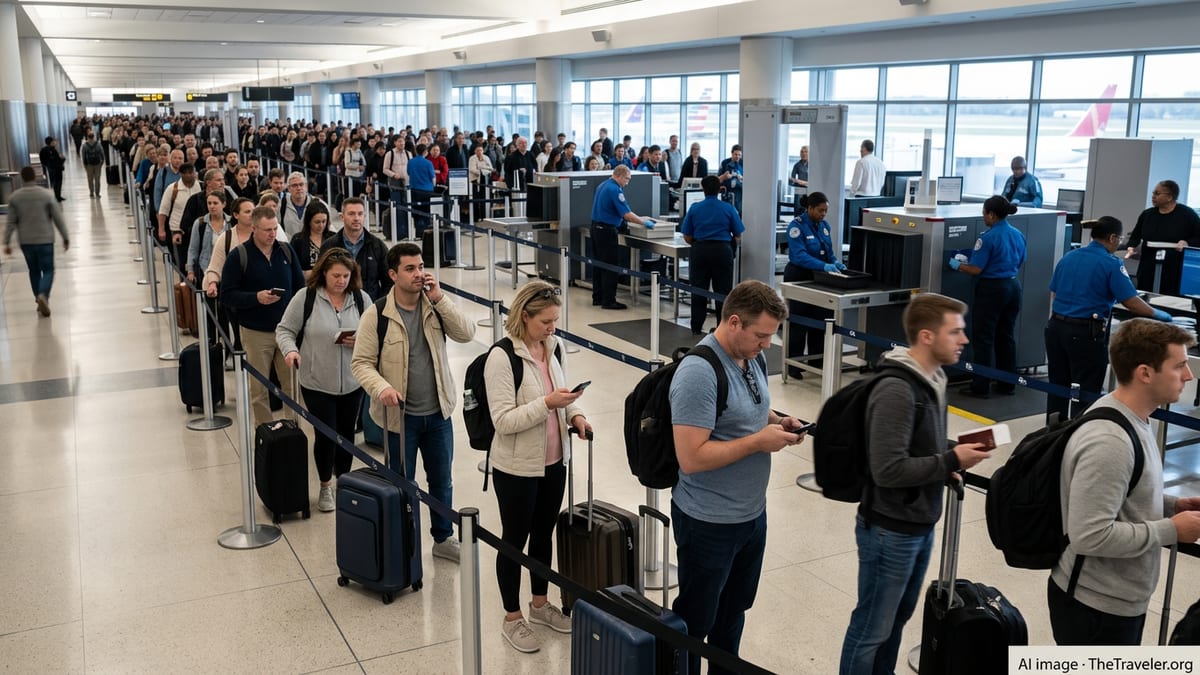
Unprecedented Halt as Peak Travel Season Looms
Publicly available flight tracking and aviation data show that the Federal Aviation Administration ordered a nationwide halt to departures at U.S. airports on Friday, November 13, citing what multiple news outlets describe as “extraordinary circumstances” and reasons of safety. The stop affects domestic departures and some outbound international flights just as airlines and airports prepare for one of the busiest travel periods of the year.
Major national outlets report that the disruption began during the morning travel window, when airports in multiple regions were already handling heavy preweekend and early holiday-season crowds. Within minutes, departure boards across the country began to fill with delay and cancellation notices, and aircraft at the gate were held while the scope of the restriction became clear.
The order marks the most significant nationwide pause in U.S. air traffic since a January 2023 incident involving a critical FAA notice system, and it is drawing comparisons to other rare moments when the system has been forced to stop departures across the board. The timing, just days after the Veterans Day federal holiday and ahead of the late November and December travel peaks, has amplified the sense of unease among passengers and industry analysts.
According to published coverage and early operational data, the ground stop was framed as a temporary safety measure while officials assessed the underlying issue. At the same time, the lack of immediate clarity about its cause contributed to worries that the event could be linked to a broader communications or cybersecurity problem.
Communications Problems Sharpen Focus on Aviation Systems
Initial reports from aviation-focused outlets and airline passengers indicate that the trigger for the nationwide action is linked to air traffic control communications problems affecting multiple regions. References to radio frequency issues in major control centers and abnormal behavior in systems that support controller coordination have circulated widely among pilots and travelers posting real-time updates from airport concourses.
Publicly accessible FAA advisory pages and independent trackers have documented localized ground stops and delay programs in recent months when specific facilities encountered outages, staffing shortages, or severe weather. What distinguishes the November 13 event is its rapid escalation into a coast-to-coast halt, suggesting concern that a localized fault might ripple through the broader system if departures were allowed to continue as normal.
Security specialists note in published commentary that any disruption involving communications between controllers and aircraft can quickly raise red flags. Even when early evidence points to a technical malfunction or software failure, the same channels and networks are of interest to those who study cyber risks to transportation infrastructure. As a result, precautionary pauses tend to be interpreted by the traveling public as potential signs of deeper security vulnerabilities.
The episode also revives questions about the pace of modernization in U.S. air traffic control technology. Previous investigations into major outages have identified aging hardware, complex software integrations, and funding constraints as contributing factors. Analysts following the current incident are already drawing parallels and asking whether known weak points have been fully addressed ahead of a holiday season when passenger volumes are expected to push back toward or beyond pre-pandemic levels.
Ripple Effects for Holiday Itineraries and Key Hubs
The timing of the nationwide ground stop is especially sensitive for travelers who have booked Thanksgiving and December holiday trips through the country’s largest hubs. Recent coverage of travel trends for the 2026 season highlights strong demand for routes connecting coastal cities with mountain resorts, Florida beaches, and major theme-park destinations. Any prolonged disruption at gateway airports such as Atlanta, Chicago, Dallas-Fort Worth, Denver, and Los Angeles could quickly translate into missed connections and multi-day rebooking challenges.
Data drawn from federal on-time performance statistics for November and December in prior years show that even shorter interruptions can reverberate for days, particularly when aircraft and crews are left out of position. Travel analysts interviewed in recent weeks about holiday congestion have pointed to the delicate balance airlines must maintain between high aircraft utilization and the need for buffer time, warning that a single day of concentrated delays can ripple through the network well into the following week.
Travel news outlets have already been advising passengers to build extra margin into their holiday itineraries, especially those connecting through historically delay-prone hubs. The current ground stop reinforces that advice. Passengers with complex routings, tight international connections, or separate tickets on different carriers are considered especially vulnerable to knock-on effects if rolling delays continue into the heart of the holiday calendar.
In some regions, particularly airports that were already flagged for congestion based on last year’s federal data, local media had been reporting an expectation of longer security lines and greater volatility even before the nationwide halt. The additional uncertainty introduced by the November 13 event is likely to intensify demand for earlier departure times, nonstop flights, and alternative routing options, potentially driving up prices on the most resilient itineraries.
Airlines, Airports and Travelers Shift Into Disruption Mode
As departures pause, publicly available airline operations dashboards show carriers shifting into disruption response, with rolling waivers allowing customers to rebook without change fees on affected dates and routes. Some major airlines had already updated their travel advisories in recent weeks to address potential weather disruptions and routine congestion; these notices are now being amended to reflect the broader systemwide issue.
Airports, for their part, are using terminal announcements and display boards to flag delays and cancellations while encouraging passengers to stay close to their gates for updated departure times. Published airport statements in recent disruptions of this kind have typically urged travelers to work directly with their airlines’ apps and customer service channels, which often update more quickly than general airport information feeds.
For travelers already in the system, the sudden hold can mean long waits on parked aircraft or in crowded gate areas as crews await clearance. Social media posts from multiple hubs on November 13 describe passengers being asked to deplane and take carry-on bags with them in cases where no estimated time of resolution could be offered. Past events suggest that hotel availability near major hubs may tighten quickly if the stop extends into the evening hours and forces widespread overnight misconnects.
Travel advisors and consumer advocates quoted in recent coverage of holiday air travel disruptions emphasize strategies that become especially important under these conditions: tracking flights in real time through both airline and third-party tools, understanding passenger rights under each carrier’s contract of carriage, and having a backup plan that could include alternate routings or even rail and rental car options on dense domestic corridors.
Security Anxiety and Calls for Greater Transparency
The November 13 ground stop is feeding into a broader sense of anxiety around holiday travel security that has been building through a year marked by geopolitical tensions, high-profile cyber incidents in other sectors, and a series of smaller aviation disruptions. While current reporting has not attributed the latest halt to a deliberate attack, the mere possibility that communications systems could be compromised is enough to unsettle many travelers.
Editorials and analysis pieces in major U.S. and international outlets in recent years have urged aviation and government agencies to communicate more quickly and clearly when interruptions occur, arguing that information vacuums tend to be filled with speculation about worst-case scenarios. The mix of technical jargon, evolving explanations, and necessary caution around sensitive infrastructure details can make that a difficult balance to strike, especially in the early hours of an unfolding event.
Passenger advocacy groups have long argued that clearer public reporting on the causes, duration, and recurrence of ground stops and similar measures would help rebuild confidence. Some have called for a standardized post-incident summary that would be made available for any widespread disruption, documenting whether the root cause was technical, weather-related, human error, or linked to a security concern.
With the U.S. aviation system now under fresh scrutiny at the cusp of the holiday rush, the November 13 nationwide ground stop is likely to become a reference point in ongoing debates about investment in critical infrastructure, contingency planning, and the level of transparency owed to travelers when unprecedented steps are taken in the name of safety.