


More news on this day
A Nebraska teenager who admitted intentionally causing a BNSF coal train derailment that sent locomotives and loaded cars off the tracks near Bennet has been sentenced to probation, a case that is drawing attention to rail safety, criminal accountability for minors and the social media culture that reportedly surrounded the incident.
Get the latest news straight to your inbox!
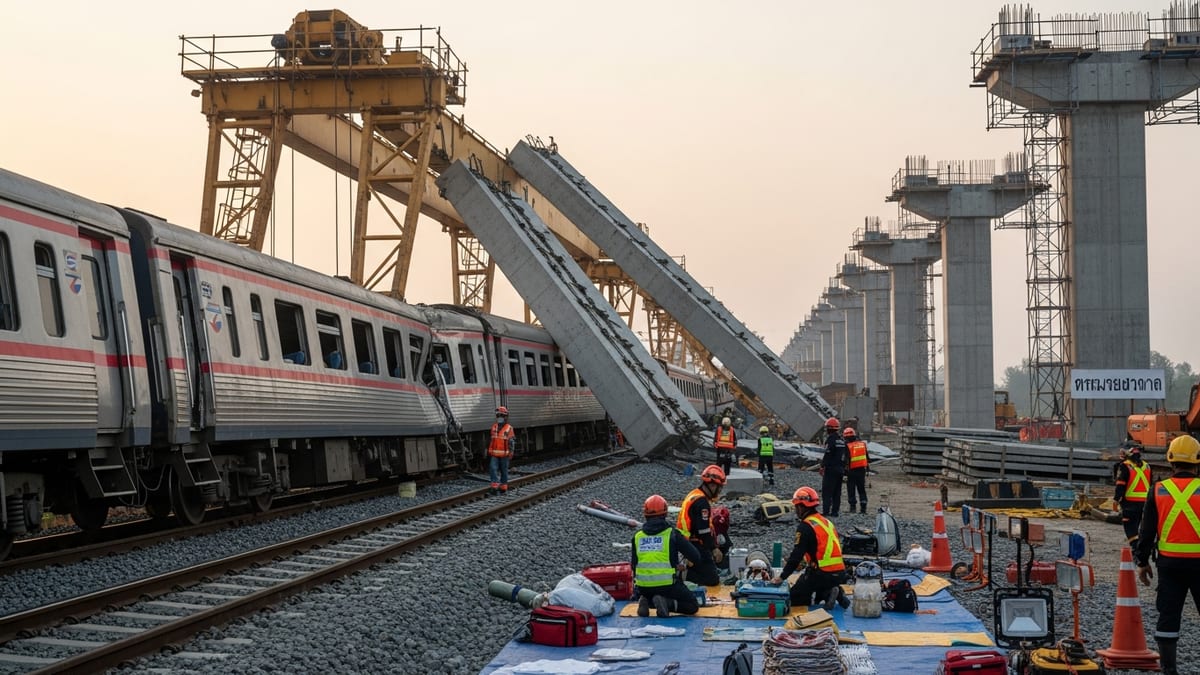
Probation in high-profile derailment case
According to published coverage, a district court judge in Nebraska ordered the teen to serve a term of probation rather than incarceration after the youth admitted to actions that led to the derailment of a fully loaded BNSF coal train serving a Nebraska power plant. The ruling follows a lengthy juvenile case process that began after the derailment in April 2024 on tracks near Bennet, southeast of Lincoln.
Publicly available information indicates that prosecutors had pursued felony criminal mischief allegations tied to property damage that investigators initially estimated at roughly 350,000 dollars, including impacts to BNSF equipment and infrastructure connected to the Omaha Public Power District. The probation sentence reflects the offender’s age at the time of the derailment and the protections built into Nebraska’s juvenile system, which prioritizes rehabilitation over long-term confinement.
Reports indicate that the teen must comply with a series of probation conditions that can include supervision, counseling, restrictions on social media use and requirements related to education or employment. Any violations could expose the youth to more severe sanctions, extending the legal consequences of the derailment well beyond the headline sentence.
The outcome has prompted debate within Nebraska over whether probation is an adequate response when intentional acts disrupt critical transportation corridors and power generation supply chains, even when no injuries are reported.
How the Bennet coal train left the tracks
Court documents and legislative testimony made available to the public describe how an eastbound BNSF coal train traveling toward a Nebraska City power plant derailed after entering a misaligned switch outside Bennet. Several loaded coal cars and locomotives left the rails, scattering coal and debris along the right of way and damaging track, signaling equipment and power-utility property.
Investigative materials summarized in news reports state that the teen drove to the rural site by car and walked toward the tracks shortly before the derailment. Security footage from the corridor, along with statements attributed to a BNSF railway police investigator, were later used to reconstruct the sequence of events and connect the youth to the misaligned switch.
Rail fans and local residents who later viewed images from the scene noted the scale of the damage relative to the modest speed of the coal train, underscoring how even small adjustments to track infrastructure can create cascading mechanical failures. The derailment forced BNSF to suspend operations along the segment while crews re-railed equipment, removed spilled coal and rebuilt damaged track structures.
For travelers and freight customers across the central United States, the incident served as a reminder that long-distance rail corridors remain vulnerable to deliberate interference at isolated locations where access is relatively easy and surveillance is often limited.
Social media, spectacle and rail safety
The case drew national attention when publicly available affidavits indicated that the teen recorded the derailment and shared video online, reportedly framing the incident as content for a small social media audience. Coverage by multiple outlets noted that the youth described himself as a train enthusiast, raising difficult questions about how fascination with railroading can intersect with the pursuit of viral attention.
Commentary in rail forums and local media has focused on what some observers see as a troubling pattern in which minors engage in increasingly dangerous behavior to capture dramatic footage near tracks, bridges or moving trains. In this Nebraska case, the line between passive trainspotting and active interference was decisively crossed, with serious property damage and significant operational disruption as the result.
Rail safety advocates point out that the Bennet derailment stands apart from the more common trespassing and near-miss incidents that freight carriers report every year. Manipulating switches or other signaling devices introduces risks not only for train crews but also for nearby communities that rely on consistent delivery of fuel, consumer goods and agricultural products.
As the video circulated and was discussed on social platforms, several commenters highlighted that the train crew and first responders had no advance warning that an online stunt might be in progress, emphasizing the asymmetry between the short-term thrill of capturing images and the long-term consequences for workers and the surrounding region.
Legal consequences and youth sentencing in Nebraska
Under Nebraska law, judges handling juvenile cases have broad discretion to impose probation in lieu of confinement when they believe structured supervision, treatment and education will better promote public safety over time. Public records and legal analyses show that the state’s framework stresses rehabilitation, particularly for first-time offenders who do not cause fatalities or serious physical injuries.
In the Bennet derailment case, the teen’s age and lack of prior adult convictions were central factors shaping the outcome, according to published coverage. The court’s decision to focus on probation instead of a custodial sentence aligns with broader juvenile-justice trends across the Midwest that seek to reduce youth incarceration while still holding young offenders accountable.
Critics of the sentence argue that the scale of the property damage and the potential for loss of life warranted at least a period of confinement, contending that lenient treatment might send the wrong signal about tampering with rail infrastructure. Supporters of the court’s approach counter that intensive probation, restitution obligations and the lasting impact of a serious juvenile adjudication represent significant penalties that can redirect a young person’s trajectory.
Legal observers note that if similar conduct were committed by an adult, federal statutes governing attacks on railroads and critical infrastructure could come into play, often carrying the possibility of multi-year prison sentences. The contrast highlights how age and jurisdiction can dramatically alter the consequences of the same underlying behavior.
Implications for rail operators and communities
For BNSF and other major freight carriers, the Nebraska derailment has become an example frequently cited in discussions of right-of-way security and rural access points. Industry publications describe how railroads are reevaluating camera coverage, physical barriers and data analytics to detect suspicious activity near switches and crossings that could signal tampering.
Communities along busy rail corridors, including small towns like Bennet, face a dual challenge. On one hand, they benefit from the economic role of coal and freight trains that support power plants, grain elevators and manufacturing centers. On the other, they bear the immediate risk when derailments occur, from blocked roads and damaged infrastructure to potential environmental concerns.
Reports indicate that local leaders in Nebraska have used the case to support educational campaigns in schools and youth organizations, emphasizing both the dangers of trespassing on rail property and the legal stakes of interfering with railroad operations. These efforts seek to reach teens who may be captivated by online rail content but unaware of how quickly curiosity can tip into criminal conduct.
For travelers planning journeys across the Great Plains by rail or road, the Bennet derailment underscores the interconnected nature of transportation networks. A single act at a remote switch can ripple outward through freight schedules, passenger connections and power generation, making the safety of trackside infrastructure a concern that extends far beyond any one community or courtroom.