


More news on this day
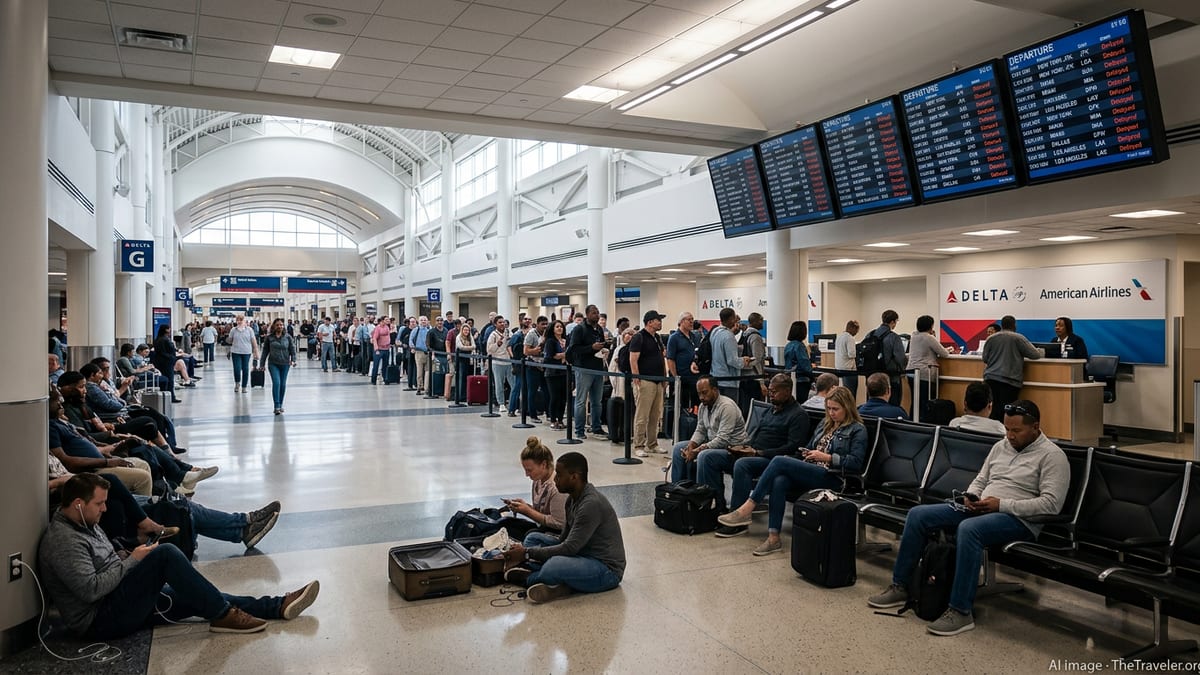
Hundreds of passengers at Hartsfield–Jackson Atlanta International Airport faced extensive delays and cancellations on June 14, as disruption across Delta Air Lines, its regional affiliate Endeavor, and major rivals including Southwest, American and Frontier rippled through domestic and international networks.
Get the latest news straight to your inbox!
Heavy Disruptions at the World’s Busiest Hub
Publicly available tracking data for June 14 indicate that Atlanta’s Hartsfield–Jackson airport experienced around 970 delayed departures and arrivals and at least 70 cancellations, creating long lines, missed connections and crowding across concourses. The figures place the world’s busiest passenger hub among the most disrupted airports in the United States for the day, with knock-on impacts across North America and overseas destinations.
Delta Air Lines, the dominant carrier in Atlanta, appeared to account for a significant share of the irregular operations, alongside regional operator Endeavor Air, which flies many of Delta’s shorter domestic routes under the same flight code. Other carriers with substantial schedules at the airport, including Southwest Airlines, American Airlines and low cost operator Frontier Airlines, also showed elevated delay levels as aircraft and crews became trapped in the congestion.
Operational data compiled by aviation analytics platforms and airport traffic reports suggest that, while Hartsfield–Jackson typically maintains high on time performance relative to its size, concentrated bouts of disruption can quickly cascade because of the sheer volume of daily movements. With more than 2,000 flights on a busy day and aircraft banks tightly scheduled through the hub, even modest schedule shocks can translate into widespread delays.
Ripple Effects Across the United States, Canada and Mexico
The disruption in Atlanta rapidly spread across domestic networks as delayed departures and grounded aircraft affected onward legs to other U.S. cities. Flights linking Atlanta with major business and leisure destinations such as New York, Chicago, Dallas, Denver, Las Vegas and Austin experienced knock on tardiness, with some departures pushed back by more than an hour.
Reports from flight tracking services also showed irregular operations on routes north to Canada and south to Mexico. Services connecting Atlanta to Canadian gateways such as Toronto and Montreal, and to Mexican resort and business markets including Cancun and Mexico City, displayed extended ground times and revised arrival estimates. Passengers on later legs often arrived to find already crowded customer service desks and limited remaining seats on alternative departures.
Travel forums and social media posts from affected travelers described a mix of rolling delay notifications, gate changes and overnight rebookings as airlines attempted to rethread aircraft and crews back into position. With many routes operated only a few times per day, especially to secondary cities, missed connections out of Atlanta often meant extended layovers or forced overnight stays.
Transatlantic and Long Haul Routes Hit With Knock-On Delays
Atlanta’s role as a major U.S. gateway to Europe and beyond meant that the impact was not confined to North America. Long haul departures from Hartsfield–Jackson to key European markets, including Amsterdam, Milan and other continental hubs, experienced departure delays as aircraft arriving late from earlier domestic segments were turned around behind schedule.
Available flight status information indicated that some transatlantic services, particularly evening departures, left Atlanta significantly behind timetable, with revised arrival times in Europe compressing overnight rest and complicating onward morning connections within the Schengen area and the United Kingdom. This created secondary delays for travelers continuing on to destinations across the continent.
Connections to the Middle East and Latin America were also affected, both directly and indirectly. Where carriers operate one stop itineraries via European or U.S. partner hubs, late arrivals into those hubs from Atlanta narrowed minimum connection windows or triggered missed flights entirely. Travelers bound for cities in the Gulf region, northern Africa, Brazil and other parts of Latin America reported being rebooked onto later departures or next day services as seat availability tightened.
Multiple Airlines, Shared Constraints
While Delta and Endeavor together operate the majority of flights at Hartsfield–Jackson, the scale of Saturday’s disruption highlighted how operational challenges at a single mega hub can quickly affect airlines that have only a fraction of the presence. Southwest, American and Frontier, which each maintain smaller but still significant schedules at the airport, appeared to face similar constraints once congestion took hold.
Industry performance data for 2026 show that many U.S. carriers have grappled with high delay rates this year, with budget airlines and regional operators in particular facing elevated levels of controllable delays. Those patterns can amplify the effect of any localized problem at a hub, as schedules have limited slack to absorb late arriving aircraft, crew duty limits or ground handling bottlenecks.
At the same time, airport traffic reports for Hartsfield–Jackson underscore the complexity of operations at a field that consistently ranks among the top global hubs by passenger volume. With a dense wave system structured around banked connections and dozens of airlines sharing runways and gates, disruption affecting even a subset of carriers can quickly spill over to others through shared resources such as air traffic flow programs and ramp capacity.
Passenger Impact and Next Steps for Travelers
The operational turbulence translated into a difficult day for many travelers passing through Atlanta. Passengers reported extended waits at check in counters and rebooking desks, crowded gate areas and limited same day options for rerouting, particularly on popular leisure routes and long haul international links. Some resorted to last minute hotel bookings in the city or at alternate airports when misconnected from final legs.
Consumer advocates noted that, under existing U.S. regulations, airlines are not required to compensate passengers financially for most delays, even when extensive. However, carriers typically provide meal vouchers, hotel accommodation or rebooking assistance depending on the cause of the disruption and internal policy. Travel advisers frequently recommend that passengers retain all receipts and document their communications with airlines when seeking reimbursement for out of pocket expenses.
Publicly available guidance from travel experts suggests that, during large disruption events at major hubs, affected customers may have better luck using airline mobile apps or website chat functions to secure new itineraries rather than waiting in physical lines. Some recommend proactively searching for alternative routings through secondary hubs and requesting specific options, as remaining inventory during mass delays can disappear quickly.
As operations at Hartsfield–Jackson stabilize, further schedule adjustments and residual delays are likely while airlines reposition aircraft and crews and work through the backlog of displaced passengers. Travelers with upcoming itineraries involving Atlanta are being advised by published reports to monitor flight status closely, allow extra time for connections and consider earlier departures where flexibility allows.