


More news on this day
The United States has removed a “Reconsider Travel” advisory for a key Middle East destination, easing one of its highest warning levels even as airlines confront renewed flight disruptions linked to the wider regional conflict.
Get the latest news straight to your inbox!
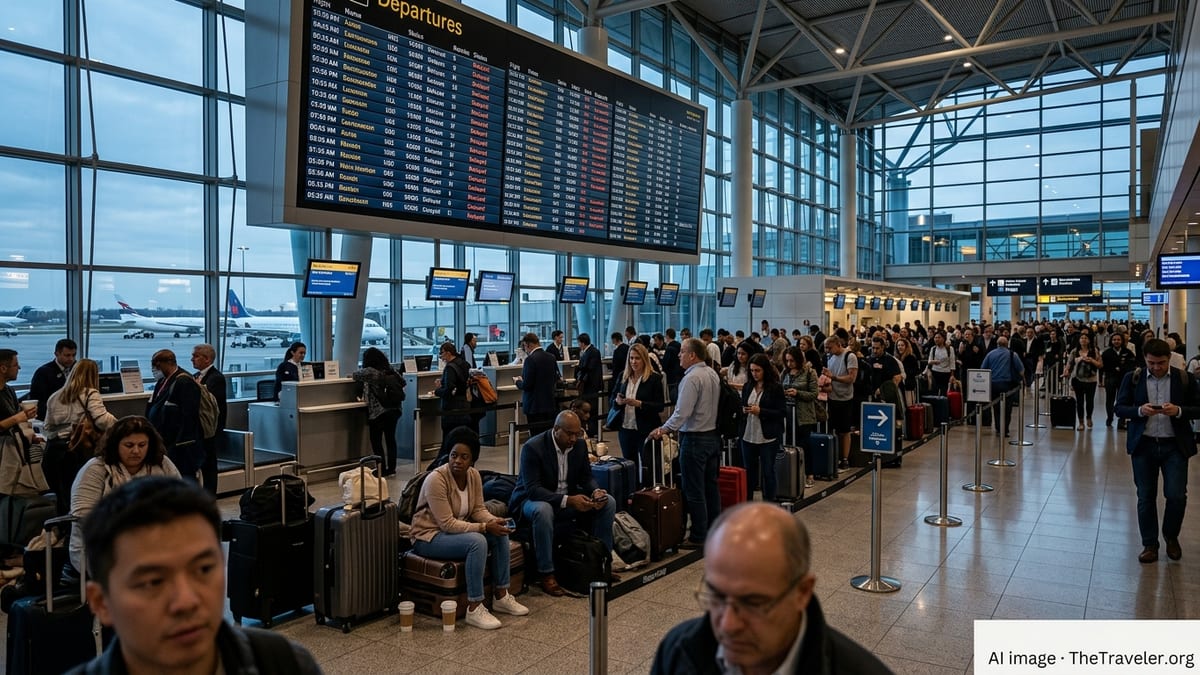
Shift in US Travel Advisory Amid Ongoing Regional Tensions
Publicly available advisory trackers show that the State Department recently downgraded its guidance for one Middle East country from Level 3, which urges travelers to reconsider visiting, to a lower level that stops short of advising against most travel. The revision follows months of heightened concern about spillover from the conflict involving Iran, Israel and United States forces elsewhere in the region.
The updated notice indicates that broad restrictions tied to the risk of armed conflict and potential attacks on civilian infrastructure have been eased. However, localized warnings remain in place for specific border zones and areas with a history of militant activity, where separate instructions continue to discourage or prohibit travel.
Analysts note that such a shift typically reflects an assessment that immediate large-scale hostilities are less likely, even if the broader security picture remains fragile. Travel insurers and risk consultancies are already adjusting their country risk maps to reflect the lower-tier advisory, although many still flag the destination as higher risk than popular leisure markets in Europe or Asia.
The change also underscores how quickly government guidance can move in response to shifting military dynamics. As regional powers recalibrate their posture, travel advisories have begun to distinguish more sharply between direct conflict zones and neighboring states whose main exposure is disruption in the skies rather than fighting on the ground.
Airlines Confront Renewed Flight Cancellations and Rerouting
Even as the advisory level drops, commercial aviation across the Middle East continues to feel the impact of the conflict. Industry factboxes and airline network updates compiled over recent weeks describe a patchwork of cancellations, reduced frequencies and rerouted services as carriers respond to airspace restrictions and evolving risk assessments.
Some European and Asian airlines have temporarily halted services to hubs in the Gulf and Levant or are avoiding the airspace of countries closer to the front lines. Others have shifted long-haul routes between Europe and Asia further south or north, adding flight time and costs but reducing exposure to potential missile and drone activity and long-range air defense systems highlighted in regional safety bulletins.
Risk advisories aimed at corporate travelers emphasize that schedules remain highly fluid, with short-notice delays and cancellations still common. Airports in Iran continue to face some of the most severe constraints, while major hubs in the Gulf operate with added security measures and contingency plans for rapid rerouting should tensions spike again.
Travel companies that specialize in adventure and small-group trips have in some cases suspended itineraries in nearby markets through at least early April, citing elevated warnings, insurance limitations and the difficulty of guaranteeing smooth air connections for customers who may transit through multiple regional hubs.
Conflicting Signals for Tourists and Travel Planners
The easing of the US advisory sends a cautiously positive signal to leisure travelers considering the destination, but the broader picture is more complicated. Government advice in other major outbound markets, including parts of Europe and Asia, still urges heightened caution for travel anywhere in the Middle East due to the prospect of further missile or drone incidents and the risk of sudden airspace closures.
Immigration and mobility trackers published by global consulting firms point out that several governments continue to warn their citizens about possible airport closures, diversions, or prolonged layovers if air corridors are disrupted again. They highlight that seemingly distant military actions in the Gulf can have knock-on effects for passengers transiting to Africa, South Asia or Europe.
For tour operators, this mixed landscape has led to a conservative approach for the current season. Some are limiting departures, shortening booking windows, or switching tours to destinations that can be reached without overflying sensitive airspace. Others require clients to acknowledge that itineraries may change at short notice if airlines adjust schedules again.
Travelers are being urged by consumer advocates to read policy language closely, as standard travel insurance frequently excludes disruption connected to war or armed conflict. Where the advisory level has been lowered, some insurers may resume full coverage, but products differ widely on how they treat cancellations caused by renewed military activity or government warnings.
What the Advisory Change Means for Flights and Insurance
For aviation planners, the removal of the “Reconsider Travel” label is likely to be most significant for route planning and risk modeling rather than an immediate surge in capacity. Carriers typically weigh government advisories alongside their own security assessments and aircraft routing constraints before restoring suspended services or adding frequencies.
Specialist safety reports focusing on Middle East airspace note that while overall risk to civil aviation remains elevated compared with pre-conflict norms, some flight information regions have stabilized. That has opened the door for gradual restoration of non-stop services as operators test demand and monitor how often air defense activity or alerts are affecting normal operations.
On the insurance side, the advisory adjustment may help restore more standard terms for travelers headed to the affected country, particularly for medical coverage and basic trip interruption. However, brokers continue to highlight that many policies distinguish between advisory levels and exclude claims where a traveler knowingly ignores higher-level warnings that still apply to specific regions within the country.
Industry guidance stresses that travelers should not assume the downgrade means a full return to normal. Booking flexible tickets, allowing longer connection times, and staying prepared for last-minute terminal or schedule changes remain central recommendations from airlines and risk consultants watching the situation closely.
Preparing for Summer Travel in an Uncertain Environment
With the northern summer season approaching, the advisory shift may encourage some travelers to revisit itineraries that were postponed at the height of the conflict. Tourism boards and hotel operators in the destination have been working to reassure international markets, highlighting that daily life in major cities continues largely uninterrupted despite regional turbulence.
Yet the pattern of recent months suggests that conditions can change quickly. Flight waivers and flexible booking policies tied to Middle East unrest have been extended and revised multiple times by large international carriers, reflecting how new military developments can ripple through timetables within days.
Travel risk specialists continue to recommend that visitors enroll in alert systems offered by their home governments and sign up for airline notifications so they are informed quickly about any changes. They also suggest preparing contingency plans, such as alternative routing options and additional budget for accommodation if a transit stop is unexpectedly prolonged.
For now, the removal of the “Reconsider Travel” banner marks an important symbolic shift in how the United States views the destination’s overall risk profile. But as flight disruption alerts remain in place and airspace warnings are extended into 2026, both travelers and the industry are being reminded that the path back to predictable, pre-conflict connectivity across the Middle East is likely to be gradual rather than immediate.