


Few places in Europe combine raw volcanic power, sweeping Mediterranean scenery and a world-changing historical event quite as dramatically as Mount Vesuvius. Looming over the Bay of Naples and the buried cities of Pompeii and Herculaneum, this still-active volcano is not just a backdrop to southern Italy but a destination in its own right. For travelers who love both nature and history, a day on Vesuvius turns textbooks into a living landscape, with crater-edge hiking, panoramic views and direct connections to one of the most famous eruptions in human history.
Get the latest updates straight to your inbox!
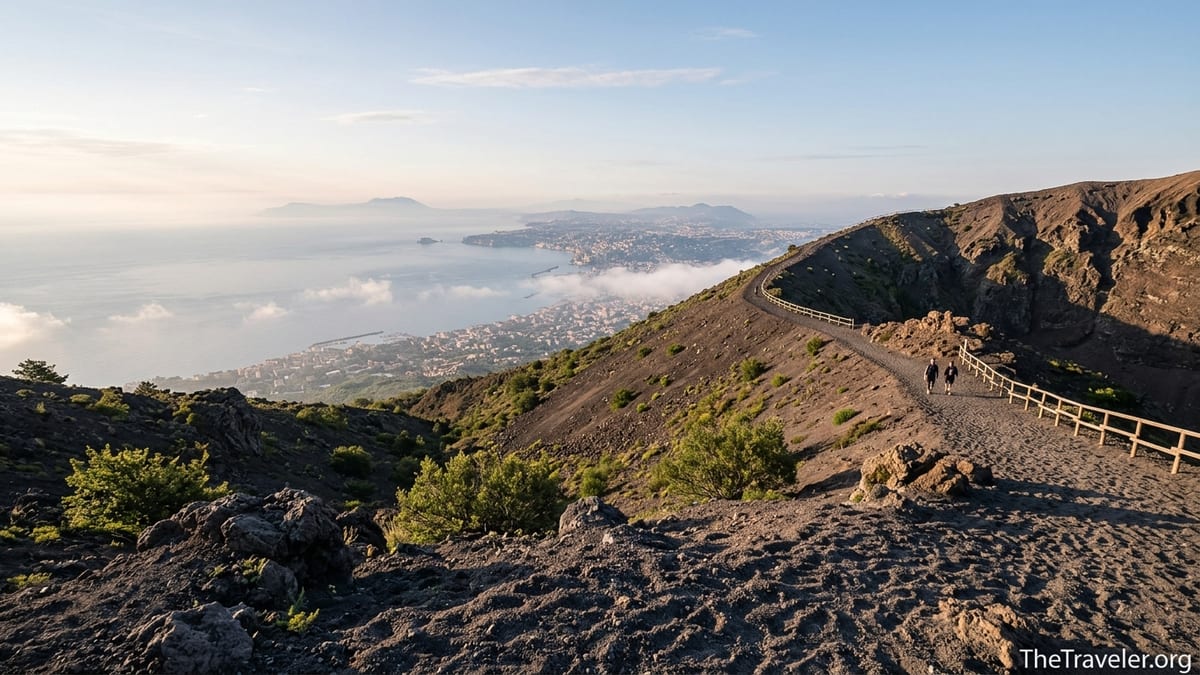
A Living Volcano Within Easy Reach of Naples
One of the reasons Vesuvius is such a compelling stop is how easy it is to reach from a major Italian city. From central Naples, travelers typically take the Circumvesuviana commuter train to Ercolano Scavi, a journey of about 25 minutes that costs only a few euros in second class. Just outside Ercolano Scavi station, dedicated shuttle services like Vesuvio Express run frequent buses that wind up the mountain road to the park access point near 1,000 meters above sea level, with combined round-trip transport and crater access packages often in the range of 25 to 35 euros per person depending on season and inclusions.
Those staying in Sorrento or exploring the Amalfi Coast can also ride the same Circumvesuviana line in the opposite direction, hopping off at Ercolano or Pompei to connect with shuttle buses into Vesuvius National Park. Organized day tours from Naples, Sorrento and even Rome frequently bundle Vesuvius with Pompeii, providing coach transport, a tour leader and prebooked tickets. This can be particularly attractive in high season when independent transport is crowded and crater time slots book up early.
Vesuvius’s accessibility matters for nature and history lovers because it turns what could be a remote, specialist destination into a realistic day trip. You can spend the morning climbing to the crater, descend for a late lunch in the seaside town of Ercolano, and still be back in Naples by early evening for a plate of pizza margherita, all without renting a car.
Crucially, the volcano is not a dormant relic. Vesuvius last erupted in 1944 and remains classified as an active volcano that is closely monitored by Italy’s national volcanology institute. Visitors standing on the crater rim are experiencing a living geological system, complete with fumaroles and warm vents, rather than a purely fossilized landscape.
Walking the Crater Rim: Nature Up Close on the Gran Cono Trail
The highlight for most visitors is the Gran Cono trail, the official path leading from the quota 1000 parking area to the crater rim. The hike is relatively short but atmospheric: roughly 1.5 to 1.7 kilometers each way, with about 200 meters of elevation gain along compacted ash and gravel. For a reasonably fit traveler wearing sturdy shoes, the ascent typically takes 30 to 45 minutes, with plenty of opportunities to pause and look back over the Bay of Naples.
As you climb, the environment shifts from roadside pines and low shrubs to a moonscape of volcanic scree and hardy plants adapted to poor, mineral-rich soils. In spring, yellow broom and wildflowers soften the dark ash slopes, while in late summer the landscape feels stark and almost otherworldly. On clear days, you can pick out the island of Capri on the horizon and trace the curve of the bay from Naples across to Sorrento, a rewarding reminder of how tightly the region’s life is tied to this volcano.
At the top, the payoff is immediate. The path skirts the edge of the enormous crater, with wooden railings separating visitors from sheer drops into the caldera. Steam sometimes rises from small fumaroles on the inner walls, and guides point out telltale color changes where minerals have stained the rock in shades of yellow, red and white. It is a place where even casual hikers grow quiet, taking in both the beauty and the latent power that shaped everything below.
Because the path is exposed to sun and wind, practical preparation matters. In peak summer, temperatures at mid-day can be intense, so many visitors aim for a morning entry slot between 9 and 11 a.m. or a later afternoon visit. A refillable water bottle, closed shoes with grip and a light jacket in shoulder seasons are not luxuries but basics. The trail surface can be dusty, so those with sensitive eyes often appreciate sunglasses not only for sun but for grit kicked up by other hikers.
A National Park of Lava Flows, Forests and Panoramic Ridges
Beyond the famed Gran Cono path, Vesuvius National Park covers more than 70 square kilometers and includes a surprisingly diverse set of landscapes. The park protects both Vesuvius itself and the remnants of the older Mount Somma volcano, whose collapsed walls encircle the younger cone. Enthusiasts who want more than a quick crater visit can explore additional marked trails that traverse pine forests, ancient lava flows and panoramic ridges.
For example, routes that thread along the Somma rim offer sweeping views into the so-called Valle dell’Inferno, a dramatic ravine carved between the old and new volcanoes. Here, darker, older lava fields are slowly being recolonized by Mediterranean scrub and dwarf oaks, providing a textbook case of ecological succession after volcanic disturbance. Birdwatchers frequently report sightings of kestrels and buzzards riding thermals above the ridges, while the undergrowth shelters foxes and small mammals.
Nature lovers with a car can base themselves in one of the Vesuvian towns such as Ottaviano or San Sebastiano al Vesuvio and spend several days sampling lesser-known trails away from the crowds. Local agriturismi on the lower slopes often combine overnight stays with vineyard tours or farm dinners, where produce is grown on soils enriched by centuries of ash deposits. Tasting a glass of Lacryma Christi wine while looking up at the dark silhouette of the cone is a quietly memorable experience that connects geology to agriculture in a very real way.
Because some of the park’s trails are longer, less maintained or occasionally affected by fire risk, it is wise to check current conditions with the park authority or local guides before setting out. In hotter months, many visitors choose to book a guided hike through a Vesuvian outdoor operator, especially if they want to attempt less trafficked routes where trail marking is more subtle.
Standing Above the Cities Buried by the 79 CE Eruption
For history lovers, one of the most powerful aspects of visiting Vesuvius is the physical line of sight between the volcano and the archaeological sites it destroyed in 79 CE. From the crater rim or even halfway up the trail, guides will gesture toward the flat plain where Pompeii, Herculaneum, Stabiae and other Roman settlements once thrived. It is one thing to read about pyroclastic flows and ash clouds in a museum caption; it is another to see how close the volcano sits to the former shoreline and to realize how little warning those communities had.
The 79 CE eruption, famously described by the younger Pliny in letters to the historian Tacitus, remains one of the best documented ancient disasters. Roman villas, streets and even food stalls were sealed beneath layers of ash and pumice, preserving frescoes, mosaics and everyday objects in extraordinary detail. Today, many travelers pair a morning or afternoon on Vesuvius with a walk through Pompeii or Herculaneum, using combined tickets or guided day tours that tie the geology and archaeology together.
Imagine spending the first part of your day on the crater rim learning how the eruption column collapsed, then strolling in the afternoon along Pompeii’s Via dell’Abbondanza, where ruts of ancient cart wheels still scar the stone. In Herculaneum, you can peer into once-elegant seafront houses and see carbonized wooden beams that bear silent witness to the heat of the pyroclastic surge. The physical juxtaposition of these sites with the looming profile of Vesuvius makes their story more tangible and emotional.
Even for travelers less versed in classical history, the narrative is easy to grasp on the ground. Many tours include simple diagrams and on-site explanations in multiple languages. Families with teenagers often report that standing in a preserved Roman bakery or bathhouse, then looking up at the volcano that buried it, sparks more curiosity than any classroom slideshow could manage.
Local Culture Shaped by the Volcano
Vesuvius is not only a geological and historical landmark but also a cultural presence that permeates the daily life of Naples and surrounding towns. The volcano appears in local songs, proverbs and even in the name of the Neapolitan football club’s ultras groups. Locals grow up with the cone always on the horizon, and many families have their own stories about ash fall during the 1944 eruption or minor seismic swarms in more recent decades.
Travelers can sense this connection in small ways. Cafes in Ercolano and Torre del Greco serve pastries named after the volcano, often dusted with powdered sugar to evoke ash. Roadside stalls on the access road to the crater sell lava-stone bracelets, pumice souvenirs and magnets shaped like tiny volcanoes. While some of it is tourist kitsch, other crafts are more grounded in genuine local tradition, such as jewelry carved from lava stone or coral in Torre del Greco workshops.
Wine and food express the relationship even more convincingly. The slopes of Vesuvius are famous for Lacryma Christi del Vesuvio, a DOC wine whose vineyards stretch across the lower flanks of the volcano. Many wineries, reachable by car or private transfer, offer tastings paired with simple local dishes like spaghetti with cherry tomatoes grown in volcanic soil or grilled vegetables drizzled with olive oil from nearby groves. A typical tasting lunch can be found in the 30 to 50 euro range per person, depending on the number of wines and courses.
In the evenings, back in Naples, it is hard not to notice how the city’s vibrant, occasionally chaotic energy coexists with the quiet threat of the mountain above. For many visitors, this coexistence becomes part of the destination’s fascination: a sense of living in the shadow of nature’s power, embraced rather than denied.
Safety, Access and Practical Planning for Your Visit
Because Vesuvius is an active volcano within a densely populated area, safety and organization are taken seriously. The volcano sits within a national park that controls daily visitor numbers to the Gran Cono trail through a time-slot ticketing system. In practice, that means most travelers need to purchase a specific entry time in advance, especially from spring through autumn. Day-of “last minute” tickets sometimes exist but are limited and not guaranteed, especially at peak hours.
Opening hours for the crater path vary seasonally, often starting around 9 a.m. and closing in the late afternoon, with the last entry typically at least 1 to 1.5 hours before closing time to allow visitors to exit in daylight. It is essential to check current hours and ticket procedures shortly before travelling, as weather, maintenance or fire risk can affect access with relatively short notice.
On the mountain itself, safety rules are straightforward: stay on the marked path, follow instructions from park personnel and guides, and do not cross barriers to approach fumaroles or unstable edges. Official guides stationed along the trail are trained to monitor conditions, answer basic geological questions and help manage visitor flow. Although the volcano is at a low monitoring level and there is no immediate eruption forecast, authorities maintain a robust seismic and gas-monitoring network, and any change in status would trigger clear public communication.
For a smooth day, travelers should factor in the “two-stage” journey: city to base town, then shuttle or tour up the mountain. Independent visitors from Naples might spend 2 to 2.5 hours in total on transport and the hike, plus extra time for photos and a drink at one of the simple kiosks near the crater. Those combining Vesuvius with Pompeii or Herculaneum often allocate a full day, beginning with an early archaeological visit before the midday heat and finishing the day on the cooler crater in late afternoon.
When to Go and How to Pair Vesuvius With Nearby Highlights
Seasonality shapes the Vesuvius experience. Spring and autumn tend to offer the most comfortable hiking conditions, with milder temperatures, clearer skies and fewer tour buses than in July and August. Wildflowers and fresh greenery make March to May particularly photogenic. In high summer, early morning and late-afternoon entries are preferable to avoid the harshest sun and the thickest crowds.
Winter visits can be atmospheric on clear days, with sharper views across the bay and occasional dustings of snow on the higher slopes, but shorter daylight hours and weather-related closures are more common. Travelers should always check the latest information the day before, as strong winds or heavy rain can prompt temporary trail closures even in otherwise accessible seasons.
Pairing Vesuvius with a neighboring highlight turns a good day into a great one. The classic combination is Pompeii, easily reached via the same Circumvesuviana railway. Many travelers spend the morning wandering Pompeii’s forum, amphitheater and frescoed villas, then take a mid-afternoon shuttle up to the crater. Others prefer a quieter, more compact archaeological experience in Herculaneum, which lies closer to the volcano and preserves upper stories of Roman houses and delicate woodwork rarely seen at Pompeii.
For those with extra time, the slopes of Vesuvius can also be paired with an overnight in a nearby wine estate or an evening in Sorrento, where sea views back toward the volcano frame sunset aperitivi. Even a tight Naples city break can accommodate an afternoon excursion to the crater followed by a seafood dinner on the waterfront at Mergellina with Vesuvius silhouetted in the distance.
The Takeaway
Mount Vesuvius earns its place on many Italy itineraries not through marketing hype but through a rare combination of qualities. It is a living volcano that you can safely and relatively easily climb, a protected national park with distinct ecosystems and views over one of the world’s most storied bays, and a vantage point from which to understand the destruction and preservation of Roman cities that still shape global imagination.
For nature lovers, the draw lies in walking a crater rim, tracing old lava flows, spotting birds above the Somma ridges and tasting wine grown in volcanic soil. For history enthusiasts, it is the chance to connect the dots between the smoking cone overhead and the ruins underfoot in Pompeii and Herculaneum. Add in straightforward access from Naples, a well-managed trail system and a local culture that has woven the volcano into song, food and everyday identity, and Vesuvius becomes more than a side trip. It is a lens through which to see southern Italy’s relationship with nature, time and resilience.
FAQ
Q1. Is Mount Vesuvius safe to visit today?
The volcano is classified as active but at a low alert level and is continuously monitored by Italian authorities. Visitor access is managed through a national park, marked trails and daily capacity limits. While no visit to an active volcano is risk-free, the Gran Cono trail is considered safe under normal conditions, and any significant changes in volcanic activity would trigger closures.
Q2. Do I need to book tickets for the crater in advance?
Yes, in most seasons you should reserve a timed entry slot for the Gran Cono trail before you arrive, especially from spring through autumn. Same-day tickets are sometimes available at the base or via shuttle operators, but they are limited and not guaranteed, particularly at peak hours.
Q3. How difficult is the hike to the crater?
The hike is short but moderately steep, with a loose ash and gravel surface. Most reasonably fit people, including older children and active seniors, can complete it in 30 to 45 minutes each way if they wear sturdy shoes and pace themselves. Those with serious mobility issues may find the incline and footing challenging.
Q4. What should I wear and bring for a Vesuvius visit?
Closed, grippy shoes or hiking boots are strongly recommended, along with sun protection such as a hat, sunglasses and sunscreen. Bring a refillable water bottle, especially in warmer months, and a light jacket or windbreaker outside high summer, as conditions at 1,000 meters can be windy or cooler than in Naples.
Q5. Can I visit Vesuvius and Pompeii in the same day?
Yes, many travelers do exactly that. A common plan is to visit Pompeii in the morning using the Circumvesuviana train, then take a shuttle or tour bus up to Vesuvius for an afternoon crater walk. Expect a full, fairly active day, and consider booking a combined tour if you prefer logistics handled for you.
Q6. How do I get to Vesuvius from central Naples without a car?
Most visitors take the Circumvesuviana or Campania Express train from Napoli Garibaldi to Ercolano Scavi, then connect with a dedicated shuttle bus up to the Vesuvius parking area. Total travel time to the crater entrance is typically about an hour each way, depending on train and bus connections.
Q7. Are there age restrictions for children visiting the crater?
There is no strict age ban, but the trail’s gradient, loose surface and exposure mean that very small children may need to be carried or carefully supervised. Families often find that school-age children and teenagers enjoy the hike and the dramatic views, while strollers are impractical on the path.
Q8. What happens if the weather is bad on the day of my visit?
Strong winds, heavy rain or low visibility can lead to temporary closure of the Gran Cono trail for safety reasons, sometimes at short notice. In those cases, shuttle operators and ticket offices may offer rebooking options or partial refunds depending on their policies, so it is wise to check conditions the morning of your planned visit.
Q9. Can I walk all the way around the crater rim?
Visitors follow a designated section of path along the rim, but not the full 360 degrees, both for safety and conservation reasons. The accessible part still offers extensive views into the crater and across the Bay of Naples, so most travelers feel they have seen the essential perspectives.
Q10. Are guided tours on the crater mandatory?
Access is supervised by official park guides stationed along the trail rather than by private tour leaders for each small group. You can walk at your own pace within the time limits, but guides are present to answer questions, provide basic geological explanations and enforce safety rules. Many travelers also choose to hire additional guides for combined Vesuvius and archaeological site tours for deeper context.