


More news on this day
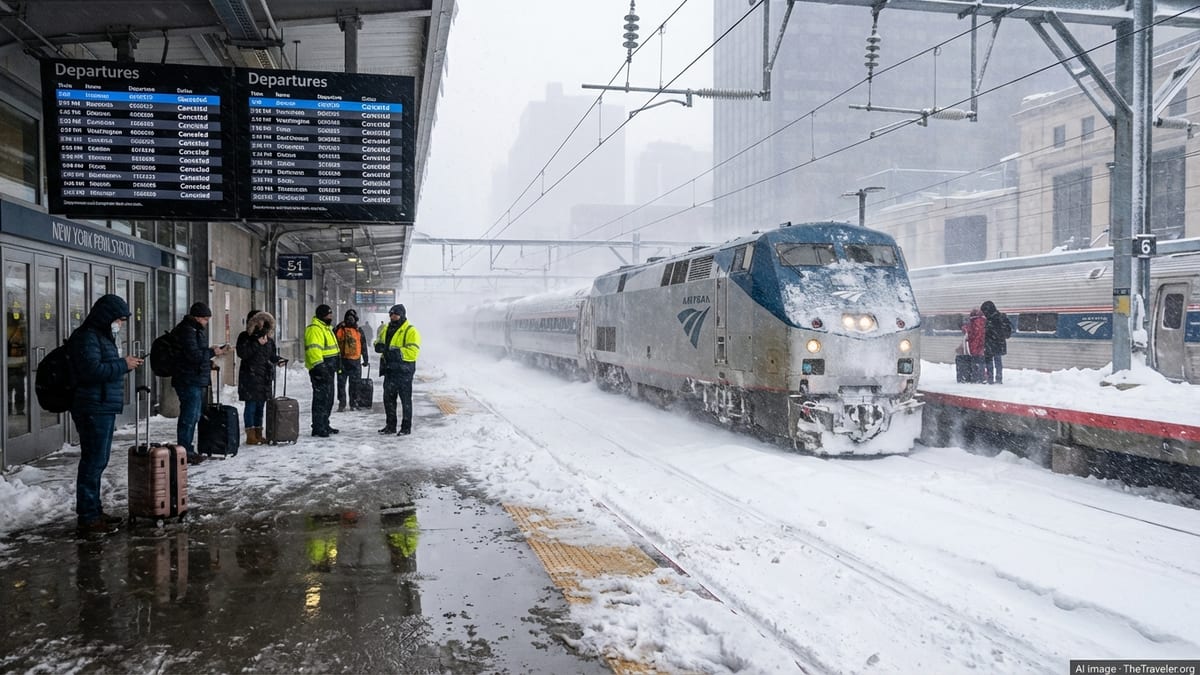
Sudden train cancellations with little or no warning are stranding passengers across multiple rail networks in 2026, according to recent disruption reports and passenger accounts, fueling concern about communication failures and the limits of existing passenger protections.
Get the latest news straight to your inbox!
Recent Disruptions Highlight the Human Impact
In the United States, long-distance rail passengers have reported receiving cancellation messages overnight or shortly before departure, leaving little time to make alternative plans. Accounts shared in late August 2026 around Amtrak’s “Pause for Progress” track work described travelers discovering only at the rebooking stage that there was no practical substitute service, despite holding confirmed reservations for affected dates. Publicly available discussions of the program suggest that, in many cases, customers were left to piece together their own itineraries when trains were withdrawn from the schedule at short notice.
Similar experiences have been documented in Canada, where riders on cross-country services reported being held for several hours on a halted train before buses arrived to complete the journey toward Vancouver. Passengers described long waits in remote areas and limited updates on onward connections, illustrating how a cancellation partway through a trip can be even more disruptive than a pre-departure schedule change.
In Europe, overnight service gaps have left travelers facing expensive last-minute alternatives. Online forums in spring and summer 2026 carried examples of passengers in the United Kingdom who missed the last train home after a late cancellation and resorted to long taxi rides costing more than 80 pounds, later seeking reimbursement under national rail conditions. Other travelers reported that first indications of disruption came from platform screens or staff announcements only minutes before departure, rather than from advance messages via apps or email.
These cases underscore a recurring theme across different rail systems: when cancellations are communicated late, the burden of finding and funding an alternative often falls initially on passengers, who may only later discover whether compensation or refunds are available.
New UK Rules Aim to End “Passenger Limbo”
In Great Britain, new rules scheduled to take effect on 20 September 2026 are designed to address some of the most acute problems associated with last-minute cancellations. Government information describes a “cancellations covered” scheme that will allow passengers whose train is cancelled to board another participating operator’s service at no additional cost, provided they travel within a two-hour window before or after their original departure time. The policy is framed as a way to end situations in which passengers are left in limbo on station concourses, forced to buy new tickets or abandon trips altogether.
Public notices explain that the new arrangements are intended to work across operators, not just within a single brand. This is significant on routes where multiple companies share tracks, such as intercity corridors linking London with major regional cities. If implemented as described, a traveler whose intercity train is cancelled could switch onto an alternative operator’s service on the same corridor, using a direct or reasonable alternative route, without paying again for the journey.
The Office of Rail and Road’s guidance on passenger rights, updated for tickets bought on or after 1 April 2026, already states that no administration fee should be charged when customers seek a refund because they choose not to travel after a cancellation or severe disruption. The regulator also notes that each train company is expected to publish a code of practice explaining how it provides information to passengers during disruption, and that audio announcements should match what appears on passenger information screens throughout a journey.
However, recent disruption bulletins and coverage of major incidents show that implementing these standards consistently remains a challenge, especially when events unfold quickly. Reports from the Elizabeth Line in London in early September 2026, for example, described passengers being evacuated from a train near Paddington after an electricity supply problem linked to a lineside fire. While that case involved a stranded rather than cancelled service, it highlighted the importance of clear real-time information, especially when passengers must transfer to other modes to complete their trip.
North American Policies Allow Cancellations Without Notice
On intercity routes in the United States, publicly available service commitments emphasize operational flexibility in the face of infrastructure issues, weather, and other disruptions. Amtrak’s customer information explains that the company may cancel, terminate, divert, postpone, or delay any service without notice in events beyond its control. The same material notes that alternate transportation, when provided, may include another Amtrak train, a bus, a car service, or air travel, though the specific arrangements and timing can vary widely by route and incident.
While the commitments outline ways to modify or cancel reservations without additional fees in many circumstances, they also underscore that passengers cannot rely on guaranteed transportation in every scenario. This can be particularly difficult for travelers on overnight or long-distance routes with limited daily frequencies, where a last-minute cancellation may mean that no alternative train is available the same day. In such cases, passengers often must decide whether to seek refunds and arrange their own transport or wait for the next scheduled service.
More broadly, the United States Department of Transportation has focused much of its recent consumer protection effort on air travel. A rulemaking process launched in 2022 examined whether airlines should be required to provide cash compensation, hotel rooms, and meals when disruptions are within the carrier’s control. Rail passengers do not currently benefit from an equivalent nationwide framework, and protections are instead set by individual operators’ policies and state contract or consumer laws, leaving notable gaps when trains are cancelled on short notice.
In Canada, federal rules concentrate on air passenger protection, while long-distance rail remains governed largely by carrier policies and contractual terms. Recent passenger accounts from Canadian transcontinental services suggest that when freight or infrastructure incidents force a cancellation mid-route, replacement buses are sometimes deployed, but riders may encounter long waits and limited information on timing and amenities.
Gaps in Communication and the Role of Passenger Rights
Across regions, a consistent source of frustration is not only that trains are cancelled, but that passengers often learn about cancellations too late to make cost-effective choices. Oversight documents from transit investigations in North America and the United Kingdom have repeatedly identified shortcomings in on-board announcements and station communication when trains are stranded or disrupted, noting instances where some carriages received few or no updates while others were better informed.
Passenger advocacy groups and seasonal performance statistics published in 2026 for the British rail network highlight how short-notice cancellations can distort both customer experience and reliability figures. Disruption on so-called “severely disrupted days” can cluster around operational pinch points, leading to cascading cancellations and missed connections. When communication fails to keep pace, passengers can end up out of position, missing medical appointments, work commitments, or onward travel, even when alternative services technically exist.
Regulators in Britain stress that operators must keep their codes of practice current and ensure information is consistent across different channels, including station screens, apps, websites, and on-board announcements. Yet real-world incidents continue to show variation between operators and routes. In some cases, travelers reported receiving app notifications only after they had already reached the station, while in others, cancellation notices were retracted without a corresponding update reaching all affected customers.
The experience of passengers left with unexpected taxi, hotel, or rideshare bills after last trains were cancelled has drawn attention to the practical boundaries of existing compensation schemes. While the National Rail Conditions of Travel in Great Britain and comparable frameworks elsewhere do provide for refunds and, in some circumstances, reimbursement of reasonable onward travel costs, passengers often must proactively gather documentation and pursue claims after the fact. This can leave travelers temporarily out of pocket, especially when alternative travel requires substantial upfront payments.
Practical Steps for Travelers Caught by Sudden Cancellations
Publicly available guidance from regulators and transport agencies offers several concrete steps for travelers who find themselves stranded by a train cancellation with little notice. In Britain, official advice emphasizes checking whether tickets can be used on another operator’s service, especially as the new cross-operator scheme comes into effect, and retaining all receipts for substitute transport such as taxis or rideshares. The guidance also recommends capturing time-stamped evidence of cancellations, including screenshots of journey planners or app notifications, to support later refund or compensation claims.
In North America, rail operators encourage passengers to use official apps, websites, or customer service lines to confirm the status of their train before heading to the station, particularly during significant infrastructure projects or severe weather. While this does not eliminate the risk of late-breaking changes, it can reduce the likelihood of arriving at a station after a cancellation has already been posted. Passengers traveling on the last train of the day are often advised in consumer coverage to pay especially close attention to status updates because missed connections at that hour can require costly overnight stays or long-distance road travel.
Advocacy organizations also suggest building extra time into itineraries that involve critical appointments or onward flight connections, given the documented frequency of delays and cancellations on some routes. They note that while passengers cannot control the timing of disruptions, they can improve their position afterward by knowing their rights in advance, including refund policies, transfer options, and any entitlement to replacement transport or accommodation.
As new rules in markets such as Great Britain seek to standardize responses to cancellations and reduce the number of passengers left without options, forthcoming performance data and passenger feedback are expected to show whether the gap between policy and on-the-ground experience narrows. Until then, reports from 2026 indicate that sudden train cancellations without adequate notice remain a significant challenge for rail travelers, particularly on busy corridors and late-night services where alternatives are scarce.