


More news on this day
Air travelers flying into and out of the Washington, DC area this fall may be among the first in the United States to feel the effects of a new artificial intelligence system designed to forecast congestion earlier, reroute traffic more efficiently, and ultimately reduce flight delays.
Get the latest news straight to your inbox!
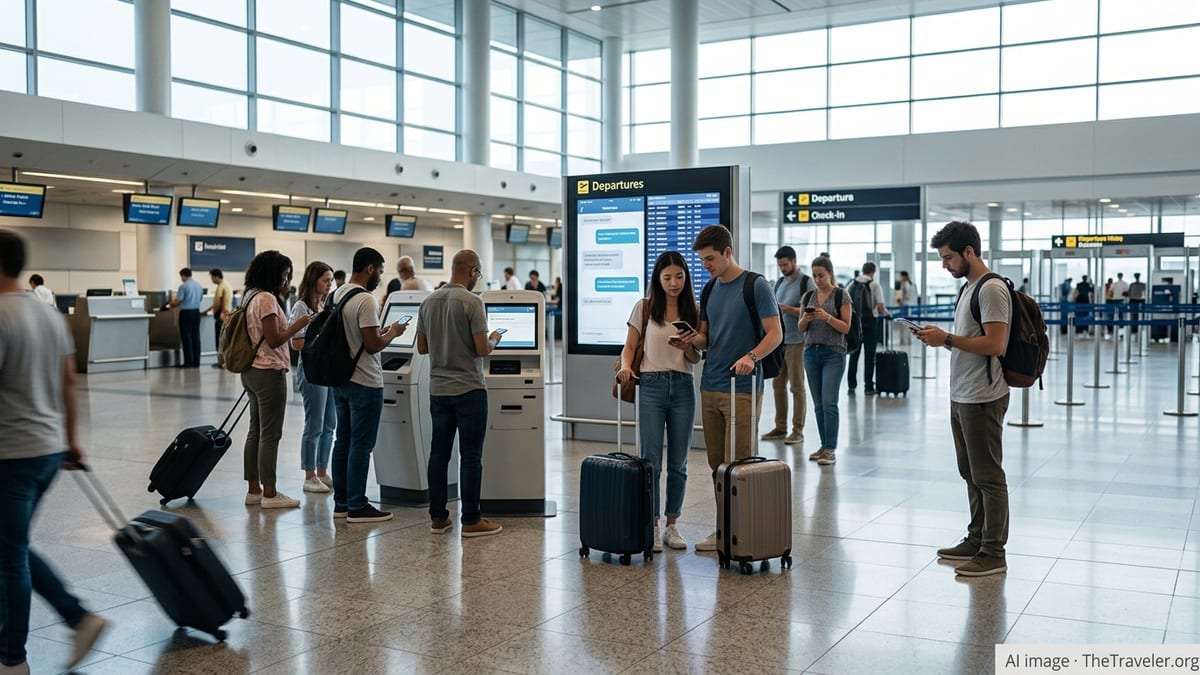
DC Region Chosen as Testbed for FAA’s SMART Platform
Publicly available information from the Federal Aviation Administration shows that a new decision-support system known as SMART, short for Strategic Management of Airspace, Routes and Trajectories, has begun initial operations focused on the Washington region. The tool is part of a broader modernization effort that includes a 12-year, 875 million dollar contract with California-based company Air Space Intelligence to overhaul how air traffic flow is managed nationwide.
According to recent coverage in national and local outlets, the first phase of the rollout centers on the three major DC-area airports: Ronald Reagan Washington National Airport, Washington Dulles International Airport, and Baltimore/Washington International Thurgood Marshall Airport. The system is being introduced through the FAA’s Air Traffic Control System Command Center in Warrenton, Virginia, which oversees strategic traffic management across the National Airspace System.
Reports indicate that the Washington area was chosen in part because of its dense and complex airspace, managed by the Potomac Consolidated TRACON facility, which handled more than 1.4 million aircraft operations in 2024. The mix of high-frequency shuttle traffic, long-haul international flights, military operations, and strict security procedures makes the region a demanding environment for any new air traffic tool.
For travelers, the near-term change will not come in the form of new procedures at the gate or on board. Instead, the AI system is intended to operate behind the scenes, supporting traffic managers as they make high-level decisions that shape when and how flights move into and out of the region.
How the AI Tool Works to Predict and Prevent Delays
FAA informational materials and recent technology reporting describe SMART as a predictive engine that continuously ingests data from around 200 separate feeds, including airline schedules, filed flight plans, real-time and forecast weather, airport capacity, airspace constraints, and known operational disruptions. The tool uses artificial intelligence models to spot emerging conflicts hours in advance, such as too many flights converging on a single arrival bank or storms set to close off key routes.
Instead of directly issuing commands, the system generates recommended strategies for traffic managers, such as adjusting departure times, metering arrivals into crowded hubs, or routing certain flights around developing storms. These recommendations are delivered through existing FAA systems so that they can be compared with human judgment and other planning tools already in use.
Public fact sheets emphasize that the AI system is designed to complement, not replace, the work of controllers in radar rooms and towers. Air traffic controllers will continue to manage individual aircraft and maintain separation, while SMART operates at the strategic level, suggesting ways to smooth out demand and avoid overloads that often cascade into multi-hour delays.
The approach builds on decades of research and prototype tools developed with NASA and other partners to optimize flight paths around weather and congestion. Those earlier systems demonstrated that relatively small routing or timing adjustments, made early in a flight’s lifecycle, can add up to significant savings in time and fuel when scaled across hundreds of daily operations.
What Travelers at DCA, IAD and BWI Might Notice
For passengers moving through the DC-area airports, the launch of SMART is not expected to bring dramatic, overnight changes to schedules. However, if the system performs as intended, travelers could begin to see fewer instances where clear blue skies still coincide with extensive ground delays, or where a single storm line triggers hours of recovery time.
One potential impact is more deliberate spacing of flights into congested arrival banks. Public descriptions of the tool suggest that the system can anticipate when too many flights are on track to reach the same airport within a narrow time window and flag options to slightly adjust speeds or departure times so that arrivals are spread more evenly. For passengers, this might translate into shorter periods holding in the air and more predictable gate arrival times.
Another expected benefit is improved coordination across the three regional airports. Because the AI system views traffic flows across the entire DC airspace rather than a single airport in isolation, it can highlight rerouting options that shift demand among DCA, IAD, and BWI when one facility is under particular strain from weather or runway constraints. Airlines then have the option to align their operational plans with these broader system insights.
Travelers are unlikely to see SMART referenced on boarding passes or departure boards. Instead, the results will appear indirectly, through fewer last-minute flow control actions, more proactive schedule adjustments on the day of travel, and potentially a reduction in the number of flights that suffer long, unexpected delays due to bottlenecks that could have been anticipated earlier.
Balancing Efficiency Gains With Safety and Oversight
The FAA and the Department of Transportation have repeatedly framed the new tool as a decision-support system that must be held to strict safety and oversight standards. Public documents and research plans indicate that regulators are applying additional scrutiny to AI-based traffic management tools, including requirements to monitor how their recommendations affect aggregate delays and the equitable distribution of delays among airlines and routes.
Recent advisory committee materials describe efforts to develop metrics that capture not only whether an AI tool reduces overall delay minutes, but also whether those benefits are shared fairly across different operators and regions. The same documents point to ongoing work on standards governing how AI and machine learning are validated and certified in operational environments where safety margins are paramount.
Industry commentary has noted that one of the challenges for systems like SMART is ensuring that human decision-makers understand when and how to trust the recommendations. To address this, the FAA’s public messaging about the DC rollout stresses transparency around what data the system is using, how frequently it updates its forecasts, and how its suggestions are surfaced to traffic managers who retain final authority.
For nervous flyers, aviation experts responding in public forums have emphasized that the AI system is not steering aircraft or replacing controllers, but operating at a higher planning layer that has more in common with advanced analytics than with autonomous control. Safety-critical functions such as separation, takeoff and landing clearances, and emergency responses remain entirely in human hands.
From DC Pilot to Nationwide Deployment
The deployment in the Washington area is being framed as a pilot phase that will inform decisions about expanding SMART to other congested corridors, including the Northeast, major Midwest hubs, and key West Coast gateways. Reports indicate that performance in the DC testbed will shape the pace and scope of the nationwide rollout over the coming years.
Publicly available schedules connected to the 12-year contract suggest that the FAA views SMART and its companion Flow Management Data and Services platform as long-term cornerstones of a modernized air traffic system. As additional regions come online, the system is expected to provide a more unified national view of demand and capacity, offering earlier warning of holidays, storms, or infrastructure disruptions that could ripple across multiple airports.
For travelers planning trips to or through Washington in the coming months, the most practical takeaway is that a new layer of predictive technology is now working in the background of their journeys. While it will not eliminate delays caused by severe weather, runway closures, or airline-specific disruptions, it is intended to soften the impact by spotting trouble earlier and giving traffic managers and airlines more time to adapt.
If the DC-area rollout demonstrates measurable reductions in delay minutes and improved on-time performance without compromising safety or fairness, the capital’s airspace could become the template for how artificial intelligence is integrated into the everyday workings of the US air travel network.